
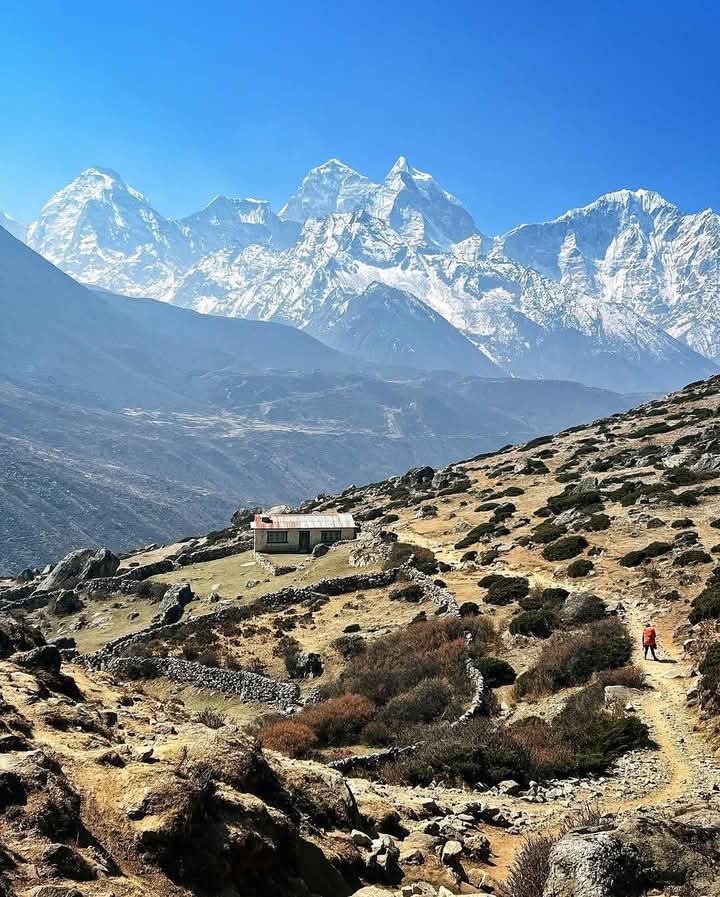
Flora and Fauna of the Everest Region: The Everest Region, home to the world’s tallest peak, may appear barren and icy from afar, yet it hides an astonishingly rich ecosystem. Beneath the towering summits and glittering glaciers lie lush valleys, alpine meadows, and forests teeming with life. The diversity of flora and fauna in the Everest Region reflects nature’s resilience and beauty, thriving in one of the harshest environments on Earth.
Located within Sagarmatha National Park — a UNESCO World Heritage Site — the Everest Region’s terrain ranges from subtropical forests at 2,800 meters to snowy wilderness above 5,000 meters. This dramatic elevation shift supports a mosaic of habitats that shelter an incredible variety of plant and animal species, many of which are rare or endangered.
Let’s take a closer look at the mesmerizing plants and wildlife that make the Everest Region a natural wonder.
Flora in the Everest Region
Despite the rugged terrain, the Everest Region is a botanical paradise where plant life paints color across the Himalayan slopes. The diversity changes with altitude — from lush rhododendron forests to hardy alpine herbs that cling to rocky outcrops.
1. Rhododendron (Rhododendron arboreum)
The rhododendron, Nepal’s national flower, transforms the hillsides into a sea of crimson, pink, and white blossoms each spring. Growing up to 20 meters tall, this evergreen shrub or small tree features thick, leathery leaves and dense clusters of flowers. Trekkers walking through Tengboche or Namche during April and May are greeted with slopes drenched in color — a breathtaking sight in the heart of the Himalayas.
Medicinal Uses:
Traditionally, rhododendron flowers and leaves are valued for their anti-inflammatory and pain-relieving properties. Herbalists use them to treat fevers, coughs, and headaches.
2. Himalayan Blue Poppy (Meconopsis betonicifolia)
A true Himalayan gem, the Himalayan Blue Poppy is among the most stunning flowers in the region. Its large, sky-blue petals with golden centers make it one of the most photographed alpine plants in Nepal. It thrives between 3,000 and 4,500 meters in damp meadows and rocky slopes.
Medicinal Uses:
Though mainly admired for its beauty, the plant is used in Tibetan medicine to relieve respiratory and digestive discomforts.
3. Yarsagumba (Ophiocordyceps sinensis)
Also known as the caterpillar fungus, Yarsagumba is one of the most valuable natural products in the Himalayas — often called “Himalayan Gold.” It’s a fascinating parasitic fungus that grows from caterpillars buried in alpine soil, found between 3,000 to 5,000 meters.
Medicinal Uses:
Highly prized in Chinese and Tibetan traditional medicine, Yarsagumba is believed to boost stamina, immunity, and vitality. It’s also considered an aphrodisiac and a natural energy enhancer.
4. Juniper (Juniperus indica)
Juniper shrubs are a sacred and practical part of mountain life. Found across subalpine zones, their aromatic wood and leaves are commonly burned during Buddhist rituals as offerings to mountain deities.
Medicinal Uses:
Juniper berries and oils are used to treat respiratory infections and digestive issues. In local culture, juniper smoke is thought to purify homes and ward off evil spirits.
5. Alpine Gentian (Gentiana alpina)
The Alpine Gentian is a hardy perennial herb known for its vivid blue, trumpet-shaped flowers. Blooming in summer, it adds splashes of color to high-altitude pastures.
Medicinal Uses:
Its roots are valued for improving digestion and appetite and are used to make herbal tonics to counter fatigue and stomach ailments.
6. Cotoneaster simonsii
Commonly called the Himalayan Snowcock Berry, this evergreen shrub produces bright red berries and glossy green leaves. It grows on stony slopes and meadows between 3,000 and 4,500 meters, providing food for birds and small mammals.
Medicinal Uses:
The berries are edible and have been used to soothe coughs and digestive discomforts. The plant also helps stabilize fragile mountain soils against erosion.
7. Tibetan Barberry (Berberis asiatica)
The Tibetan Barberry is a thorny shrub adorned with yellow blossoms and red or bluish berries. Found in both subalpine forests and alpine meadows, it is a common sight along trekking trails.
Medicinal Uses:
Its berries and roots have antibacterial and anti-inflammatory properties and are used to heal skin infections, stomach issues, and fevers.
Fauna in the Everest Region
The Everest Region’s wildlife thrives across diverse ecological zones — from lush pine forests to frozen ridges. Many species are rare and endangered, perfectly adapted to cold climates and rugged terrain.
1. Snow Leopard (Panthera uncia)
The elusive Snow Leopard is the most majestic predator of the high Himalayas. Cloaked in smoky-gray fur patterned with black rosettes, it blends seamlessly into the rocky landscape. These solitary hunters roam elevations between 3,000 to 4,500 meters, preying on Himalayan blue sheep and musk deer.
Spotting a snow leopard is a rare privilege, often possible during late winter to early spring when they descend to lower altitudes. They are shy, nocturnal, and revered as symbols of mystery and grace.
2. Red Panda (Ailurus fulgens)
The adorable Red Panda — with its fiery fur, bushy tail, and gentle eyes — inhabits temperate forests with dense bamboo undergrowth. Found between 2,200 to 4,800 meters, this endangered species spends its days sleeping in trees and feeding on bamboo leaves.
Their playful nature and striking appearance make them one of the most cherished animals of the Everest Region. Early mornings and evenings are the best times to spot them.
3. Himalayan Tahr (Hemitragus jemlahicus)
The Himalayan Tahr is a mountain goat-like animal with curved horns and a thick, shaggy coat to withstand the cold. They inhabit rugged cliffs and alpine meadows up to 5,000 meters. Males are larger and more heavily maned than females.
Trekkers often see them grazing on steep slopes in early morning light. Their breeding season falls between October and January.
4. Himalayan Monal (Lophophorus impejanus)
The Himalayan Monal, Nepal’s national bird, is a spectacle of iridescent colors. Males display metallic shades of blue, green, and copper, while females are more subdued in earthy browns. These birds inhabit forests and alpine meadows between 2,400 to 4,500 meters.
During spring, males perform courtship displays — a vibrant sight against the snow-capped peaks.
5. Musk Deer (Moschus leucogaster)
The Musk Deer is a shy, small-bodied animal found in forested mountain slopes between 2,500 and 5,000 meters. Unlike other deer, males lack antlers but have long tusk-like canines. The musk gland in males produces a scent used in perfumes and traditional medicine, which sadly has led to poaching and endangerment.
They are mostly nocturnal and prefer dense vegetation, making them difficult to observe.
Ecosystem Diversity in the Everest Region
The incredible biodiversity of the Everest Region results from dramatic altitudinal variation:
• Below 3,000 meters: Birch, pine, and fir forests dominate, housing pheasants, martens, and Himalayan black bears.
• Between 3,000–4,000 meters: Rhododendron and juniper thrive, supporting musk deer and red pandas.
• Above 4,000 meters: Only hardy shrubs and alpine flowers persist, where snow leopards and tahrs roam.
• Beyond 5,000 meters: Vegetation is scarce, but lichens and mosses survive the icy winds.
This vertical ecosystem demonstrates nature’s adaptability — a remarkable interplay of life and altitude.
Frequently Asked Questions (FAQs) about Flora and Fauna of the Everest Region
1. What should trekkers do when encountering animals carrying loads, like yaks or mules, on narrow trails?
Always stand on the mountain side of the path and allow the animals to pass first. On suspension bridges, ensure the bridge is clear before crossing to avoid accidents. Patience ensures both your safety and the animals’.
2. What is the difference between yaks and zopyos (crossbreeds)?
Yaks are large, heavy-bodied animals adapted to cold, high-altitude environments with thick fur and strong lungs. Zopyos (yak-cow hybrids) are smaller, with less fur, and are used to carry loads at lower altitudes. Both are essential to Himalayan transport and trade.
3. Are snakes found in the Everest Region?
No. The cold temperatures and high elevation are unsuitable for snakes. The majority of the EBC trek takes place above 2,500 meters, where reptiles cannot survive.
4. How are musk deer different from regular deer?
Unlike common deer, musk deer lack antlers and instead have long canine teeth. Males possess a musk gland used in perfume and traditional medicine, making them targets for hunters. Regular deer, such as elk or white-tailed deer, are larger and live in diverse habitats worldwide.
5. What conservation efforts protect the Everest Region’s wildlife?
The area is protected under Sagarmatha National Park, which promotes anti-poaching patrols, eco-tourism, and local awareness programs to preserve endangered species like snow leopards and red pandas.
Conclusion: A Living Museum Above the Clouds
The Everest Region is not just a mountaineer’s dream — it’s a living sanctuary of biodiversity. From the glowing petals of rhododendrons to the silent footsteps of the snow leopard, every element of this landscape tells a story of survival, balance, and natural beauty.
Exploring the flora and fauna of Everest is more than a journey through altitude; it’s a journey into the essence of life itself, thriving where few dare to exist.
So, when you trek through the Khumbu trails with Adventure Aspirant Pvt. Ltd., take a moment to look beyond the mountains — and witness the living wonders that call Everest home.


