
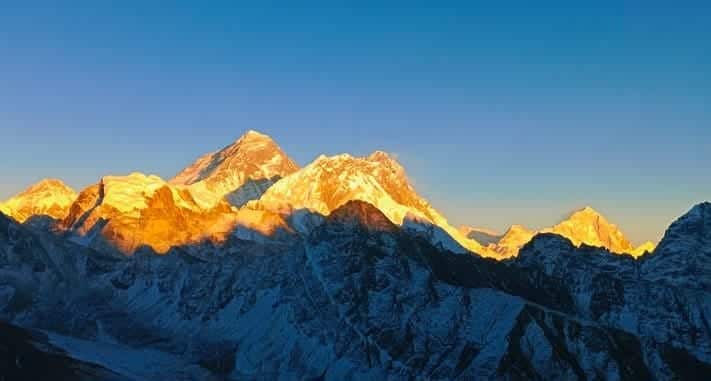
Conquer the Heights: Among all the trekking routes on Earth, few can rival the legendary charm of the Everest Base Camp (EBC) Trek. Nestled in Nepal’s Khumbu region, this iconic adventure takes travelers deep into the lap of the world’s tallest peaks — where prayer flags flutter in the wind, glaciers sparkle under the sun, and the mighty Mount Everest reigns supreme at 8,848.86 meters (29,031.7 feet).
Following in the footsteps of mountaineering heroes like Sir Edmund Hillary and Tenzing Norgay, trekkers embark on a spiritual and physical odyssey. Yet, amid the excitement of reaching Everest Base Camp itself, one question always stirs curiosity:
What is the highest point on the Everest Base Camp Trek?
Many assume that arriving at Everest Base Camp (5,364 m) marks the ultimate goal. However, those who climb just a bit higher are rewarded with something extraordinary — Kala Patthar, the highest accessible viewpoint on the trek, perched at 5,645 meters (18,519 feet).
Kala Patthar: The True Summit of the Everest Base Camp Trail
The name Kala Patthar translates to “Black Rock” in Nepali, an apt description of the dark, rugged ridge that rises above Gorakshep, the final settlement before reaching Base Camp.
While the trail to EBC gives you a close-up of the Khumbu Icefall and the base of Everest, Kala Patthar offers the best panoramic view of the mountain itself — an awe-inspiring reward for trekkers who venture that extra climb.
An Unparalleled Viewpoint
From Kala Patthar’s summit, the scenery is nothing short of magical. As the sun begins to rise, the first golden light kisses the peaks of Everest, Lhotse, Nuptse, Pumori, and Ama Dablam. The entire Himalayan range glows with hues of orange, pink, and gold — a sight that remains etched in memory forever.
For photographers and adventurers alike, sunrise or sunset from Kala Patthar is the ultimate highlight of the entire journey.
The Final Ascent: Gorakshep to Kala Patthar
The climb to Kala Patthar begins from Gorakshep (5,164 m), a small outpost that marks the last stop with tea houses on the trail. The trek to the viewpoint typically takes around 1.5 to 2 hours, depending on pace and acclimatization.
The path is steep and rocky, demanding strong willpower and slow, steady breathing in the thin mountain air. But as trekkers reach the top and witness the unobstructed view of Everest’s summit, every step feels worthwhile.
Everest Base Camp vs. Kala Patthar — What’s the Difference?
Although both are part of the same trekking journey, Everest Base Camp (EBC) and Kala Patthar serve very different purposes.
Feature Everest Base Camp Kala Patthar
Altitude 5,364 meters (17,598 ft) 5,645 meters (18,519 ft)
Main Attraction Standing at the historic base of Everest expeditions Panoramic view of Mount Everest and surrounding peaks
Location Beside Khumbu Glacier Above Gorakshep
Trek Duration from Gorakshep 2–3 hours (round trip) 2–3 hours (round trip, but steeper)
While EBC connects trekkers to mountaineering history, Kala Patthar gives them the visual reward — the iconic postcard view of Mount Everest itself.
Key Stops and Elevations Along the EBC Route
The Everest Base Camp trek unfolds like a stairway to the sky, with each village offering unique scenery, culture, and altitude:
Location Elevation (Meters) Highlights
Lukla 2,860 m Gateway to the Everest region, home to Tenzing–Hillary Airport
Phakding 2,610 m Riverside village ideal for the first night’s rest
Namche Bazaar 3,440 m Vibrant Sherpa town, acclimatization stop with stunning Everest views
Tengboche 3,860 m Home to the sacred Tengboche Monastery
Dingboche 4,410 m Acclimatization village surrounded by Ama Dablam and Lhotse
Lobuche 4,940 m Final stop before reaching the high-altitude zone
Gorakshep 5,164 m Last human settlement before Base Camp
Everest Base Camp 5,364 m Historical base of Mount Everest expeditions
Kala Patthar 5,645 m The highest point trekkers can reach without climbing Everest
Additionally, Nangkartshang Peak (5,083 m) near Dingboche serves as a popular acclimatization hike, providing jaw-dropping views of Ama Dablam, Makalu, and Lhotse.
Why Kala Patthar Is the Real “Summit” for Trekkers
Climbing Kala Patthar isn’t about technical mountaineering — it’s about personal triumph. Standing at 5,645 meters with Everest in front of you, you’ve not only conquered physical altitude but also connected with something far deeper — the spirit of the Himalayas.
Many describe this moment as a blend of exhaustion, elation, and humility. The peaks surrounding you seem timeless, reminding every traveler of nature’s grandeur and humanity’s small but meaningful place within it.
Understanding “Highest” — A Matter of Perspective
When we talk about the highest point, context matters:
• Highest on the EBC Trek: Kala Patthar (5,645 m)
• Highest mountain above sea level: Mount Everest (8,848.86 m)
• Tallest mountain from base to summit: Mauna Kea (Hawaii) — 10,210 m from its underwater base
• Farthest point from Earth’s center: Mount Chimborazo (Ecuador)
Each represents a different way of measuring greatness. But for trekkers, Kala Patthar’s height symbolizes the pinnacle of the EBC journey, both literally and emotionally.
Two Climaxes of the Everest Base Camp Trek
The EBC trek offers a dual sense of accomplishment:
1. Reaching Everest Base Camp (5,364 m):
A symbolic achievement, connecting you to decades of exploration and mountaineering legacy. Here, prayer flags mark the starting point of expeditions that ascend to the top of the world.
2. Summiting Kala Patthar (5,645 m):
A more personal triumph — not the base of Everest, but the best seat in the house to behold her grandeur. The higher you climb, the closer you feel to the heavens.
To skip Kala Patthar is to miss the true finale of your Himalayan journey.
Tips for Trekkers: Reaching Kala Patthar Safely
• Acclimatize properly at Namche Bazaar and Dingboche.
• Start early for sunrise views — temperatures drop quickly.
• Dress in layers and protect yourself from strong winds.
• Carry light snacks and water, as energy burns fast at high altitude.
• Walk slowly, breathe deeply, and enjoy every step of the ascent.
FAQs: Highest Point on the Everest Base Camp Trek/ Conquer the Heights
1. What is the exact altitude of Kala Patthar?
Kala Patthar stands at 5,645 meters (18,519 feet) above sea level.
2. Is Kala Patthar harder to reach than Everest Base Camp?
Yes — the climb is steeper and at higher altitude, but it’s shorter in distance. Most trekkers find it physically demanding yet deeply rewarding.
3. Can you see the peak of Mount Everest from Base Camp?
No. The mountain’s own ridges block the view from Base Camp. The best full view of Everest is from Kala Patthar.
4. How long does it take to climb from Gorakshep to Kala Patthar?
Typically, 1.5 to 2 hours up, and about an hour to descend.
5. What’s the best time to trek to Kala Patthar?
The ideal seasons are spring (March–May) and autumn (September–November), when skies are clear and weather is stable.
6. Do you need any permits to reach Kala Patthar?
Yes. You’ll need the Sagarmatha National Park Entry Permit and Khumbu Pasang Lhamu Rural Municipality Permit, both easily obtainable in Kathmandu or Lukla.
Final Thoughts: The True Roof of the World Awaits
For those who venture into the Khumbu, the Everest Base Camp Trek is more than just a walk — it’s a pilgrimage into the soul of the Himalayas. And while standing at Everest Base Camp is a triumph, ascending Kala Patthar offers a transcendent moment that words can barely capture.
When the golden rays of dawn light up Everest’s icy crown and prayer flags flutter in the crisp air, you’ll realize you’ve reached not just the highest point of your trek — but a high point in life itself.
Adventure Aspirant Pvt. Ltd. invites you to experience this breathtaking journey — to stand where the sky meets the Earth and to embrace the adventure that defines your spirit.


