

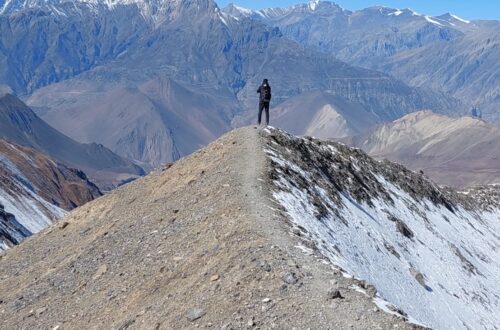
Annapurna Circuit Trek Guide; The Annapurna Circuit Trek stands as one of Nepal’s most iconic and sought-after trekking routes, luring adventure lovers from every corner of the globe. Stretching approximately 160–230 km, this trail offers an extraordinary blend of landscapes, cultures, and challenges. With every step, you’ll embark on an unforgettable journey through diverse terrain – from lush subtropical forests to stark alpine regions – making it a truly transformative experience.
This comprehensive guide from Adventure Aspirant covers everything you need to know: routes, best trekking seasons, costs, permits, maps, itineraries, and more.
Annapurna Circuit Trek Overview
Here’s a quick rundown of the key facts:
| Details | Information |
| Location | Central Nepal (passing through Lamjung, Manang, Mustang, Kaski & Myagdi) |
| Trek Distance | Approx. 160–230 km (depending on your route) |
| Difficulty Level | Moderate |
| Trek Duration | Usually 12–20 days |
| Highest Elevation | Thorong La Pass (5,416m / 17,769ft) |
| Permits Required | ACAP & TIMS |
This trek is suitable for solo explorers, couples, groups, and even families seeking a mix of challenge and beauty.
Best Time to Trek the Annapurna Circuit
Trekking in Nepal’s mountainous regions isn’t always straightforward due to unpredictable weather and high altitudes. On the Annapurna Circuit, you’ll start as low as 760m in Besisahar and ascend to the dizzying heights of Thorong La Pass at 5,416m.
- Autumn (October – early December) is the golden season for this trek. The weather is stable, skies are crystal clear, and mountain views are breathtaking.
- Spring (March – May) is equally rewarding with colorful rhododendron blooms and mild temperatures.
Avoid trekking in winter (December – February) due to heavy snowfall and potential closure of Thorong La Pass. Similarly, monsoon (June – August) brings slippery trails, landslides, and leeches, making it less than ideal.
Recommended Annapurna Circuit Trek Itinerary
Most trekkers follow the route anti-clockwise from Besisahar to allow gradual acclimatization and avoid steep ascents. Here’s a popular 14-day itinerary:
Day 01: Arrival in Kathmandu (1400m)
Day 02: Scenic Drive from Kathmandu to Syange (1100m)
Day 03: Trek from Syange to Dharapani (1860m)
Day 04: Trek from Dharapani to Chame (2670m)
Day 05: Trek from Chame to Pisang (3200m)
Day 06: Trek from Pisang to Manang (3540m)
Day 07: Acclimatization and Exploration Day in Manang
Day 08: Trek from Manang to Yak Kharka (4050m)
Day 09: Trek from Yak Kharka to Thorong Phedi (4450m)
Day 10: Cross Thorong La Pass (5416m) and Descend to Muktinath (3760m)
Day 11: Trek from Muktinath to Jomsom (2720m)
Day 12: Flight/Drive from Jomsom to Pokhara (827m)
Day 13: Drive Back from Pokhara to Kathmandu
Day 14: Final Departure
This route is flexible and can be adjusted based on time, pace, or fitness level.
Permits for Annapurna Circuit Trek & Costs
The trek passes through the Annapurna Conservation Area, requiring two essential permits:
- ACAP (Annapurna Conservation Area Permit): ~NPR 3,000 (~USD 30)
- TIMS (Trekking Information Management System): ~NPR 1,000 (~USD 10)
You can obtain these at the Nepal Tourism Board offices in Kathmandu, Pokhara, or at the ACAP counter in Besisahar.
Annapurna Circuit Trek, Independent Trek vs Trekking with an Agency
Self-Organized Trekking
✅ Greater freedom to plan your itinerary
✅ More budget-friendly
❌ Must arrange permits, gear, and logistics yourself
❌ Risk of altitude sickness or unforeseen emergencies without guidance
Trekking with an Agency
✅ Hassle-free experience with permits, accommodation, and meals arranged
✅ Knowledgeable guides and porters ensure safety and comfort
✅ Priority access to lodging during peak season
❌ Slightly higher cost
Adventure Aspirant recommends hiring a guide or porter for first-time trekkers for added safety and local insight.
Cost of Annapurna Circuit Trek
The cost ranges between USD 600–2,600 per person, covering:
✔ Permits
✔ Transportation
✔ Accommodation & meals
✔ Guide & porter fees
Daily expenses for meals and accommodation (without a package) average USD 20–30/day.
Accommodation & Food on the Annapurna Circuit Trek
Teahouses and guesthouses are abundant, offering cozy twin-sharing rooms. Facilities like Wi-Fi, hot showers, and charging ports are available for a small fee.
For meals, enjoy hearty Nepali dishes like dal bhat (rice & lentils) or international options like pasta, pizza, and pancakes.
Must of the valleys do have Luxury Lodges with electric blankets nowadays.
Packing List for Annapurna Circuit Trek
Here’s a checklist of trekking essentials:
✅ Down jacket & thermal layers
✅ Trekking pants & waterproof shell
✅ Woolen hat, gloves, and scarf
✅ Sturdy trekking boots & sandals
✅ Sleeping bag (good for -10°C)
✅ Trekking poles
✅ Sunscreen, sunglasses & lip balm
✅ Water purification tablets
✅ Personal first aid kit
✅ Portable power bank
Keep your backpack light for comfort, especially if trekking without a porter.
Altitude Sickness & Safety Annapurna Circuit Trek
Thorong La Pass (5,416m) is the highest point of the trek and requires proper acclimatization.
- Take a rest day in Manang to adjust to altitude.
- Stay hydrated and ascend gradually.
- Be aware of symptoms like headache, dizziness, and nausea.
- Carry Acetazolamide (Diamox) as a precaution.
If symptoms worsen, descend immediately to a lower altitude.
Why Choose the Annapurna Circuit Trek with Adventure Aspirant?
From subtropical valleys and vibrant villages to high mountain passes and dramatic gorges, the Annapurna Circuit is often called the “world’s most beautiful trekking trail”. Whether you hike solo or with support, it promises an experience of a lifetime.


One comment on “Annapurna Circuit Trek Guide 2025”
Comments are closed.