
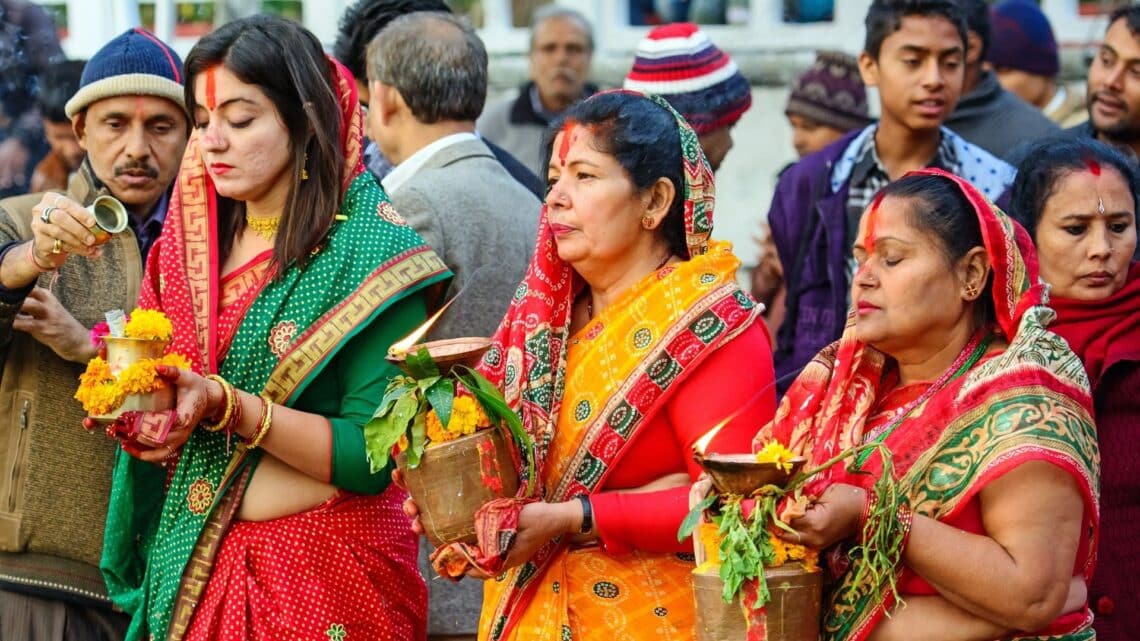
Chhath Parva in Nepal: The Chhath Parva, also known as Chhath Puja or Surya Shashti, stands as one of Nepal’s most vibrant and spiritually uplifting festivals. Dedicated to Surya Dev (the Sun God) and Chhathi Maiya (the Goddess of Power and Prosperity), this sacred celebration pays tribute to the life-giving energy of the sun — a symbol of purity, wellness, and vitality.
Primarily observed in the Terai belt of Nepal, particularly among the Madhesi community, the Chhath Festival beautifully weaves together elements of faith, gratitude, and cultural unity. It follows closely after the grand celebrations of Dashain and Tihar, making it the third major festival in the Nepali calendar.
When Is Chhath Puja in 2025?
In 2025, Kartik Chhath Puja will be celebrated from October 25 to October 28, lasting four auspicious days.
According to the Nepali calendar, it falls between 8th Kartik to 11th Kartik, 2082. During this period, the Terai region transforms into a realm of devotion, with rivers, lakes, and ponds glowing under thousands of clay lamps and colorful decorations.
Why Do People Celebrate Chhath Puja?
The essence of Chhath Puja lies in expressing gratitude to the Sun — the eternal source of life, light, and energy. Devotees believe that by worshiping Surya Dev, they attain health, prosperity, and harmony in life.
The rituals also honor Chhathi Maiya, who is considered the protector of children and the goddess of fertility. Through fasting, offering, and prayers, devotees seek blessings for family well-being, purity of soul, and environmental balance.
In today’s fast-paced modern world, Chhath stands as a reminder of our connection to nature, simplicity, and sustainability.
Who Celebrates Chhath Parva in Nepal?
While Chhath is most widely celebrated in the Madhesi and Bhojpuri-speaking communities of southern Nepal, its cultural charm has spread far and wide.
In cities like Kathmandu, Janakpur, Birgunj, Biratnagar, and Pokhara, devotees gather on riverbanks and ponds to perform rituals. Over time, Chhath has transcended ethnic and regional lines, becoming a festival of national pride that unites people of different backgrounds.
Women devotees, in particular, play a central role — leading prayers, fasting, and organizing offerings. Their dedication embodies spiritual strength and resilience, empowering women within their families and communities.
The Cultural and Spiritual Significance
Chhath Parva carries deep cultural roots and philosophical meaning. It’s not just about worship — it’s about living in harmony with the elements of nature. The Sun is revered as the universal source of energy, and Chhathi Maiya represents nurturing and protection.
The rituals reflect discipline, purity, and self-restraint — values that purify the body and mind. Moreover, the festival strengthens family ties, social unity, and inter-community respect, bridging gaps among diverse Nepali cultures.
Historical Background of Chhath Parva
The origin of Chhath dates back to the Vedic era, when early Hindus worshiped the sun as a vital cosmic force. References to Chhath Puja appear in ancient scriptures like the Rigveda, highlighting hymns that praise the solar deity.
The Ramayana recounts how Sita Mata performed the Chhath rituals during her stay at Valmiki Ashram after returning from exile. Similarly, in the Mahabharata, Draupadi, wife of the Pandavas, observed Chhath Puja to seek blessings from Surya Dev for victory and healing.
These stories showcase Chhath as an ancient practice blending devotion, science, and respect for nature’s power.
Rituals and Traditions of Chhath Festival
Chhath Puja spans four spiritually significant days, each marked by unique observances.
Day One – Nahay Khay (Purification and Preparation)
The festival begins with ritual cleansing. Devotees take a holy dip in a river or pond, symbolizing the purification of body and soul. Homes are thoroughly cleaned, and pathways to the riverbanks are decorated with flowers and lamps.
A simple vegetarian meal, often consisting of bottle gourd (lauki), Bengal gram lentils (chana dal), and rice, is prepared without salt, garlic, or onions. This meal, known as the satvik bhojan, marks the beginning of the fasting period.
Day Two – Kharna (Fasting and Devotion)
The second day, called Kharna, is a day of rigorous fasting. Devotees abstain even from water until sunset.
In the evening, they prepare jaggery kheer (sweet rice pudding) and chapatis made from wheat flour. These are offered to Chhathi Maiya before being consumed as prasad. Family members and neighbors then share this sanctified food, promoting togetherness and mutual respect.
Day Three – Sandhya Arghya (Offering to the Setting Sun)
On the third day, the atmosphere turns magical. Women dress in bright traditional sarees, and men wear dhotis or kurtas. Bamboo baskets are filled with offerings such as thekua (sweet fried delicacies), fruits, and rice laddus.
At sunset, devotees stand knee-deep in water and offer Arghya — a ritual of pouring holy water to the setting sun while chanting hymns. The entire environment glows with devotion, lights, and songs celebrating the power of nature.
Day Four – Usha Arghya (Morning Offering)
The final day begins before dawn. Devotees gather at the riverbanks once again to offer prayers to the rising sun, marking the conclusion of the fast. The ritual, called Usha Arghya, represents new beginnings and hope.
After the offering, devotees break their fast with ginger water or prasad, followed by a special meal called Paran. The morning is filled with songs, laughter, and blessings, signifying purity and renewal.
Attire, Songs, and Festive Cuisine
Traditional Clothing
Women wear bright sarees — often in orange, red, or yellow — symbolizing energy and devotion. They adorn themselves with bangles, bindis, and flowers. Men prefer traditional dhotis or kurta-suruwals, reflecting cultural pride.
Folk Songs
Melodious folk tunes like “Kera Je Pharal Ghaurme”, “Sajhuka Arghya”, and “Bhoraka Arghya” fill the air. These devotional songs narrate tales of faith and gratitude, passed down through generations.
Delicious Offerings
The festival is incomplete without its signature dishes such as:
• Thekua – a crispy sweet made from wheat flour and jaggery
• Kheer – rice pudding flavored with milk and cardamom
• Kaddu Bhaat – bottle gourd cooked with rice and turmeric
• Kasar, Fruits, Chana Dal, and more
These foods are first offered to the deities before being distributed among family and neighbors.
Tips for Travelers Attending Chhath Puja in Nepal
If you’re planning to witness this mesmerizing festival, here are some handy travel tips:
1. Arrive early to experience the build-up and decoration of the ghats.
2. Dress modestly and respect local customs and fasting devotees.
3. Participate in rituals like offering Arghya and lighting diyas (lamps).
4. Taste traditional dishes such as thekua and kheer for an authentic experience.
5. Capture moments responsibly without disturbing rituals.
6. Combine your visit with heritage tours or treks — such as the Everest Base Camp, Annapurna Base Camp, or Janakpur Heritage Tour — to make your trip even more meaningful.
Frequently Asked Questions (FAQ) About Chhath Parva in Nepal
Q1. What makes Chhath different from other Hindu festivals?
Unlike other festivals, Chhath is performed without any priests. Devotees directly connect with nature through strict fasting, water offerings, and personal prayers.
Q2. Is Chhath celebrated only in Nepal?
No, it’s also observed in parts of India such as Bihar, Jharkhand, and Uttar Pradesh. However, the Nepali Chhath carries unique cultural variations and local charm.
Q3. Can non-Hindus or foreigners participate?
Absolutely. Visitors are welcome to observe and respectfully participate in the rituals, songs, and prayers.
Q4. What are the environmental values of Chhath?
Chhath promotes eco-friendly living. The use of natural offerings, cleanliness drives, and water worship reflects respect for nature and environmental balance.
Q5. Which are the best places to witness Chhath Puja in Nepal?
Top locations include Janakpur, Birgunj, Biratnagar, Kathmandu’s Rani Pokhari, and Ganga Sagar Dham in Dhanusha.
Conclusion
The Chhath Festival of Nepal is more than a religious event — it’s a celebration of light, life, and unity. Rooted in ancient traditions, it reminds us to honor the elements that sustain us.
As devotees offer Arghya to the setting and rising sun, they not only seek divine blessings but also express profound gratitude to nature. Whether you are a traveler, a photographer, or a culture enthusiast, witnessing Chhath in Nepal is an unforgettable spiritual journey — a true reflection of devotion, discipline, and harmony.


