
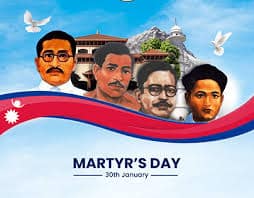
Martyrs’ Day in Nepal, widely known as Shahid Diwas, is a solemn and meaningful national observance dedicated to remembering the brave individuals who sacrificed their lives for the nation’s freedom, democracy, and social justice. The day commemorates both known and unknown martyrs whose courage and determination helped dismantle the autocratic Rana regime and paved the way for a democratic Nepal.
Observed annually on Magh 16 according to the Nepali calendar (which usually falls on January 30 in the Gregorian calendar),Martyrs’ Day stands as a powerful reminder of the cost of liberty and the responsibilities that come with it.
Significance of Martyrs’ Day in Nepal
Martyrs’ Day is not merely a historical remembrance; it is a reflection of Nepal’s long struggle against oppression and injustice. For over a century, Nepal endured authoritarian rule under the Rana dynasty, where civil liberties were suppressed and political participation was denied to ordinary citizens.
The sacrifices made by Nepal’s martyrs ignited the democratic movement, inspired political awakening, and ultimately led to the downfall of the Rana regime in 1951. Their legacy continues to influence Nepal’s political system, national identity, and democratic aspirations today.
Martyrs’ Week: A Nationwide Tribute
The observance of Martyrs’ Day in Nepal is part of a larger commemoration known as Martyrs’ Week (Shahid Saptah), which runs from Magh 10 to Magh 16. Throughout this week, various programs are organized across the country to honor those who laid down their lives for the nation.
These events include:
• Public awareness campaigns
• Cultural performances
• Educational discussions
• Tributes at martyrs’ memorials
The final day, Magh 16, is the most significant and is officially recognized as Martyrs’ Day in Nepal.
Who Are the Martyrs of Nepal?
In Nepal, the term martyr refers to individuals who sacrificed their lives for the greater good of the country or society, particularly in the fight for political freedom, democracy, and national sovereignty.
Although the government has officially recognized thousands of martyrs over different political movements, ten martyrs are especially remembered for their historic contributions to Nepal’s democratic struggle.
The Ten Prominent Martyrs of Nepal
- Lakhan Thapa Magar
- Shukra Raj Shastri
- Dharma Bhakta Mathema
- Dashrath Chand
- Gangalal Shrestha
- Bhimdatta Panta
- Ratna Kumar Bantawa
- Yagya Bahadur Thapa
- Bakaabir Baldev Shahi
- Tanka Prasad Acharya
Among these, Shukra Raj Shastri, Dharma Bhakta Mathema, Dashrath Chand, and Gangalal Shrestha are regarded as the four principal martyrs, whose executions in 1941 marked a decisive moment in Nepal’s democratic revolution.
Lakhan Thapa Magar: Nepal’s First Martyr
Lakhan Thapa Magar holds a special place in Nepalese history as the first martyr of Nepal. A local leader from Bungkot in the Gorkha district, he openly rebelled against the oppressive Rana administration and opposed Jung Bahadur Rana’s pro-British policies.
His resistance led to his execution in 1877, making him the earliest symbol of resistance against autocracy in Nepal. His courage inspired future generations to challenge injustice and authoritarian rule.
Historical Background: The Struggle Against the Rana Regime
The roots of Martyrs’ Day in Nepal trace back to the Rana era (1846–1951), a time when power was concentrated within a single family and the monarchy was reduced to a ceremonial role.
In the late 1930s, political awareness began spreading among educated youth and intellectuals. Leaders such as Shukra Raj Shastri, Dharma Bhakta Mathema, Dashrath Chand, and Gangalal Shrestha established the Nepal Praja Parishad, a secret political organization advocating democracy, civil rights, and an end to Rana rule.
• Dharma Bhakta Mathema and Gangalal Shrestha mobilized students and intellectuals
• Dashrath Chand delivered powerful speeches exposing Rana oppression
• Shukra Raj Shastri promoted political consciousness through writings and teachings
Alarmed by the growing movement, the Rana government arrested these leaders and executed them in January 1941.
Impact of the Martyrs’ Sacrifice
The execution of the four martyrs shocked the nation and revealed the brutality of the Rana regime to the world. Instead of suppressing the democratic movement, their deaths strengthened resistance and unified political forces.
Their sacrifices:
• Increased international attention on Nepal
• Encouraged King Tribhuvan to ally with democratic leaders
• Accelerated the movement that ended Rana rule in 1951
Historically, these events marked a major turning point that led Nepal toward democracy and constitutional governance.
How Martyrs’ Day in Nepal Observed
Martyrs’ Day is commemorated with dignity and national pride throughout the country.
- Morning Processions and Rallies
A formal procession begins at Shanti Batika, Ratna Park, and proceeds to the Martyrs’ Memorial at Lainchaur. Senior government officials, including the Prime Minister, ministers, and dignitaries, participate in the event. - Wreath-Laying Ceremony
Floral tributes are offered at the statues of the martyrs in Lainchaur. This ceremony symbolizes national gratitude and respect. - Educational Programs
Schools and universities organize lectures, essay competitions, and discussions to educate students about Nepal’s democratic history and the sacrifices made by martyrs. - Cultural and Commemorative Events
Poetry recitations, patriotic songs, debates, and exhibitions are held across the country, highlighting themes of freedom, equality, and justice. - Nationwide Moment of Silence
A moment of silence is observed to honor all martyrs—both recognized and unknown—who gave their lives for the nation.
Influence of Martyrs’ Day in Nepal on Nepal’s Democratic and Political Landscape
Martyrs’ Day in Nepal continues to shape Nepal’s political consciousness. It reinforces democratic values and reminds citizens of the importance of safeguarding freedom, justice, and human rights.
The observance:
• Promotes national unity across ethnic and social groups
• Encourages civic responsibility and patriotism
• Inspires future generations to uphold democratic principles
Even today, Martyrs’ Day in Nepalserves as a moral compass for Nepal’s leaders and citizens alike.
Martyrs’ Day and Responsible Travel in Nepal
Martyrs’ Day also reminds travelers and citizens alike to respect Nepal’s history, culture, and democratic values. For companies like Adventure Aspirant Pvt. Ltd., promoting responsible and ethical tourism goes hand in hand with honoring national heritage. By encouraging travelers to learn about Nepal’s past, support local communities, and respect cultural landmarks such as martyrs’ memorials, tourism can contribute positively to national pride and sustainable development.
Frequently Asked Questions (FAQs) about Martyrs’ Day in Nepal
- How many martyrs are officially recognized in Nepal?
The exact number is uncertain due to historical limitations in record-keeping. However, as of February 27, 2023, the Government of Nepal officially recognized 8,470 martyrs from various political movements. - Who was the first martyr of Nepal?
Lakhan Thapa Magar is recognized as Nepal’s first martyr. He was executed in 1877 for leading a rebellion against the Rana regime. - When is Martyrs’ Day in Nepal celebrated?
Martyrs’ Day in Nepal is observed on January 30 each year according to the Gregorian calendar and on Magh 16 in the Nepali calendar. - What is Martyrs’ Day called in Nepali?
In Nepali, Martyrs’ Day is known as शहीद दिवस (Shahid Diwas). - Why are the four martyrs of 1941 especially important?
Their execution exposed the cruelty of the Rana regime and became a catalyst for Nepal’s democratic revolution, eventually leading to the end of Rana rule. - Is Martyrs’ Day a public holiday in Nepal?
Martyrs’ Day in Nepal is widely observed nationwide, though the status of a public holiday may vary depending on government announcements.
Conclusion
Martyrs’ Day in Nepal, observed on Magh 16, honors the unwavering courage and selfless sacrifices of Nepal’s martyrs who fought against tyranny and injustice. From Lakhan Thapa Magar, the first martyr, to the four iconic martyrs of 1941, their contributions laid the foundation for Nepal’s democratic journey.
Through nationwide commemorations, educational initiatives, and public reflection, Martyrs’ Day keeps alive the spirit of freedom and reminds Nepalese citizens that democracy must be protected, respected, and strengthened for generations to come.


