
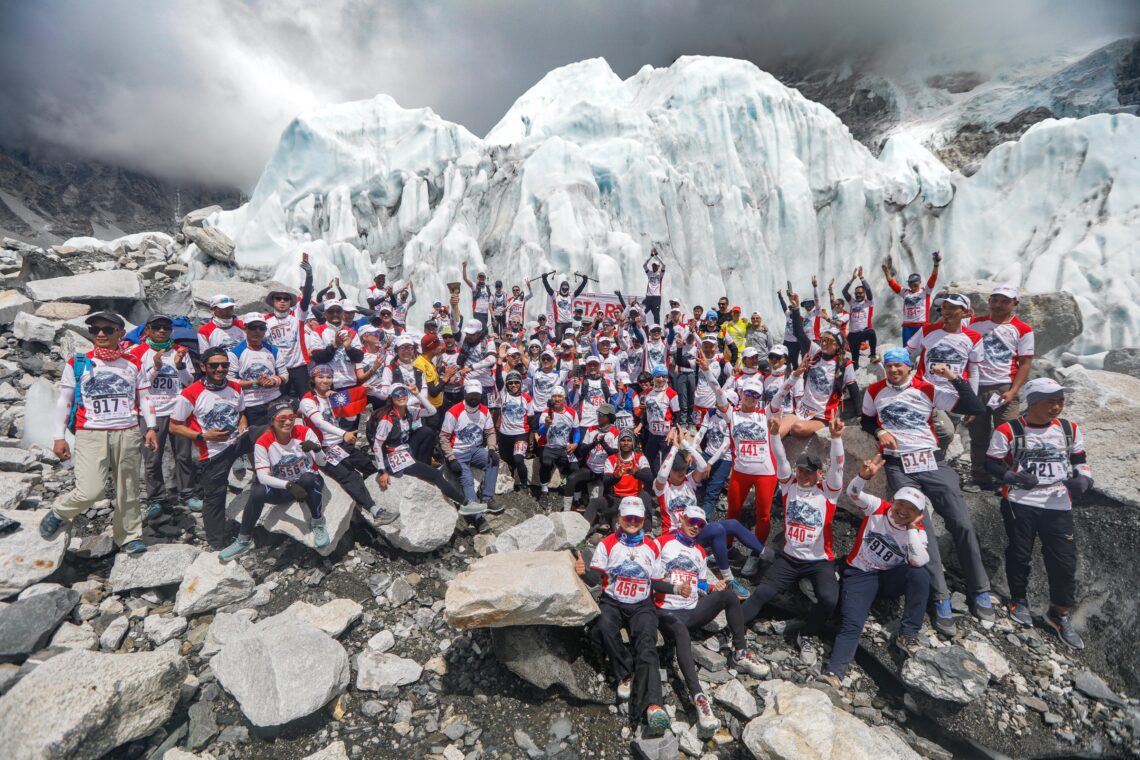
Everest Marathon 2025: Everest Marathon is an extraordinary high-altitude adventure race organized every 29th May to commemorate the legendary first ascent of Mount Everest by Tenzing Norgay Sherpa and Sir Edmund Hillary on 29th May 1953 in the stunning Solukhumbu district of Nepal.
After the devastating 2015 earthquake in Nepal, the official height of Mount Everest was updated to 8,848.86 meters. To honor the towering presence of the world’s highest peak, the Everest Marathon continues as the world’s highest official marathon, pushing the limits of human endurance.
The Everest Marathon 2025 is special because it marks the continuation of the 70th-anniversary celebrations initiated in 2023 and maintained as a tradition. The Extreme Ultra Marathon, originally 60 km, remains an extended 70 km course, offering an unmatched challenge for elite runners and adventure enthusiasts alike.
This marathon is officially acknowledged and endorsed by the Government of Nepal as a key feature of the annual tourism calendar. The event carries the name “Tenzing Hillary Everest Marathon” in tribute to the two pioneering climbers who first conquered Everest.
History of the Everest Marathon
The concept of the Everest Marathon dates back to 1985, when Tony Hunt officially organized the event for the first time. Later, it was managed in collaboration with Bufo Ventures, with Jan Turner as the Race Director during the years 1987 and 1989. Initially held biennially until 2003, the race later found its annual rhythm under the guidance of the Himalayan Expedition, with the objective of boosting tourism in Nepal through extreme adventure sports.
While the original editions were occasionally planned in Autumn (October/November), the modern version is firmly fixed on 29th May every year—a date of historical significance in mountaineering history.
Everest Marathon 2025: Categories
The Everest Marathon offers three adrenaline-packed race categories that attract runners from across the globe:
1. Half Marathon (21 km)
Key Highlights of Half Marathon
✔ Designed exclusively for foreign participants
✔ An immersive way to experience the Everest region
✔ Panoramic Himalayan views throughout the trail
The Half Marathon is the shortest distance event in the Everest Marathon, yet its 21 km stretch is no ordinary run. This category carries spiritual significance too—rooted in Buddhist symbolism around the number 7 (7+7+7).
According to Buddhist philosophy:
- Buddha took seven steps immediately after birth.
- His mother, Queen Maya Devi, passed away seven days after giving birth.
- In the seventh year of meditation, Prince Siddhartha attained enlightenment.
Route: The half marathon kicks off from Dingboche and concludes at Namche Bazaar, following the iconic Everest Base Camp trekking trail. The course primarily descends through scenic landscapes, making it both challenging and visually rewarding.
2. Full Marathon (42.195 km)
Key Highlights of Full Marathon
✔ Recognized as the highest marathon on Earth
✔ Starts from Everest Base Camp at 5,364 m
✔ Passes ancient monasteries and spiritual landmarks
This classic 42.195 km race begins at the Everest Base Camp, taking runners through Gorakshep, Kala Patthar, Dingboche, and onward to the vibrant Namche Bazaar. Participants typically spend one night camping at Everest Base Camp for acclimatization before race day.
Every year, hundreds of adventure seekers participate in this ultimate test of endurance.
3. Extreme Ultra Marathon (70 km)
Key Highlights of Extreme Ultra Marathon
✔ The longest and most demanding category
✔ Starts at Everest Base Camp
✔ A unique route beyond the traditional trekking trail
The 70 km Ultra Marathon is designed for extreme adventurers seeking the ultimate challenge. Starting at Everest Base Camp, the course diverges from the classic trail and takes a wild, adventurous path via Thukla, Chhukung, and Nha La, before finally descending to Namche Bazaar.
This isn’t just a race; it’s a Himalayan odyssey, demanding immense stamina, technical running skills, and mental toughness.
How Difficult is the Everest Marathon?
The Everest Marathon is considered one of the most demanding races on the planet. Here’s why:
- The starting point (Everest Base Camp) lies at 5,364 meters (17,598 ft)—an altitude where oxygen levels are dangerously low.
- The trail spans steep ascents and descents, rugged paths, and narrow suspension bridges.
- Weather conditions are unpredictable, ranging from bright sunshine to freezing winds and occasional snowfall.
Running 42.195 km—or even 70 km—at high altitude is no ordinary feat. Only runners with excellent physical fitness, altitude experience, and rigorous training should attempt this adventure.
Everest Marathon 2025: Key Highlights
- Date: 29th May 2025
- Location: Everest Base Camp to Namche Bazaar, Khumbu Region, Nepal
- Altitude: Start at 5,364 m | Finish around 3,440 m
- Total Participants: Approximately 250–300 runners from around the globe
- Organized By: Himalayan Expedition and recognized by the Government of Nepal
Winners of Everest Marathon 2025
- Half Marathon (21 km): Samjana Rai Nischal (India) – 3 hrs 19 min 47 sec
- Full Marathon (42 km): Suman Kulung (Nepal) – 3 hrs 47 min 16 sec
- Extreme Ultra Marathon (70 km): Gopal Tamang (Nepal) – 8 hrs 18 min 4 sec
FAQs – Everything Adventure Aspirant Needs to Know
1. What is the Everest Marathon?
It is the highest marathon in the world, organized every 29th May to honor the first ascent of Mount Everest. It includes three categories: 21 km, 42 km, and 70 km.
2. Why is 29th May significant?
It marks the historic day in 1953 when Tenzing Norgay Sherpa and Sir Edmund Hillary first reached the summit of Mount Everest.
3. How do I register for the Everest Marathon?
Registrations are handled through authorized trekking and marathon organizers that provide complete race packages, including permits, logistics, and acclimatization schedules.
4. Is prior experience required?
Absolutely. Participants must have marathon experience and should undergo altitude training prior to the event.
5. How long does the entire trip take?
On average, 15–20 days, including trekking from Lukla to Base Camp, acclimatization, race day, and the return journey.
6. What makes the 2025 edition special?
- Continuation of the 70th-anniversary celebrations of the Everest conquest.
- The 70 km Extreme Ultra Marathon, the longest in the event’s history, remains a major attraction.
Final Words for Adventure Aspirant
If your soul craves extreme adventure, there’s no better test than the Everest Marathon. The 2025 edition has once again proven why it’s the crown jewel of endurance races—blending raw nature, human grit, and historical legacy.
Are you ready to take on the ultimate Himalayan challenge in 2026? Start training today, and Adventure Aspirant will guide you every step of the way—from training plans to trek arrangements.


