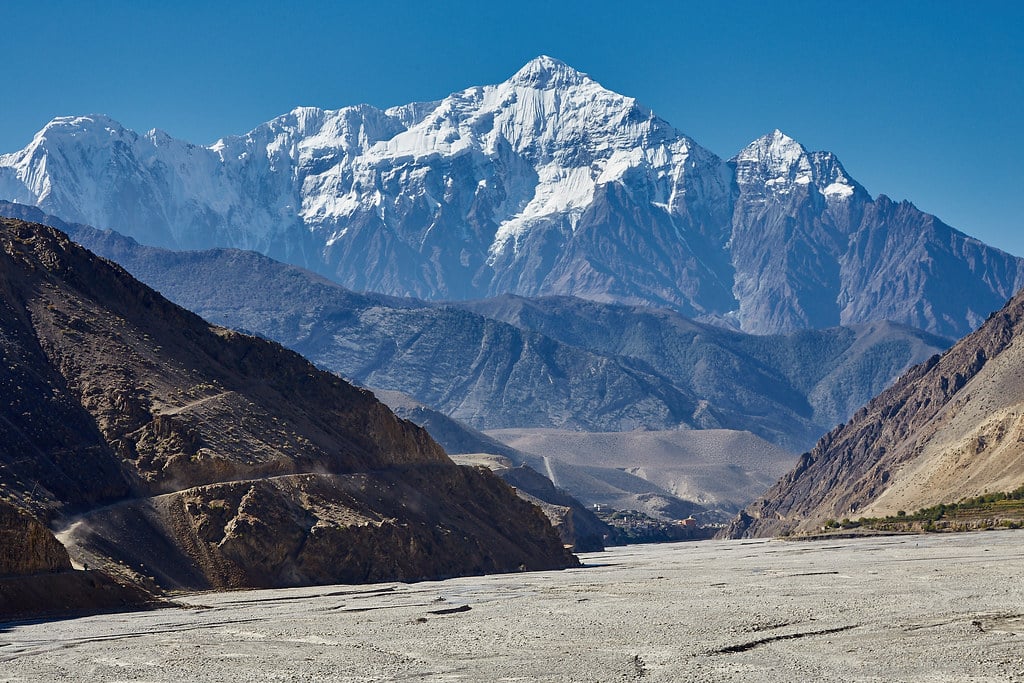
Upper Mustang Valley: Discover the mystical land of the Upper Mustang Valley, one of Nepal’s most captivating destinations. Known as the “Last Forbidden Kingdom,” this ancient Tibetan enclave blends history, spirituality, and rugged Himalayan beauty in one unforgettable experience.
Before diving into the details, enjoy a short glimpse of this wonder — a land often called “Nepal’s 8th Wonder of the World.”
Why Trek in the Upper Mustang Valley?
“Heaven is a Myth, Nepal is Real.”
The Upper Mustang Trek is more than just a trek — it’s a journey through time. The capital, Lo Manthang, feels like stepping into another era. Situated in the rain shadow of the Dhaulagiri massif, this semi-arid region features colorful cliffs, ancient caves, and whitewashed settlements that appear almost otherworldly.
This area was opened to foreign visitors only in 1992, making it one of Nepal’s most exclusive trekking regions. Even today, limited trekkers are allowed annually to preserve the fragile ecosystem and authentic Tibetan-Buddhist heritage.
As you walk through the ancient trails, you’ll encounter mani walls, Buddhist chortens, barley fields, and traditional homes — a living museum of Tibetan culture still untouched by modernity.
Perfect Upper Mustang Trek Itinerary (16 Days)
An ideal itinerary balances comfort, altitude adaptation, and cultural immersion. Below is our 16-day outline itinerary, thoughtfully designed by Adventure Aspirant Pvt. Ltd.
Day 1: Arrive in Kathmandu (1400m)
Day 2: Scenic Drive to Pokhara (827m) – Approx. 6-7 hours
Day 3: Flight to Jomsom (2710m) & Trek to Kagbeni (2800m) – 25-min flight, 2-3 hour hike
Day 4: Trek to Chele (3050m) – Around 6-7 hours
Day 5: Trek to Syangbochen (3740m) – Around 6-7 hours
Day 6: Trek to Ghami (3520m) – Around 6-7 hours
Day 7: Trek to Tsarang (3500m) – Around 6-7 hours
Day 8: Trek to Lo Manthang (3800m) – Approx. 5-6 hours
Day 9: Discover Lo Manthang (3800m)
Day 10: Trek to Dhakmar (3810m) – Around 6-7 hours
Day 11: Trek to Ghiling (3440m) – Approx. 5-6 hours
Day 12: Trek to Chhuksang (3040m) – Approx. 4-5 hours
Day 13: Trek to Jomsom (2710m) – Approx. 3-4 hours
Day 14: Fly Back to Pokhara (1400m)
Day 15: Drive to Kathmandu & Farewell Dinner (1400m)
Day 16: Final Departure from Kathmandu (1400m)
Accommodation in Upper Mustang
Along the trekking routes, trekkers stay at tea houses — small family-run lodges that provide cozy rooms and hearty meals. Some lodges even feature attached bathrooms and hot showers (for a small fee).
Because of the region’s isolation and high transport costs, accommodation can be pricier than other trails — but it’s worth every rupee for the warmth of local hospitality.
Food in Upper Mustang
Expect a mix of local, Nepali, Tibetan, and Western-style dishes.
• Breakfast (7:30–8:30 AM): Oatmeal, porridge, muesli, toast, eggs, tea, and coffee.
• Lunch (1–2 PM): Dal Bhat (rice, lentils, and curry), noodles, pasta, pizza, and sandwiches.
• Dinner: Similar to lunch, served as soon as you arrive at the lodge.
Hot beverages like mint tea, masala tea, hot chocolate, and ginger-lemon honey are popular, while cold drinks such as Fanta, Coke, juice, and local beer are widely available.
Don’t miss the apple pie or rice pudding — famous sweet treats of Mustang.
Essential Packing List for Upper Mustang Valley Trek
Packing smart is key to an enjoyable journey. Here’s what you’ll need:
• Warm, waterproof trekking jacket and pants
• Thermal layers
• Woolen & cotton shirts
• Hat, cap, or scarf
• Gloves & socks
• Trekking boots
• Sunglasses with UV protection
• Trekking poles
• Sleeping bag
• Quick-drying towel
• Water purifier & bottles
• Sunscreen & lip balm
• First Aid kit
• Headlamp or torch
• Hand sanitizer & wet wipes
If you’re hiring a porter, remember they can carry up to 14 kg per person.
All items are available for purchase or rental in Thamel, Kathmandu.
Trekking Permits for Upper Mustang Valley
Since Upper Mustang lies in a restricted area bordering Tibet, special permits are mandatory.
Required Permits:
1. Restricted Area Permit (RAP):
o USD 500 per person for 10 days
o USD 50 per additional day
2. Annapurna Conservation Area Permit (ACAP):
o USD 27 (NPR 3,000) for foreigners
o NPR 1,000 for SAARC nationals
o NPR 100 for Nepali citizens
Note:
A TIMS Card is not required unless you’re combining this trek with Lower Mustang or Annapurna Base Camp.
Where to Obtain:
Permits are issued by the Department of Immigration, Maitighar, Kathmandu.
Documents required:
• Original passport with Nepal visa
• 3 passport-size photos
• Travel insurance copy
About Mustang Valley
Mustang is one of Nepal’s 77 districts, covering 3,573 km² and housing around 13,000 residents. Sheltered between the Annapurna and Dhaulagiri ranges, Mustang’s landscape transitions from lush greenery in the Lower Mustang to stark, desert beauty in the Upper Mustang.
The word “Mustang” comes from the Tibetan term meaning “Plain of Aspiration.”
The economy is driven by tourism, animal husbandry, agriculture, and trade. Despite its remote setting, it’s one of Nepal’s most prosperous mountain districts.
History & Culture of Upper Mustang Valley
Upper Mustang, located about 206 km north of Kathmandu, is home to the Lobas, people of Tibetan origin. Its capital Lo Manthang, just 20 km from the Tibetan border, preserves centuries-old Tibetan Buddhist customs, dialects, and rituals.
This isolation has protected its authentic traditions, making it one of the few places in the world where polyandry and sky burials still exist.
Why Upper Mustang Valley Is Restricted
The region remained off-limits until 1992 to protect its culture and its strategic border with Tibet. Even now, drones are prohibited without government permission due to proximity to China.
Today, the area is open but regulated, ensuring the unique Tibetan-Buddhist identity remains unspoiled.
Lo Manthang — The Walled City of Mustang
Lo Manthang is a medieval city with around 275 houses. Its residents are divided into four main castes: royal, blacksmith, butchers, and millers.
Solar power lights up homes, while prayer flags and herb gardens decorate the streets. It’s truly a living fortress of spirituality and tradition.
Culture and Festivals of Upper Mustang Valley
The highlight of the year is the Tiji Festival, a three-day celebration held in Lo Manthang. It symbolizes the triumph of good over evil — the victory of Dorje Jono over his demon father who caused drought and suffering.
During the festival, locals perform sacred dances, prayers, and rituals, attracting visitors from all over the world.
Other key cultural sites include:
• Thubchen and Jampa Monasteries (15th century)
• Luri Gompa, an ancient cave monastery
• Over 10,000 caves, many still unexplored — a magnet for archaeologists and explorers alike.
Weather & Best Season for Upper Mustang Valley Trek
Because of its rain shadow location, Upper Mustang remains dry throughout the year, making it one of Nepal’s few monsoon-friendly treks.
Spring (Apr–May)
• Temperature: 15°C–21°C (night -6°C to 2°C)
• Blue skies, vibrant festivals (Tiji), ideal for photography.
Summer / Monsoon (Jun–Aug)
• Temperature: 18°C–28°C (night -2°C to 0°C)
• No rainfall; perfect for trekking.
• Don’t miss Yartung Mela, the famous horse-riding festival.
Autumn (Sep–Nov)
• Temperature: 12°C–20°C (night -8°C to -4°C)
• Crisp skies, high visibility, and cultural richness.
Winter (Dec–Feb)
• Temperature: 0°C–5°C (day), -20°C (night)
• Cold but peaceful, ideal for solitude seekers (best early Dec or late Feb).
Important Note
Solo trekking is not permitted in Upper Mustang.
You must trek with a registered guide and obtain permits through an authorized trekking agency like Adventure Aspirant Pvt. Ltd.
Frequently Asked Questions (FAQs) about Upper Mustang Valley
1. Can solo travelers trek to Upper Mustang?
No. Solo trekking is prohibited. You must travel with a registered guide and through a licensed trekking company.
2. What is the best time to trek Upper Mustang?
Spring (April–May) and Autumn (September–November) are the best seasons. However, it’s also ideal during the monsoon months due to its dry climate.
3. Do I need previous trekking experience?
Not necessarily, but good fitness and some hiking preparation are recommended due to altitude and long trekking hours.
4. How high does the trek go?
The highest point is around 3,800 meters at Lo Manthang.
5. Is there internet or electricity?
Yes, most tea houses offer solar power and paid Wi-Fi, though connection can be slow.
6. Can I hire horses or jeeps?
Yes, horse rides and jeep tours are available in Lo Manthang for exploration.
7. What about altitude sickness?
The risk is moderate. Proper acclimatization days are included in the itinerary to minimize risk.
Conclusion
The Upper Mustang Trek is a once-in-a-lifetime adventure — an encounter with Nepal’s mystical landscapes and ancient Tibetan culture. It offers rare solitude, timeless traditions, and breathtaking Himalayan vistas.
Adventure Aspirant Pvt. Ltd. invites you to embark on this unforgettable journey into the “Last Forbidden Kingdom” — where every trail tells a story, and every sunrise paints a masterpiece.


