
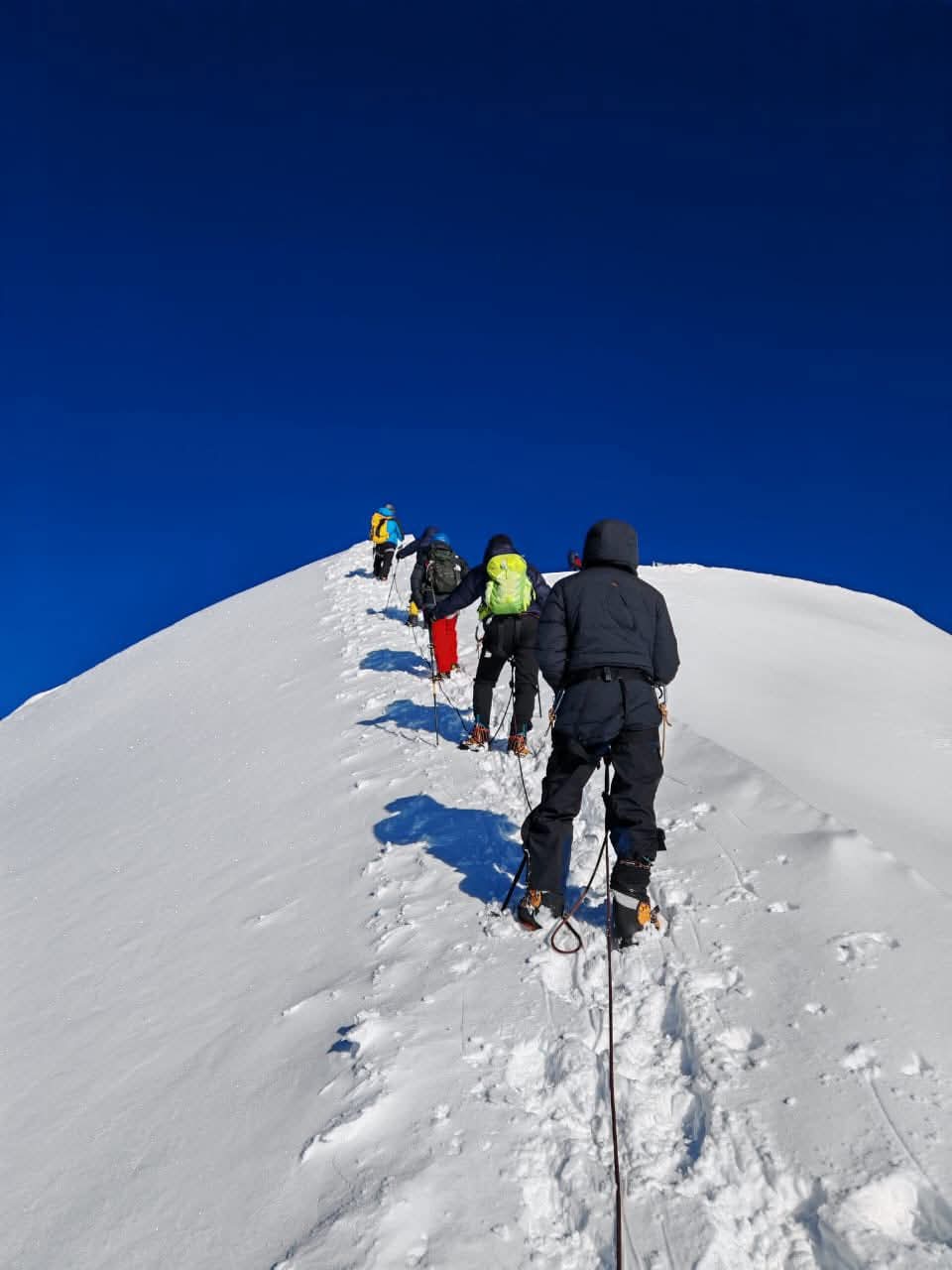
Mera Peak Climbing: Standing proudly at 6,476 meters, Mera Peak is one of Nepal’s most popular trekking peaks — often called the “gateway climb” for aspiring mountaineers. It offers a perfect balance of adventure and accessibility, leading you through Sherpa heartlands, dense rhododendron forests, and glacial landscapes before rewarding you with sweeping views of five of the world’s highest peaks: Everest, Lhotse, Makalu, Kanchenjunga, and Cho Oyu.
If you dream of standing above 6,000 meters without needing extreme technical skills, this is your climb. Here’s your complete guide to Mera Peak climbing — from routes and difficulty to permits, gear, and the best time to go.
Quick Facts About Mera Peak Climbing
Fact Details
Duration 16–20 Days
Total Distance Approx. 126 km (78 miles)
Difficulty Challenging but achievable
Maximum Altitude 6,461 m / 21,190 ft
Required Permits TIMS Card & Climbing Permit
Highlights of Mera Peak Climbing
• Thrilling flight to Lukla, one of the world’s most adventurous airports.
• Cultural immersion in traditional Sherpa villages.
• Astonishing panorama of five 8000m giants from the summit.
• Exploration of a 200-year-old Buddhist monastery (Gompa).
• Trekking through lush rhododendron and pine forests.
Where Is Mera Peak Located?
Mera Peak lies in the Khumbu region of eastern Nepal, south of Mount Everest. The mountain has three summits:
• Mera North (6,476m) – the highest and most demanding
• Mera Central (6,461m) – the most frequently climbed
• Mera South (6,065m) – slightly lower and less visited
From the top, climbers are rewarded with a breathtaking 360° panorama of the Himalayan giants — a sight worth every step.
Suggested 17-Day Mera Peak Climbing Itinerary
While several routes exist, most climbers take the standard route via Lukla and Hinku Valley, which ensures gradual acclimatization and safety.
Outline Itinerary:
Day 01: Arrival in Kathmandu (1,300m)
Day 02: Flight to Lukla (2,840m) & Trek to Paiya (2,730m)
Day 03: Trek to Panggom (2,804m)
Day 04: Trek to Ningsow (2,863m)
Day 05: Trek to Chhetra Khola (3,122m)
Day 06: Trek to Kothe (3,580m)
Day 07: Trek to Thangnak (4,358m)
Day 08: Trek to Khare (5,045m)
Day 09: Acclimatization & Pre-Climb Training at Khare
Day 10: Trek to Mera Base Camp (5,350m)
Day 11: Trek to Mera High Camp (5,780m)
Day 12: Summit Mera Peak (6,461m) & Return to Khare
Day 13: Trek Back to Kothe (3,580m)
Day 14: Trek to Thuli Kharka (4,300m)
Day 15: Trek to Lukla via Zatrwa La Pass (4,610m)
Day 16: Fly Back to Kathmandu
Day 17: Final Departure
Best Seasons to Climb Mera Peak
The Spring (March–May) and Autumn (September–November) seasons are ideal.
• Spring brings crystal-clear skies, mild temperatures, and colorful rhododendron blooms.
• Autumn offers stable weather, superb visibility, and comfortable trekking conditions.
Avoid Monsoon (June–August) and Winter (December–February) when trails are slippery, visibility is low, and extreme cold adds risk.
Permit Fees for Mera Peak
You’ll need two permits:
• TIMS Card: NPR 1,000 (approx. USD 10)
• Climbing Permit (as per season):
o Spring: USD 250
o Autumn: USD 125
o Winter: USD 70
o Summer: USD 70
Permits are issued by the Nepal Mountaineering Association (NMA).
Mera Peak Difficulty Level
Mera Peak is categorized as a “trekking peak”, meaning it combines long high-altitude trekking with basic climbing. It doesn’t require advanced technical skills, but a good fitness level, endurance, and acclimatization are vital.
Key Difficulty Factors:
• Long trekking distance and duration
• High altitude (above 6,000m)
• Cold temperatures and changing weather
• Steep glacier ascent on summit day
While deaths are rare, altitude-related issues can arise without proper preparation. Always climb with certified guides and follow acclimatization schedules carefully.
Equipment & Packing List
Essential Climbing Gear:
• Double boots or mountaineering boots
• Climbing harness, helmet, ice axe, crampons
• Ropes, carabiners, ascender, descender
• Sleeping bag (-20°C rated), mat, tent (for high camps)
Trekking Essentials:
• Down jacket, fleece layers, thermal underwear
• Waterproof outerwear
• Trekking poles, gloves, hats, and sunglasses
• 4–5 pairs of woolen socks
• Backpack (40–60L)
• Personal toiletries, sunscreen, water purification tablets
Most items can be rented or purchased in Kathmandu before departure.
Accommodation & Meals
Throughout the trail, accommodation is provided in local teahouses offering basic but cozy rooms (usually twin-sharing). Meals are mostly Nepali and Tibetan-inspired dishes like dal bhat, noodles, soup, and tea.
At Mera Base Camp and High Camp, climbers sleep in tented camps and are served freshly cooked meals by the expedition team.
Altitude Sickness & Acclimatization
Ascending beyond 6,000 meters increases the risk of Acute Mountain Sickness (AMS). Adventure Aspirant’s Mera Peak itinerary is carefully designed with multiple rest and acclimatization days to minimize this risk.
Tips to Prevent AMS:
• Hike slowly; avoid overexertion.
• Stay hydrated and eat well.
• Avoid alcohol and sleeping pills.
• Consider medication like Diamox (consult your doctor first).
• Descend immediately if symptoms worsen.
Fitness & Preparation
Though Mera Peak doesn’t demand extreme mountaineering skills, you should engage in cardio training (running, swimming, cycling) and strength exercises at least 6–8 weeks before the climb. This helps improve endurance and oxygen efficiency at altitude.
Frequently Asked Questions (FAQs) about Mera Peak Climbing
1. Do I need prior climbing experience for Mera Peak?
No advanced experience is required, but previous high-altitude trekking (like Everest Base Camp or Annapurna Circuit) is highly beneficial.
2. What is the success rate for Mera Peak?
With proper acclimatization and weather, the success rate is over 90% for guided groups.
3. Can I rent climbing equipment in Nepal?
Yes. Most essential gear can be rented in Kathmandu or Lukla at reasonable rates.
4. Is bottled oxygen required?
Generally, no. Mera Peak is a non-technical climb, and oxygen is not needed unless in emergency situations.
5. What are the communication facilities like?
You’ll find mobile connectivity in lower villages and satellite phones or radios at higher altitudes.
Final Thoughts
Climbing Mera Peak is not just about reaching a summit — it’s a journey through breathtaking landscapes, vibrant cultures, and personal triumphs. With expert guidance, proper acclimatization, and a spirit of adventure, anyone with determination can achieve this Himalayan milestone.
If you’re ready to take your trekking to the next level, join Adventure Aspirant Pvt. Ltd. for an unforgettable Mera Peak expedition — where adventure meets aspiration.

