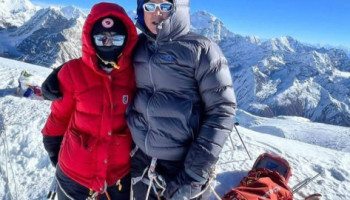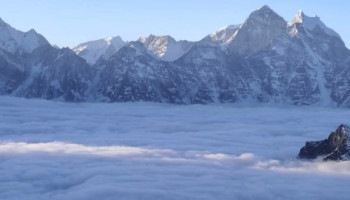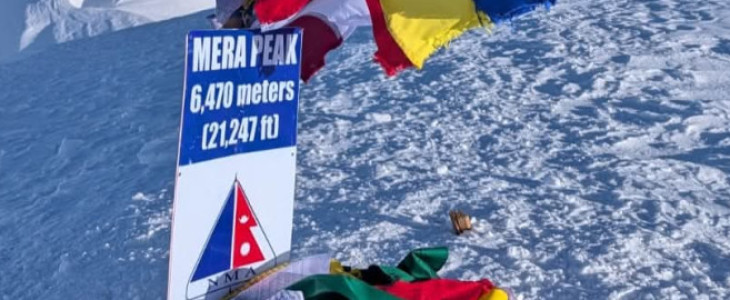
Mera Peak, rising to 6,476 meters, stands as one of the most captivating trekking peaks in the Himalayas—perfect for both experienced climbers and ambitious trekkers seeking their first high-altitude summit. Located south of Everest in the remote Hinku and Hongu valleys, this climb is an expedition into some of Nepal’s most untouched and wild terrain, far from the crowds of more commercialized trails.
The mountain forms a prominent barrier between these two forested valleys, where ancient trails wind through dense rhododendron, silver fir, and birch forests, past alpine lakes and hidden glacial basins. While largely uninhabited, seasonal yak pastures (Kharkas) are still used by Sherpa herders during the monsoon, offering glimpses of timeless highland life. The upper Hongu basin features sprawling glaciers, moraines, and views of neighboring giants like Chamlang and Baruntse.
The Adventure Begins
The expedition kicks off with a breathtaking flight to Lukla (2,800m)—a thrilling start to the journey. From here, a six-day trek through pristine Himalayan wilderness leads you to the base of Mera Glacier, where the real climbing begins. The route gradually ascends, allowing for multiple acclimatization days to reduce the risk of altitude sickness and ensure a safe, successful summit.
On the approach, you’ll trek past crystal-clear lakes, through virgin forests, and alongside roaring rivers—experiencing both natural splendor and the warm hospitality of local Sherpa communities. Reaching Mera Base Camp, climbers are rewarded with views of towering icefalls and vast alpine landscapes.
Summit Day & Views Like No Other
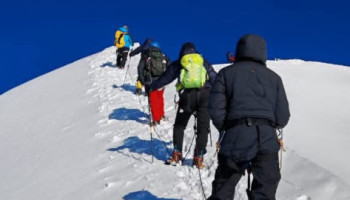
The final ascent to the summit of Mera is demanding yet non-technical, ideal for trekkers with basic mountaineering training. Along the route, you’ll use crampons, ice axes, and ropes to traverse crevassed glaciers and snow slopes. With proper guidance and preparation, the climb is a manageable yet deeply rewarding challenge.
From the summit of Mera Peak, the panorama is unmatched—featuring a lineup of Himalayan giants including Everest (8,848m), Lhotse (8,414m), Makalu (8,463m), Kanchenjunga (8,586m), Cho Oyu (8,188m), Ama Dablam, and Baruntse, all framed by endless horizons of snow-capped peaks.
Why Climb Mera Peak?
Experience Nepal’s highest trekking peak with minimal technical requirements
Explore untouched valleys and remote alpine ecosystems rarely visited by others
Acclimatize properly through a gradual ascent and professional guidance
Train in the use of mountaineering gear under the supervision of expert guides
Enjoy one of the most panoramic Himalayan summits visible from a single point
Important Notes
Mera Peak is physically demanding due to its altitude, and climbers should be in excellent physical shape with prior experience in multi-day trekking. Although technically straightforward, the route involves glacier travel, and familiarity with basic mountaineering techniques is crucial. Our experienced team ensures all necessary skills are taught and supported during the journey.
Who Is It For?
Whether you're a seasoned trekker seeking a higher challenge or a new mountaineer looking to step into the world of alpine expeditions, Mera Peak offers the ideal mix of adventure, wilderness, and reward—all wrapped into one unforgettable Himalayan experience.
Day 01: Arrival in Kathmandu (1,300m)
Upon landing at Tribhuvan International Airport, you’ll be greeted by a representative from our team. After a warm welcome, you'll be transferred to your hotel in the heart of Kathmandu. The rest of the day is free—relax, recover from your journey, or head out to explore the bustling streets and heritage sites of the city.
Overnight in Kathmandu.
Day 02: Flight to Lukla (2,840m) & Trek to Paiya (2,730m)
Flight Duration: 30 minutes | Trek Duration: 5–6 hours
We begin the adventure with a thrilling morning flight to Lukla, offering dramatic aerial views of the Himalayas. After landing, we start trekking south through lush alpine forests. The trail crosses the Chutok La Pass (2,945m) before descending into the small settlement of Paiya (Chutok).
Overnight in Paiya.
Day 03: Trek to Panggom (2,804m)
Trek Duration: 5–6 hours
We descend gently before crossing a suspension bridge and making a steep ascent to Kari La Pass (3,145m). The path weaves through vibrant rhododendron forests and remote foothills until we reach the traditional village of Panggom.
Overnight in Panggom.
Day 04: Trek to Ningsow (2,863m)
Trek Duration: 4–5 hours
We hike over Panggom La Pass and climb steadily northward. The trail provides glimpses of Himalayan giants like Lhotse and Everest. After crossing a few rivers including Peseng Kharka Khola, we arrive at the peaceful village of Ningsow.
Overnight in Ningsow.
Day 05: Trek to Chhetra Khola (3,122m)
Trek Duration: 7–8 hours
Today’s trek is a mix of ascents and descents, taking us through Ramailo Danda and along the lesser-known Pasang Lhamu Trail. Keep an eye out for wildlife—red pandas and blue sheep have been spotted in this region.
Overnight in Chhetra Khola.
Day 06: Trek to Kothe (3,580m)
Trek Duration: 6–7 hours
We follow the trail north, walking through silent forests and crossing rivers including Majang Khola. After reaching Takhto, we gradually approach Kothe, a quiet village in the Hinku Valley. Views of the Makalu range and surrounding landscapes add to the beauty of the day.
Overnight in Kothe.
Day 07: Trek to Thangnak (4,358m)
Trek Duration: 3–4 hours
A relatively short trek today. We follow the Inkhu Khola, passing through Mosom Kharka and the ancient monastery of Gordishung before reaching Thangnak, a popular acclimatization stop for trekkers and climbers.
Overnight in Thangnak.
Day 08: Trek to Khare (5,045m)
Trek Duration: 2–3 hours
The route leads us along the Dig Glacier’s lateral moraine and into Dig Kharka. We continue across rocky terrain to reach Khare, the base for acclimatization and training before the summit climb. Spectacular views of Mera Peak’s northern face await.
Overnight in Khare.
Day 09: Acclimatization & Pre-Climb Training at Khare
We take a rest day at Khare for essential acclimatization. In addition to short hikes, our guides will conduct technical training covering the use of climbing equipment such as crampons, harnesses, ice axes, and ropes.
Overnight in Khare.
Day 10: Trek to Mera Base Camp (5,350m)
Trek Duration: 3–4 hours
We trek along the Mera Glacier, ascending towards Mera La Pass, which offers sweeping Himalayan views. After a short descent, we reach Mera Base Camp and settle into our tented camp. After lunch, we may do an ice climbing session with the guide.
Overnight at Base Camp.
Day 11: Trek to Mera High Camp (5,780m)
Trek Duration: 4–5 hours
As we ascend toward High Camp, breathtaking views unfold—Everest, Makalu, Lhotse, Cho Oyu, and Baruntse, among others. We camp on a sheltered rock ledge surrounded by snowfields and glaciers.
Overnight at Mera High Camp.
Day 12: Summit Mera Peak (6,461m) & Return to Khare
Climb Duration: 8–9 hours
A pre-dawn start sees us making our summit bid. Using fixed ropes and alpine gear, we ascend the final snow-covered slope. Reaching the Mera Peak summit, we’re rewarded with one of the best panoramic views in the Himalayas—featuring Everest, Kanchenjunga, Makalu, Lhotse, and more. After taking in the views, we descend back to Khare for a well-earned rest.
Overnight in Khare.
Day 13: Trek Back to Kothe (3,580m)
Trek Duration: 4–5 hours
We retrace our steps down the Hinku Valley to Kothe. Celebrate your successful summit with traditional Sherpa food and locally brewed drinks.
Overnight in Kothe.
Day 14: Trek to Thuli Kharka (4,300m)
Trek Duration: 5–6 hours
Following steep ridges and forest trails, we ascend through the Hinku Khola region. After passing a Chorten and Mani walls, we reach the pastureland of Thuli Kharka.
Overnight in Thuli Kharka.
Day 15: Trek to Lukla via Zatrwa La Pass (4,610m)
Trek Duration: 6–7 hours
We cross the Zatrwa La Pass, marked by fluttering prayer flags and stone cairns. After the pass, a steady descent through rhododendron forests brings us back to Lukla, where our trek ends.
Overnight in Lukla.
Day 16: Fly Back to Kathmandu
We take a scenic early morning flight from Lukla to Kathmandu. Upon arrival, check into your hotel and enjoy a free day to relax, explore, or shop for souvenirs.
Overnight in Kathmandu.
Day 17: Final Departure
As your Himalayan adventure comes to an end, a team member will transfer you to the airport approximately 3 hours before your flight for your onward journey. We hope to welcome you again on your next mountain quest!
Difficulty Level and Fitness Requirements for Mera Peak Climbing
Mera Peak is among Nepal’s most well-known trekking peaks, attracting adventure seekers looking for a rewarding Himalayan experience. Rising to an elevation of 6,476 meters (21,247 feet), it is recognized as the highest trekking peak in Nepal. Although the climb is considered non-technical compared to major expedition peaks, the extreme altitude, demanding terrain, and harsh mountain weather make it a physically challenging journey.
How Challenging is Mera Peak?
Mera Peak climbing is generally rated as moderately difficult. Advanced mountaineering expertise is not essential, but trekkers must be prepared for long days of hiking, icy conditions, and high-altitude environments. The route involves glacier crossings, steep snowy sections, and rugged mountain trails, especially around the high camp area at approximately 5,800 meters.
One of the main difficulties during the expedition is altitude sickness, which can affect climbers regardless of experience level. Success on Mera Peak depends heavily on physical conditioning, mental resilience, and proper acclimatization. With adequate preparation and guidance from experienced professionals, many determined trekkers successfully reach the summit.
Understanding the Physical Demands of Mera Peak
The Mera Peak trek requires strong endurance and the ability to handle continuous walking at high elevations. Trekkers often face freezing temperatures, isolated mountain conditions, and physically exhausting trekking days. While technical climbing is limited, climbers still need basic knowledge of using mountaineering equipment such as crampons, harnesses, ropes, and ice axes for safe glacier travel.
The rapid gain in elevation throughout the journey increases the importance of acclimatization and altitude awareness. Careful pacing and sufficient rest are crucial for a safe and successful climb.
How to Prepare for Mera Peak Climbing
Improve Physical Fitness
Building cardiovascular endurance and leg strength is essential before attempting Mera Peak. Activities such as hiking, running, cycling, stair training, and strength workouts can help prepare your body for the demanding trek.
Allow Proper Acclimatization
Gradual ascent and scheduled rest days help your body adapt to reduced oxygen levels at high altitude. Taking enough time to acclimatize significantly lowers the risk of altitude sickness.
Learn Basic Mountaineering Skills
Although Mera Peak is beginner-friendly for climbers, understanding how to use crampons, ropes, harnesses, and ice axes improves safety and confidence during glacier crossings and summit sections.
Carry Suitable Equipment
Reliable trekking and climbing gear is essential for comfort and safety in harsh Himalayan conditions. Warm layered clothing, insulated boots, crampons, gloves, and a quality sleeping bag are all necessary for high-altitude camping.
Develop Mental Strength
The expedition can be mentally demanding due to cold weather, physical exhaustion, and remote mountain environments. Maintaining a positive attitude and strong determination plays a major role in reaching the summit successfully.
With proper training, careful planning, and support from experienced teams like Adventure Aspirant Pvt Ltd, climbing Mera Peak becomes a rewarding Himalayan adventure and an unforgettable achievement for passionate trekkers.
Accommodation & Meals
During your Mera Peak journey, accommodation will be as follows:
Kathmandu: Comfortable tourist-standard hotel (with breakfast only)
Trek: Basic yet cozy teahouses with shared rooms; breakfast and dinner provided at the teahouses, lunch served along the trail
Climbing Segment: Twin-sharing alpine tents
Please note that the Everest region is remote, and while teahouses are welcoming, they do not offer the same amenities as city hotels. Meals throughout the journey are designed to be nutritious and energizing, featuring local organic dishes like dal bhat, Tibetan-style soup and bread, and hot porridge.
Pre-Climb Briefing
Your expedition briefing takes place on Day 1 in Kathmandu and lasts 1–2 hours. This essential session includes:
A full walk-through of the itinerary and daily plan
Key safety procedures and altitude information
Introduction to your licensed climbing leader
Time for Q&A and discussion of personal concerns
This is your opportunity to familiarize yourself with the team and clarify anything before the climb.
Guide-to-Climber Ratio & Communication
We provide a well-structured support system, including:
Trekking & climbing staff: 1 certified guide per 4 trekkers
Porters: 1 porter for every 2 climbers
Technical climb staffing:
Groups of 2–4: 1 main guide, 1 assistant
Groups of 5–8: 1 lead guide, 2 assistants
Groups of 9+: 1 lead and 3 assistant guides
Our expedition also includes experienced high-altitude cooks and logistical Sherpa staff.
Communication is critical at altitude. Whether you’re feeling unwell, anxious, or physically strained, notify your guide immediately. Our team is trained in emotional and medical support to help you feel safe, seen, and strong throughout your experience.
Completion Certificate
Upon successful completion of the Mera Peak expedition, you’ll receive a personalized Adventure Aspirant Summit Certificate — a proud keepsake to commemorate your accomplishment.
Group Size Options
At Adventure Aspirant, we offer flexible group sizes to suit all climbers:
Standard groups: 2–10 trekkers
Private climbers: Custom solo programs available
Large groups (10+): Special arrangements with additional support and customized pacing
This ensures a safe guide-to-climber ratio, personalized support, and a balanced group dynamic.
Altitude Safety & Technical Precautions
Mera Peak (6,476m) demands solid acclimatization and basic mountaineering preparation. Here’s how we handle it:
Acclimatization Strategy
Gradual altitude gain with rest days at strategic elevations
Daily hikes that follow the “climb high, sleep low” approach
Moderate trekking hours (4–6 hours/day)
Altitude Health Measures
Pulse oximeter checks and health monitoring
Oxygen and first-aid equipment on standby
Emergency descent protocols ready for AMS
Technical Readiness
Pre-summit glacier training (use of ropes, ice axe, crampons)
Fixed-line support on steep slopes
Safety-first summit strategy with 1:4 guide ratio
Weather backup plans in case of sudden storms or whiteouts
Why Is Travel Insurance Mandatory?
Adventure Aspirant requires comprehensive travel insurance for all Mera Peak participants. Your policy must include:
Coverage for elevations up to 6,500m
Helicopter evacuation from remote areas (min. $100,000)
Hospitalization and treatment coverage in Nepal (min. $50,000)
Trip cancellations/delays
Lost baggage and emergency repatriation
Why it matters:
High-altitude rescues are costly (helicopters $3,000–$7,000)
Some facilities demand upfront payments
Weather delays can increase expenses
Tips:
Buy insurance within 14 days of booking
Bring printed and digital copies
Ensure the term “mountaineering” is included (not just “trekking”)
Need help choosing a policy? Just ask us during the booking process.
Are Permits Included?
Yes. Your Mera Peak package includes all required trekking and climbing permits, such as:
Makalu Barun National Park Entry
Mera Peak Climbing Permit (season-dependent)
Khumbu Pasang Lhamu Rural Municipality Fee
TIMS Card
Conservation & Development Fees
We handle the entire permit process so you can focus on your climb. No hidden permit fees.
Flight Delays: Kathmandu to Lukla
The Kathmandu–Lukla route can be affected by weather. Here’s how we handle delays:
Helicopter alternative if fixed-wing flights are grounded
Shared helicopter: from $500/person
Private helicopter: up to $3,500
Real-time updates from your guide
Payments accepted via cash or card in Kathmandu (receipt provided for insurance claims)
Planning tips:
Arrive early in Kathmandu (1+ days before trek start)
Leave 2–3 buffer days after your trek before flying home
Check your travel insurance covers:
Flight cancellation
Extra hotel nights
Alternative transfers
During peak seasons (spring/autumn), flights may depart from Ramechhap Airport (4–5 hrs drive from Kathmandu). We manage all required transport.
Do I Need Prior Mountaineering Experience?
Not necessarily. Mera Peak is ideal for fit trekkers seeking their first Himalayan summit. No prior rope or climbing experience is required.
You should be prepared to:
Hike 5–7 hours per day
Use basic gear (crampons, harness, fixed ropes)
Sleep in high-altitude conditions
Included training:
Ice axe, crampon, and rope skills at Base Camp
Fixed-rope climbing practice
Summit support with 1:4 guide ratio
Recommended preparation:
3+ months of cardio & stair/hill training
Weighted pack hikes
Consult your doctor about altitude meds
How to Choose the Right Operator?
Selecting a reliable operator matters more than choosing the cheapest deal. Here’s what to look for:
Essential Criteria
Government-licensed and insured company
Experienced UIAGM/IFMGA or NMA-certified guides
Strong safety record with wilderness first-aid training
Well-paced itineraries with rest/acclimatization days
Transparent pricing with permit and emergency inclusion
Red Flags
Unlicensed operations
Vague itineraries or reviews
Prices well below market
Pressure for immediate deposit
Adventure Aspirant’s Promise
12+ years of Himalayan guiding
Over 98% summit success on Mera Peak (recent season)
Certified and safety-trained staff
All equipment reviewed and updated before each trip
Booking Your Mera Peak Climb
Step 1: Contact Us
Inquire via our website, phone, or email
Share preferred dates and group size
Receive our detailed trip dossier
Step 2: Confirm Your Spot
Complete booking form
Secure your place with a 20% deposit
Receive your confirmation and pre-trip checklist
Step 3: Prepare for Departure
Buy travel insurance with mountaineering coverage
Book flights to Kathmandu
Undergo a medical checkup
Pack your equipment (rental options available)
Step 4: Arrival in Kathmandu
Meet our airport representative
Attend your pre-climb briefing
Finalize gear check and collect your duffel bag
We also offer free date changes in case of weather issues, personal emergencies, or unexpected disruptions.
We’ve compiled this comprehensive gear list to help you pack. Most items can be bought or rented in Kathmandu. Porters carry all group luggage (max 25kg per 2 climbers). Domestic flight limit: 15kg per person.
Climbing Gear – Personal
Ice axe
Crampons
Climbing harness
2 Tape slings
2 Locking + 2 Non-locking carabiners
Figure-8 or ATC descender
Ascender (jumar)
Plastic or double-mountaineering boots
Helmet (optional but recommended)
Climbing Gear – Group (Provided)
Snow bar
Ice hammer
Climbing rope
Ice screws
Headwear
Buff or neck gaiter
Sun hat or scarf
Warm fleece or wool hat
Sunglasses (UV protection)
Headlamp (extra batteries)
Upper Body
Moisture-wicking base layers
Insulating fleece or softshell
Waterproof and windproof jacket
Down jacket (recommended; rental available)
Lower Body
Trekking pants (lightweight, long)
Waterproof pants
Thermal leggings
Feet
Thin inner socks
Thick wool trekking socks
Broken-in hiking boots
Camp shoes or slippers
Hands
Warm, insulated gloves (Gore-Tex or equivalent)
Accessories
Sleeping bag (rated -20°C; rental available)
Duffel bag (provided; waterproof)
Large dry bags/plastic liners
Trekking poles (optional but recommended)
Reusable water bottle or hydration bladder
Microfiber towel
Toiletries + quick-dry items
Sunscreen, lip balm, insect repellent
Small first aid kit + personal meds
Wet wipes
Notebook or reading material
1- What is Mera Peak?
Mera Peak is recognized as the tallest trekking peak in Nepal, reaching an altitude of 6,476 meters (21,247 feet). Situated in the remote Hinku Valley of the Everest region, the mountain offers a thrilling high-altitude adventure that is physically demanding but not highly technical. It is a perfect choice for trekkers seeking their first Himalayan climbing experience. From the summit, climbers are rewarded with extraordinary views of five of the world’s highest mountains, including Mount Everest, Lhotse, Makalu, Cho Oyu, and Kangchenjunga.
2- Where is Mera Peak Located?
Mera Peak lies in the Hinku Valley within the Solukhumbu region of eastern Nepal. The mountain is located inside Makalu Barun National Park, to the south of Everest and east of the classic Everest Base Camp route. Most expeditions begin with a flight to Lukla Airport, followed by a trek through isolated mountain villages, dense forests, and alpine landscapes.
3- How Technically Difficult is Mera Peak?
Mera Peak is generally considered a non-technical trekking peak, but it still presents several physical and environmental challenges. Climbers encounter glacier travel, snow-covered slopes, and icy terrain near the summit. Basic mountaineering equipment such as crampons, harnesses, ropes, and ice axes are commonly used during the final ascent. Although less technical than major Himalayan expeditions, climbers should still be prepared for demanding high-altitude conditions.
4- Is Mountaineering Experience Required?
Previous climbing experience is not compulsory for Mera Peak, making it suitable for fit trekkers with a sense of adventure. However, having a basic understanding of glacier travel and climbing equipment can improve both safety and confidence during summit day. Many expeditions also include pre-climb training sessions before the ascent.
5- Managing Altitude Sickness During the Climb
Altitude management is one of the most important parts of the Mera Peak expedition. Climbers should ascend gradually, include acclimatization days, drink plenty of fluids, and maintain proper nutrition throughout the trek. Symptoms such as headaches, dizziness, or nausea should never be ignored. Medications like Diamox may assist acclimatization, but descending to a lower elevation is the safest option if symptoms worsen. Experienced guides from Adventure Aspirant Pvt Ltd closely monitor climbers to ensure safety during the journey.
6- Can the Mera Peak Itinerary Be Customized?
Yes, the Mera Peak itinerary can be adjusted to suit different travel schedules. Some trekkers choose to shorten the trip by reducing acclimatization days or arranging helicopter transfers after the summit climb. However, maintaining sufficient acclimatization time is strongly advised to minimize altitude-related risks.
7- Can I Rent Climbing Equipment?
Climbing gear can easily be rented in Kathmandu as well as in parts of the Khumbu region. Kathmandu usually provides better-quality equipment and a wider selection. Certain villages along the trekking route, including Khare, also offer rental services for essential climbing gear.
8- What Kind of Food is Available During the Trek?
Meals during the Mera Peak expedition are simple, nutritious, and designed to provide energy for trekking at high altitude. Tea houses along the trail commonly serve foods such as dal bhat, noodles, pasta, soups, fried rice, pancakes, eggs, and porridge. Hot beverages including tea, coffee, and lemon drinks are also widely available. At base camp and high camp, meals are generally more basic and prepared by expedition staff using locally available ingredients.
9- Symptoms of Altitude Sickness
Trekkers should be aware of common altitude sickness symptoms including headache, fatigue, nausea, poor appetite, dizziness, sleeping difficulty, and shortness of breath. Severe symptoms such as confusion, chest tightness, vomiting, or trouble walking may indicate serious altitude illnesses like HAPE or HACE, which require immediate descent and urgent medical attention.
10- How to Handle Altitude Sickness on Mera Peak
The best way to manage altitude sickness is through gradual ascent, proper acclimatization, hydration, and avoiding overexertion. If symptoms begin to appear, resting and descending to a lower altitude are essential. Some climbers use Acetazolamide (Diamox) under medical guidance to support acclimatization. Guides from Adventure Aspirant Pvt Ltd are trained to respond quickly to altitude-related issues and can arrange emergency evacuations if necessary.
11- Main Challenges During the Mera Peak Climb
Climbers on Mera Peak face several challenges including high altitude, freezing temperatures, strong mountain winds, and long trekking days through remote terrain. Near the summit, glacier crossings and snow-covered sections may require the use of ropes, crampons, and ice axes, particularly in icy weather conditions. Despite these difficulties, proper preparation and experienced support make the climb achievable for determined trekkers.
The given cost are per person and exclude international flights. Given below are the departure dates available for online booking. If the given date is not favorable then please contact us and we will happily customize your trip on dates more appropriate for you.
Note: If your group size is of more than 1 pax then you can set your own departure date.
| Start Date | Trip Price | Discount | Discounted Price | Action |
|---|
USD2349pp
Duration : 17 Days
From USD 2498
Duration: 20 Days
View Details