Lobuche East Peak Climbing (6,119 meters / 20,075 feet) is a high-altitude mountaineering journey in the heart of Nepal’s Khumbu region, offering an exciting blend of alpine adventure and cultural immersion. Combined with the classic Everest Base Camp Trek, this expedition is perfect for thrill-seekers aiming to experience one of the region’s more demanding trekking peaks while also enjoying the legendary EBC route.
Lobuche East is regarded as a technically moderate but physically challenging climb, making it an ideal choice for those with some trekking experience and basic climbing skills. The route ascends through a scenic trail lined with Sherpa villages, Buddhist monasteries, and glacial valleys before tackling the icy, snow-laden slopes of Lobuche.
Why Climb Lobuche East with EBC Trek?
Two goals in one journey: Summit Lobuche East and reach Everest Base Camp.
Perfect for trekkers seeking their first real mountaineering challenge.
Scenic acclimatization with gradual elevation gain through the Everest trail.
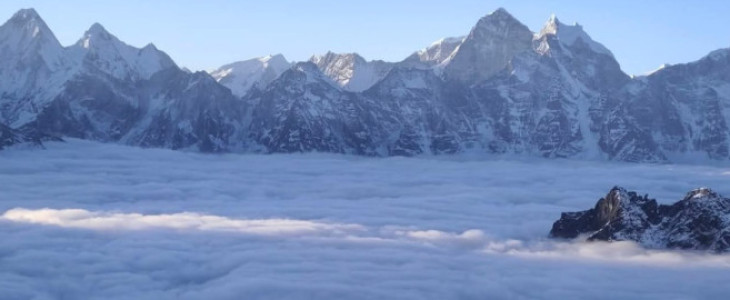
Breathtaking panoramas from the summit: Everest, Lhotse, Nuptse, Ama Dablam, Makalu, and more.
Authentic Himalayan experience through Namche Bazaar, Tengboche Monastery, and Gorak Shep.
Close-up views of the Khumbu Icefall, Khumbu Glacier, and Kala Patthar (5,545m).
Trip Highlights:
Summit Lobuche East Peak (6,119m) with support from certified guides.
Follow the iconic Everest Base Camp trail through Sagarmatha National Park.
Explore Sherpa villages, ancient monasteries, and high alpine scenery.
Trek to Everest Base Camp (5,364m) and climb Kala Patthar for unmatched views of Everest.
Stunning close-up views of Himalayan giants: Everest (8,848m), Lhotse, Nuptse, Ama Dablam, Kantega, Kwangde, and more.
Cross glacial terrain, snowy ridges, and rugged landscapes for a truly adventurous experience.
Climbing Experience & Technical Notes
Although Lobuche East is classified as a trekking peak, the final approach to the summit includes steep snow and mixed terrain requiring basic mountaineering gear like crampons, fixed ropes, and ice axes. Sections can be exposed and involve glacier travel, so previous high-altitude trekking and good fitness are essential.
Training and gear orientation will be provided by experienced climbing guides at High Camp. The summit climb rewards you with panoramic views of the Himalayas rarely seen even on more popular routes.
Cultural & Natural Immersion
This climb isn't just about reaching the top — it’s about immersing yourself in the rhythm of the Himalayan highlands. From the bustling markets of Namche Bazaar to the serene ambiance of Tengboche Monastery, you'll gain a deep appreciation of the Sherpa culture. Along the way, you’ll walk beside ancient mani stones, fluttering prayer flags, and sacred chortens, absorbing the spiritual energy of the Khumbu region.
Best Suited For:
Fit trekkers aiming for a Himalayan summit after completing base camp treks.
Climbers seeking a less crowded alternative to Island Peak.
Adventurers looking to combine technical climbing with cultural trekking.
Day 01: Arrival in Kathmandu (1,400m)
Upon landing at Tribhuvan International Airport, obtain your on-arrival visa and clear immigration. Outside the terminal, our representative will be waiting to greet you with a placard bearing your name. A short drive (approx. 30–40 minutes) brings you to Thamel, the heart of Kathmandu’s tourist district. After freshening up, take a relaxed walk through the bustling streets. In the evening, join us for a welcome dinner at a traditional Nepali restaurant with a cultural dance performance. Overnight in Kathmandu.
Day 02: Cultural Tour in Kathmandu & Trek Briefing (1,400m)
Today, you’ll explore UNESCO-listed heritage sites including Pashupatinath Temple, Boudhanath Stupa, and Kathmandu Durbar Square. Discover Nepal’s rich spiritual and historical essence. Later, finalize your gear and receive a detailed briefing on the upcoming trek. Overnight stay in Kathmandu.
Day 03: Fly to Lukla (2,860m) & Trek to Phakding (2,610m) – 30 min flight, 3–4 hrs trek
After an early breakfast, take a scenic flight to Lukla, offering awe-inspiring views of lush valleys and snow-capped peaks. On arrival, meet the rest of the expedition team. Begin your trek with a gentle descent along the Dudh Koshi River to reach Phakding. Overnight at Phakding.
Day 04: Trek to Namche Bazaar (3,440m) – 5–6 hrs
Cross multiple suspension bridges, including the famous Hillary Bridge, and ascend through pine forests and small Sherpa settlements. Enter Sagarmatha National Park at Monjo, then climb steeply to reach the vibrant Sherpa town of Namche Bazaar, the gateway to Everest. Overnight at Namche.
Day 05: Acclimatization at Namche Bazaar
Today is set aside for acclimatization. Take a short hike to Syangboche Airstrip (3,700m) or Everest View Hotel for panoramic mountain vistas. Visit the Sherpa Museum or relax and explore Namche’s cafes and markets. Overnight in Namche Bazaar.
Day 06: Trek to Tengboche (3,867m) – 5–6 hrs
Walk on a scenic ridge trail overlooking Ama Dablam and Everest. Descend to the river and then begin a steep ascent through rhododendron forest to reach the spiritual village of Tengboche. Explore the Tengboche Monastery, the largest in the Khumbu region. Overnight at Tengboche.
Day 07: Trek to Dingboche (4,410m) – 5–6 hrs
Descend briefly to Deboche and cross a suspension bridge over Imja Khola. Ascend steadily through alpine terrain past quaint villages. As you leave the tree line behind, arrive at the beautiful valley of Dingboche surrounded by Himalayan giants. Overnight in Dingboche.
Day 08: Acclimatization at Dingboche (4,410m)
Take a day to rest and adapt to the altitude. You may opt for a hike to Nangkartshang Peak or explore local trails toward Island Peak Base Camp. Alternatively, relax in a mountain bakery with coffee and treats. Overnight at Dingboche.
Day 09: Trek to Lobuche (4,940m) – 5–6 hrs
Trek past Pheriche Valley, ascend to Thukla Pass where memorials honor fallen mountaineers, and continue along a rugged moraine beside the Khumbu Glacier. Reach Lobuche, a small settlement with striking views of Nuptse and Pumori. Overnight at Lobuche.
Day 10: Trek to Everest Base Camp (5,364m) via Gorakshep (5,164m)
Start early and trek to Gorakshep, your last settlement before Everest Base Camp. After lunch, continue over glacier moraines to the legendary Everest Base Camp. Enjoy your moment at the foot of the world’s tallest peak before returning to Gorakshep. Overnight at Gorakshep.
Day 11: Hike to Kala Patthar (5,644m) & Trek to Lobuche – 6–7 hrs
Pre-dawn hike to Kala Patthar for an unparalleled close-up view of Mount Everest, Nuptse, Pumori, and Lhotse. Return to Gorakshep for breakfast and retrace your steps back to Lobuche. Overnight at Lobuche.
Day 12: Trek to Lobuche High Camp (5,400m) – 3–4 hrs
Today’s route climbs steeply across moraine and rocky slopes to reach Lobuche Peak High Camp. Along the way, enjoy views of towering peaks and glacial terrain. Upon arrival, your guide will provide basic climbing instruction and gear practice. Overnight at High Camp.
Day 13: Summit Day – Lobuche East (6,119m) & Return to High Camp – 8–10 hrs
Begin your ascent in the early hours with headlamps on. The route includes icy ridges, steep snowfields, and sections requiring ropes. From the summit, marvel at 360° views of Everest, Ama Dablam, Makalu, Lhotse, Nuptse, and surrounding peaks. Carefully descend to High Camp. Overnight stay.
Day 14: Contingency / Rest Day
Reserved for weather delays, acclimatization, or additional rest as needed. If the summit is reached on Day 13 and weather remains favorable, this day can be used to begin descending earlier. Overnight at High Camp or descend depending on the situation.
Day 15: Trek to Pangboche (3,985m) – 7–8 hrs
Descend steeply to Pheriche and continue through alpine meadows and stone-walled fields to Pangboche, home to one of the region’s oldest monasteries. Enjoy a relaxed evening and reflect on your achievement. Overnight at Pangboche.
Day 16: Trek to Namche Bazaar (3,440m) – 5–6 hrs
Cross Imja River and retrace your route through Tengboche, stopping for lunch with great views. Descend through rhododendron forests and ascend gently back to Namche Bazaar. Overnight at Namche.
Day 17: Trek to Lukla (2,860m) – 6–7 hrs
Trek back along the Dudh Koshi River, passing traditional Sherpa villages, suspension bridges, and prayer wheels. Arrive in Lukla, where you can celebrate your summit with your team. Overnight in Lukla.
Day 18: Fly back to Kathmandu (1,400m) – 30 min
Take an early morning flight back to Kathmandu, enjoying aerial views of the Himalayas. Our team will transfer you to your hotel. In the evening, join us for a farewell dinner at a traditional restaurant. Overnight in Kathmandu.
Day 19: Departure Day
Depending on your flight schedule, our team will transfer you to Tribhuvan International Airport for your final departure. If you have a later flight, feel free to explore the city or shop for souvenirs.
Safety Guidelines for Lobuche East Peak Climb
Nepal is widely regarded as a safe destination for trekkers and mountaineers. Even so, travelers should review the latest travel notices issued by their respective governments before beginning the journey. Petty theft is uncommon in the Everest region, but keeping personal belongings and valuables secure is always recommended. Many expedition organizers also provide safe storage facilities in Kathmandu for unnecessary valuables during the climb.
Safety is extremely important while attempting Lobuche East Peak because the mountain environment can be unpredictable. Climbers may face challenges such as high altitude, rapidly changing weather, icy terrain, and physical exhaustion. Symptoms including headache, dizziness, vomiting, or breathing difficulties may indicate altitude sickness and should be reported to the guide immediately. Proper acclimatization, hydration, and sufficient rest are essential for a safe ascent.
Natural hazards such as avalanches, falling rocks, and snowstorms can occasionally occur in the Himalayas. During such situations, climbers should carefully follow the instructions of experienced guides, who are trained to select safer routes and handle emergencies effectively.
Cultural Experience During the Lobuche East Peak Journey
Apart from the adventure of climbing, Lobuche East also provides a meaningful cultural experience in the heart of the Khumbu region. The trekking trail passes through traditional Sherpa settlements, allowing visitors to observe local customs, Buddhist traditions, and Himalayan lifestyles firsthand.
Sherpa Culture and Local Hospitality
The Sherpa community is internationally respected for its mountaineering expertise and strong spiritual connection to the mountains. Along the route, trekkers stay in locally operated teahouses and lodges where they can enjoy regional specialties such as yak butter tea, tsampa, and freshly prepared momos.
Festivals and Traditional Celebrations
Travelers visiting during local festivals may witness colorful Himalayan ceremonies and celebrations. Festivals such as Mani Rimdu at Tengboche Monastery showcase masked dances, prayer rituals, and Buddhist chants that reflect the region’s rich spiritual heritage.
Important Religious Sites Along the Route
Tengboche Monastery – The largest monastery in the Everest region, offering panoramic mountain scenery and insight into Buddhist traditions.
Pangboche Monastery – One of the oldest monasteries in the area, deeply respected by the local Sherpa community.
Prayer wheels, chortens, and mani walls can be seen throughout the trail, decorated with sacred Tibetan inscriptions.
Cultural Etiquette for Visitors
Walk clockwise around stupas and mani walls.
Remove footwear before entering monasteries.
Greet local people respectfully with “Namaste” or “Tashi Delek.”
Avoid touching religious monuments and prayer flags unnecessarily.
Support local communities through responsible tourism and donations to schools or social projects rather than distributing money or sweets directly to children.
Enriching the Local Experience
Spending extra time in Namche Bazaar can provide a deeper understanding of Sherpa culture. Visitors can explore local markets, museums, and traditional settlements while interacting with residents and learning more about mountain life in the Himalayas.
Wildlife and Natural Beauty Around Lobuche East Peak
The route to Lobuche East passes through Sagarmatha National Park, a UNESCO World Heritage Site celebrated for its spectacular mountain landscapes and unique Himalayan biodiversity.
Wildlife Found in the Region
Trekkers may encounter several species adapted to the alpine environment, including:
Musk deer roaming forested areas
Himalayan tahr grazing on rocky cliffs
Red pandas hidden within bamboo forests
Snow leopards, although sightings are extremely rare
Pikas and marmots living among alpine rocks and meadows
Birdlife in the Everest Region
The national park is also home to numerous Himalayan bird species, including:
Danphe (Himalayan Monal), Nepal’s national bird
Blood pheasants
Snow partridges
Golden eagles
Red-billed and yellow-billed choughs
Flora Along the Trekking Route
The vegetation changes dramatically with elevation:
Lower elevations feature rhododendron forests blooming in spring.
Mid-altitude areas are dominated by pine and juniper forests.
Higher alpine zones contain shrubs, mosses, and hardy grasses.
Near the summit, the landscape becomes rocky, icy, and barren with minimal plant life.
Difficulty Level and Fitness Requirements for Lobuche East Peak
Lobuche East is considered a demanding trekking peak that requires excellent physical condition and some familiarity with mountaineering techniques. Climbers should ideally have previous experience trekking at high altitude and basic knowledge of using climbing gear such as crampons, ropes, and ice axes.
Altitude and Acclimatization
Standing at 6,119 meters (20,075 feet), Lobuche East presents significant altitude-related challenges. Gradual acclimatization is necessary to help the body adapt to reduced oxygen levels. Trekking itineraries commonly include acclimatization days in places like Namche Bazaar and Dingboche to reduce the risk of altitude sickness.
Ignoring symptoms such as headaches, nausea, fatigue, or breathing difficulty can be dangerous. Proper hydration, balanced nutrition, and adequate rest are vital throughout the expedition.
Training and Preparation for Lobuche East Climb
Preparing physically several months before the expedition greatly improves the chances of a successful summit. Recommended preparation includes:
Cardiovascular Training: Running, cycling, hiking, stair climbing, and swimming help improve endurance and lung capacity.
Strength Exercises: Squats, lunges, and leg-focused workouts help manage steep uphill sections and long trekking days.
Backpack Hiking Practice: Trekking with a loaded backpack helps simulate actual expedition conditions and improves stamina.
Basic Climbing Skills: Practicing rope handling, crampon use, and ice axe techniques can be highly beneficial.
Flexibility and Core Training: Stretching, yoga, and balance exercises help reduce injury risk and improve stability on uneven terrain.
Consistent training, proper acclimatization, mental determination, and careful planning all contribute to a safer and more rewarding Lobuche East Peak climbing experience.
Accommodation & Meals
While in Kathmandu, you’ll stay in a tourist-class hotel with standard amenities. During the trek, you’ll be accommodated in shared twin rooms at teahouses and shared tents during the climbing portion.
Please be aware that the Everest region is remote, and although the teahouses are welcoming, they may not offer the modern comforts found in urban hotels. However, they are clean, warm, and cozy.
In Kathmandu, you’ll receive daily breakfast only. On the trek, three full meals per day are provided — breakfast and dinner at the teahouse you stay in, and lunch at a mid-point along the day’s trail. Meals consist of locally sourced, hygienic dishes, including Nepali dal bhat, Tibetan-style soups, breads, porridge, and similar hearty fare.
Pre-Trek Briefing
Before your journey begins, we’ll provide a comprehensive orientation session, an information pack, and introduce you to your trekking guide. This session ensures you’re well-prepared for the adventure ahead.
Safety & Staff Support
Your expedition will be accompanied by a licensed, English-speaking trekking guide, with one assistant guide per four trekkers, and one porter per two trekkers.
For the climbing segment, you will be guided by a certified mountaineering guide. Staff allocation is based on group size:
2–4 participants: 1 lead climbing guide + 1 assistant
5–8 participants: 1 lead guide + 2 assistants
9 or more participants: 1 lead guide + 3 assistants
Additional support includes a trained cook, experienced Sherpas, and logistics personnel.
Our team is here to look after your health and well-being. Please don’t hesitate to share any discomfort or symptoms. Feeling nervous is natural — our staff is prepared to help you through every step of the climb.
Summit Certificate
Upon successful completion of your trek and climb, you will be awarded an official Adventure Aspirant Climbing Certificate to commemorate your achievement.
Group Size
We cater to both private and small group expeditions, typically ranging from 2 to 10 participants. Solo trekkers are welcome — just reach out to us to customize your experience. For larger groups, we will tailor the itinerary, logistics, and staffing accordingly.
Acclimatization Support
Altitude trekking in the Everest region presents unique challenges. Our itinerary is thoughtfully structured to allow natural acclimatization with scheduled rest days and gradual altitude gains.
Our guides are trained to recognize and manage the symptoms of Acute Mountain Sickness (AMS). Should you experience any discomfort, our team will respond quickly and effectively.
Tips for Managing Altitude:
Carry a personal first-aid kit
Consult your doctor before the trek
Inform your guide of any symptoms immediately
Stay with the group for mutual support
Travel Insurance
Comprehensive travel insurance is mandatory. Your policy must include emergency helicopter evacuation, trip cancellation, medical coverage, and luggage protection. Trekking and climbing in this region involves unpredictable conditions — having robust insurance safeguards your safety and investment.
Permits & Entry Fees
Your trekking package includes all necessary entry permits, such as:
Sagarmatha National Park Fee
Local Government Tax
Lobuche Peak Climbing Permit
TIMS Card (Trekking Information Management System)
These permits are covered in your package cost.
Flight Delays – Kathmandu–Lukla–Kathmandu
Twin Otter and Dornier aircraft are the primary options for reaching Lukla, but weather-related delays are common due to unpredictable mountain conditions.
In the event of cancellation or extended delay, Adventure Aspirant will arrange a helicopter charter (if required) to maintain your travel schedule, especially for connecting international flights. Helicopters require a minimum visibility of 1,500 meters, while fixed-wing flights need 5,000 meters, per Civil Aviation Authority guidelines.
Helicopter Charges:
Range: USD 500 to USD 3,500, depending on group size
Payment: Cash, traveler’s cheque, or Visa/MasterCard accepted in Kathmandu
A formal receipt will be provided for insurance reimbursement
Tip: Arrive in Kathmandu at least a day early and leave buffer days after the trek to account for potential delays.
Equipment & Packing Guide
If you're uncertain about what to pack, here’s a comprehensive gear checklist. Most items are available in Kathmandu’s trekking shops, so don’t worry if you forget something.
All trekking luggage (except your daypack) will be carried by porters. Each porter carries up to 25 kg, shared between two participants.
Domestic flights have a 15 kg luggage limit per person (including hand luggage). Non-essential items can be safely stored at the hotel in Kathmandu at no extra cost.
We’ve compiled this comprehensive gear list to help you pack. Most items can be bought or rented in Kathmandu. Porters carry all group luggage (max 25kg per 2 climbers). Domestic flight limit: 15kg per person.
Climbing Gear – Personal
Ice axe
Crampons
Climbing harness
2 Tape slings
2 Locking + 2 Non-locking carabiners
Figure-8 or ATC descender
Ascender (jumar)
Plastic or double-mountaineering boots
Helmet (optional but recommended)
Climbing Gear – Group (Provided)
Snow bar
Ice hammer
Climbing rope
Ice screws
Headwear
Buff or neck gaiter
Sun hat or scarf
Warm fleece or wool hat
Sunglasses (UV protection)
Headlamp (extra batteries)
Upper Body
Moisture-wicking base layers
Insulating fleece or softshell
Waterproof and windproof jacket
Down jacket (recommended; rental available)
Lower Body
Trekking pants (lightweight, long)
Waterproof pants
Thermal leggings
Feet
Thin inner socks
Thick wool trekking socks
Broken-in hiking boots
Camp shoes or slippers
Hands
Warm, insulated gloves (Gore-Tex or equivalent)
Accessories
Sleeping bag (rated -20°C; rental available)
Duffel bag (provided; waterproof)
Large dry bags/plastic liners
Trekking poles (optional but recommended)
Reusable water bottle or hydration bladder
Microfiber towel
Toiletries + quick-dry items
Sunscreen, lip balm, insect repellent
Small first aid kit + personal meds
Wet wipes
Notebook or reading material
1- What is Lobuche East Peak?
Lobuche East is a popular trekking peak in Nepal’s Everest region with an elevation of 6,119 meters (20,075 feet). Located near the Khumbu Glacier, it is considered one of the best introductory Himalayan climbing peaks for adventure seekers wanting to experience high-altitude mountaineering.
2- Where is Lobuche East Peak Located?
Lobuche East is situated along the famous Everest Base Camp trekking route between Pheriche and Gorakshep. From the summit, climbers can enjoy stunning views of Mount Everest, Lhotse, Nuptse, Makalu, Pumori, and Ama Dablam.
3- How Difficult is the Lobuche East Climb?
Lobuche East is considered a moderately technical climbing peak. While the initial section involves trekking, the upper part of the climb requires mountaineering techniques such as using crampons, fixed ropes, harnesses, and ice axes. Climbers also encounter steep snow slopes and exposed ridgelines near the summit.
4- Do I Need Previous Mountaineering Experience?
No prior climbing experience is strictly required for Lobuche East. Most expeditions include a basic mountaineering training session before the summit attempt. Climbers learn how to use essential gear and safety equipment under the guidance of experienced climbing leaders.
5- How Can Altitude Sickness Be Managed During the Climb?
Altitude sickness can be managed by ascending slowly, taking acclimatization days, drinking enough water, and maintaining a healthy diet. Climbers should monitor symptoms such as headaches, dizziness, or nausea and immediately inform their guide if they feel unwell. Descending to a lower elevation is the safest solution if symptoms become severe.
6- What Type of Food is Available During the Lobuche East Expedition?
Food during the trek is nutritious and designed to provide energy at high altitude. Teahouses commonly serve meals such as dal bhat, noodles, soups, fried rice, pasta, eggs, pancakes, and porridge. Hot drinks like tea, coffee, and hot lemon are also widely available. At higher camps, meals become simpler and may include rice, potatoes, soups, and seasonal vegetables prepared by the support team.
7- How Should I Handle Altitude Sickness on Lobuche East?
If altitude sickness symptoms appear, it is important to rest, hydrate properly, and avoid further ascent until recovery. Inform your guide immediately if symptoms worsen. Guides are trained to assess altitude-related conditions and can arrange emergency descent or evacuation when necessary.
8- How Can I Prevent Altitude Sickness?
To reduce the risk of altitude sickness:
Ascend gradually
Include proper acclimatization days
Stay hydrated
Eat balanced meals regularly
Avoid alcohol and smoking
Maintain a steady trekking pace
Some trekkers also use Diamox (Acetazolamide) after consulting a medical professional.
9- What Medication Helps With Altitude Sickness?
Acetazolamide, commonly known as Diamox, is frequently used to help prevent and reduce altitude sickness symptoms. It supports faster acclimatization by helping the body adjust to lower oxygen levels more effectively.
10- What Religious Customs or Traditions Can I Experience During the Trek?
The Lobuche East journey passes through culturally rich Sherpa villages and Buddhist communities. Along the route, trekkers may witness monastery prayers, monks chanting mantras, spinning prayer wheels, mani walls, and traditional blessing ceremonies.
Important religious and cultural sites include Tengboche Monastery and Pangboche Monastery. Many climbers also receive blessings from Buddhist lamas before beginning their summit climb for safe travel and success in the mountains.
The given cost are per person and exclude international flights. Given below are the departure dates available for online booking. If the given date is not favorable then please contact us and we will happily customize your trip on dates more appropriate for you.
Note: If your group size is of more than 1 pax then you can set your own departure date.
| Start Date | Trip Price | Discount | Discounted Price | Action |
|---|
USD2297pp
Duration : 19 Days
From USD 2498
Duration: 20 Days
View Details