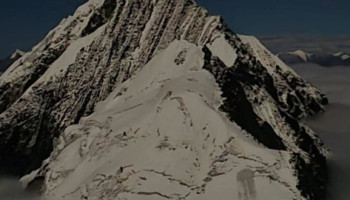
Rising elegantly above the Khumbu Valley, Mt. Ama Dablam is widely regarded as one of the most beautiful mountains in the Himalayas. Often compared to the Matterhorn because of its striking pyramid shape, Ama Dablam stands proudly south of Mt. Everest and attracts climbers from around the world who dream of taking on a world-class technical peak.
The expedition begins with a thrilling mountain flight to Lukla, the gateway to the Everest region. From Lukla, the trekking route follows the scenic Dudh Koshi River through traditional Sherpa settlements before reaching Namche Bazaar at 3,440 meters, the cultural and commercial heart of the Khumbu region. Climbers spend several days in Namche for proper acclimatization before continuing toward Pangboche village at 3,930 meters. The journey then proceeds to Ama Dablam Base Camp, located in a peaceful alpine meadow just below 5,000 meters, surrounded by spectacular Himalayan scenery.
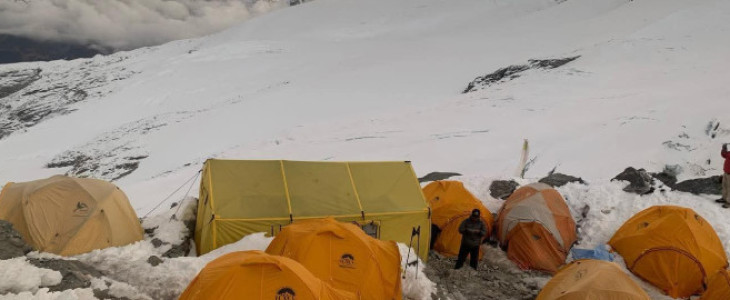
At Base Camp, climbers settle into expedition life under the guidance of experienced climbing leaders. Training sessions, equipment checks, and acclimatization rotations are carried out to prepare for the summit attempt. Once weather conditions become favorable and the team is fully prepared, the summit climb begins. The ascent generally involves three high camps, although in certain conditions strong climbers may attempt the summit directly from Camp 2. Summit day is demanding and often begins before midnight, with climbers reaching the top shortly after sunrise before carefully descending back to lower camps and eventually returning to Base Camp for recovery and celebration.
Accommodation at Base Camp includes spacious personal tents, a comfortable dining tent, shower facilities, and toilet arrangements to ensure a pleasant stay during the expedition.
Previous Experience & Fitness
Ama Dablam is a highly technical Himalayan climb that requires previous mountaineering experience and excellent physical conditioning. Climbers should already possess solid alpine climbing skills and experience in high-altitude environments. The mountain is graded Alpine TD (Très Difficile), meaning it is considered very difficult and demands strong technical ability, endurance, and mental determination.
Alpine Climbing Grades
• F (Facile) – Easy
• PD / PD+ (Peu Difficile) – Moderately Difficult
• AD / AD+ (Assez Difficile) – Fairly Difficult
• D / D+ (Difficile) – Difficult
• TD / TD+ (Très Difficile) – Very Difficult
• ED / ED+ (Extrêmement Difficile) – Extremely Difficult
• EDX – Beyond Extremely Difficult
Ama Dablam – Ideal Preparation for 8000m Expeditions
Ama Dablam is widely recognized as one of the best technical preparation climbs for future 8000-meter expeditions such as Everest, Manaslu, and Cho Oyu. The mountain helps climbers develop crucial mountaineering skills including fixed rope techniques, movement on exposed terrain, and endurance at extreme altitude. It is an excellent choice for mountaineers aiming to build both confidence and technical experience before attempting the world’s highest peaks.
Day 01: Arrival in Kathmandu
Land at Tribhuvan International Airport; meet our team and transfer to hotel via private vehicle.
Day 02: Gear Check & Orientation
Meet your expedition crew, attend a safety briefing, and finalize preparations for the climb.
Day 03: Fly to Lukla & Trek to Phakding
Enjoy a scenic mountain flight to Lukla, followed by an easy hike along the Dudh Koshi River to Phakding.
Day 04: Trek to Namche Bazaar
Ascend through forested trails and cross high suspension bridges en route to the Sherpa capital, Namche.
Day 05: Acclimatization in Namche (Optional Hike to Syangboche)
Spend the day acclimatizing; optional uphill hike for panoramic views of Everest and surrounding peaks.
Day 06: Trek to Debuche via Tengboche
Hike through rhododendron forests, visit the famous Tengboche Monastery, and continue to Debuche.
Day 07: Trek to Pangboche
Short hike through peaceful trails to reach the traditional Sherpa village of Pangboche.
Day 08: Trek to Ama Dablam Base Camp (4,450m)
Leave the main Everest trail and ascend to the stunning Ama Dablam Base Camp, your climbing base.
Day 09: Acclimatization & Camp Setup
Rest day at Base Camp for acclimatization and final expedition planning.
Day 10–20: Acclimatization Rotations (Camp I & Camp II)
Climb up and down between higher camps for adaptation, technical training, and conditioning.
Day 21–25: Summit Push (6,812m) & Return to Base Camp
Launch the final ascent to Ama Dablam summit and safely return to Base Camp.
Day 26: Trek Back to Namche Bazaar
Retrace your steps, descending along scenic trails to Namche Bazaar.
Day 27: Trek to Lukla
Final trekking day through mountain villages and forests to Lukla.
Day 28: Fly Back to Kathmandu
Catch a morning flight to Kathmandu and transfer to your hotel.
Day 29: Free Day in Kathmandu
Enjoy a well-earned rest, explore the city, or shop for souvenirs before departure.
Day 30: Final Departure
We will drop to the Airport according to your flight schedule for the final departure towards your onward destination.
Essential Requirements for the Ama Dablam Expedition (6,812m)
Conquering Ama Dablam involves in-depth preparation, training, and previous mountain experience. The full journey includes around 4–5 days of technical climbing, while the remainder is trekking to and from the mountain. Here's what’s required:
1. Physical Conditioning
Endurance and strength are vital for success. Climbers must be prepared to hike 6–8 hours daily over rugged terrain with a loaded backpack. A structured fitness routine—focusing on cardio, strength training, altitude adaptation, and endurance—is strongly recommended.
2. Prior Climbing Experience
Climbers should have experience with high-altitude ascents above 5,000 meters and should be familiar with essential climbing equipment. A good starting point is summiting one of the top 5 trekking peaks in Nepal before advancing to Ama Dablam.
3. Technical Gear Preparedness
Ensuring you have proper climbing tools and protective equipment is critical. All gear is carefully checked for safety and performance before the climb.
4. Required Documentation & Permits
Necessary personal details will be requested to secure all permits, accommodations, flights, support team services, and supplies for the expedition.
At Adventure Aspirant, your safety, success, and satisfaction are our highest priorities. Let us guide you to the summit of Ama Dablam with professionalism, expertise, and passion.
1- Do I need to arrange my own climbing permits for Ama Dablam?
No, Adventure Aspirant Pvt Ltd will handle all necessary permit arrangements on your behalf after reviewing your climbing experience and required documents. Once your booking is confirmed, our team manages the paperwork and logistics, allowing you to focus on preparation and packing. During the expedition, experienced Sherpas and guides will assist you throughout the entire journey.
2- How challenging is the Ama Dablam Expedition?
Ama Dablam is regarded as one of the more technical trekking peaks in the Himalayas and requires solid mountaineering ability. Climbers should be confident in:
Technical rock climbing (Grade III–IV)
Ice and mixed climbing
Ascending fixed ropes
Moving safely on exposed ridges and steep terrain
Because of its technical nature, the expedition is not suitable for first-time climbers.
3- When is the best season to climb Ama Dablam?
The ideal climbing periods are:
Spring Season: April to May
Autumn Season: October to November
Autumn is generally considered the preferred season due to stable weather conditions, lower precipitation, and excellent mountain visibility.
4- How long does the Ama Dablam Expedition usually last?
Most Ama Dablam expeditions take around 25 to 30 days to complete. The itinerary includes:
Trekking to Base Camp
Acclimatization rotations
Summit attempt
Descent and return journey to Kathmandu
5- Is previous climbing experience required for Ama Dablam?
Yes, prior mountaineering experience is strongly recommended. Climbers should ideally have:
Experience climbing peaks above 6,000 meters
Knowledge of rope handling and safety systems
Familiarity with crampons, ice axes, harnesses, and glacier travel
6- What permits are needed to climb Ama Dablam?
Climbers require the following permits for the expedition:
Nepal Government climbing permit
Sagarmatha National Park Entry Permit
Khumbu Pasang Lhamu Rural Municipality Permit
Adventure Aspirant Pvt Ltd arranges all required permits as part of the expedition service.
7- Is Ama Dablam more difficult than the Everest Expedition?
Technically, Ama Dablam is considered more demanding than the standard Everest route because it involves steeper and more exposed climbing sections. However, Mount Everest presents a greater physical challenge due to its extreme altitude and longer duration at high elevation.
8- Can beginners attempt Ama Dablam?
Ama Dablam is not recommended for beginner mountaineers. It is better suited for climbers who already have experience on peaks such as:
Island Peak
Mera Peak
Lobuche Peak
Kyajo Ri Climbing
These climbs help develop the technical skills and altitude experience needed for Ama Dablam.
9- Do I need a guide for Ama Dablam?
Although highly experienced climbers may climb independently, joining a professional expedition team with qualified guides is strongly advised. Having expert support significantly improves safety, logistics management, and overall success during the expedition.
10- Why is Ama Dablam known as the “Matterhorn of the Himalayas”?
Ama Dablam earned this nickname because of its elegant pyramid-shaped structure, which closely resembles the famous Matterhorn in the Alps. Its striking appearance and dramatic ridgelines make it one of the most iconic and photographed mountains in the Himalayas.
The given cost are per person and exclude international flights. Given below are the departure dates available for online booking. If the given date is not favorable then please contact us and we will happily customize your trip on dates more appropriate for you.
Note: If your group size is of more than 1 pax then you can set your own departure date.
| Start Date | Trip Price | Discount | Discounted Price | Action |
|---|
USD6200pp
Duration : 30 Days