Conquer Mt. Manaslu – A Journey to the Eighth-Highest Peak on Earth
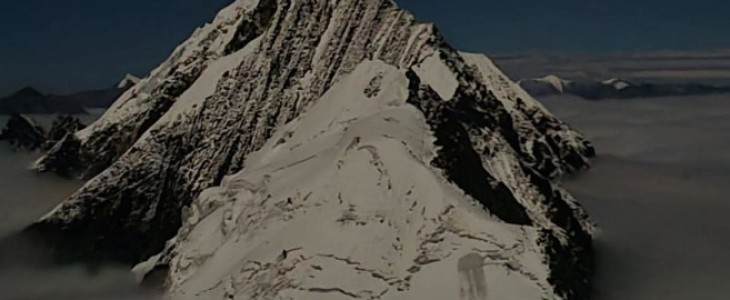
Embark on an exhilarating expedition to Mt. Manaslu, the world’s eighth-highest summit, rising to a majestic height of 8,163 meters (26,781 feet). Nestled in the Mansiri Himal range of west-central Nepal, the mountain’s name translates to “Mountain of the Spirit,” rooted in the Sanskrit word Manasa, signifying “soul” or “wisdom.”
Climbers must establish four separate camps during the ascent. Between Camp I and Camp II, the route demands navigating steep inclines and avoiding hidden crevasses. The stretch from Camp II to Camp III challenges adventurers with icy, slick terrain. From Camp III to Camp IV, avalanches present a significant hazard.
Mt. Manaslu was first successfully climbed by a Japanese expedition in 1953, and ever since, it has been closely associated with Japanese mountaineering heritage.
Your Path to the Summit
Adventure Aspirant offers highly skilled and certified Sherpa summiteer guides, along with experienced high-altitude support climbers. Our team is committed to leading you safely and confidently through each phase of the climb. We ensure top-tier service, focused attention, and a secure experience to help turn your dream of scaling Mt. Manaslu into a reality. The climb involves technical sections of solid ice and rock faces, adding to the thrill and achievement of this high-altitude challenge.
Join the Expedition
If you’re ready to take on this remarkable challenge, our expert travel coordinators are eager to provide all the necessary details, including a complete cost outline. Reach out to us at info@adventureaspirant.com – we’ll help you take the first step toward the summit of a lifetime.
Day 1: Arrival in Kathmandu & Hotel Transfer (1,300m)
Touch down in Nepal’s vibrant capital. Our team will greet you at the airport and escort you to your hotel for check-in and rest.
Day 2: Expedition Briefing & Official Documentation (1,300m)
Attend a detailed orientation session and complete the necessary permits and registration procedures.
Day 3: Scenic Drive to Dharapani (1,865m)
Enjoy a long but beautiful overland journey through hills, rivers, and rural landscapes en route to Dharapani.
Day 4: Trek to Tilije Village (2,300m)
Begin your trekking adventure, heading through lush forests and terraced fields toward the charming settlement of Tilije.
Day 5: Hike to Bhimthang (3,725m)
Ascend through alpine terrain and rhododendron forests to reach Bhimthang, nestled in the high Himalayas.
Day 6: Rest & Acclimatization in Bhimthang
Spend the day acclimatizing to the altitude. Optional short hikes to surrounding ridges for panoramic views.
Day 7: Trek to Samdo (3,875m)
Cross picturesque landscapes and glacial streams as you make your way to the highland village of Samdo.
Day 8: Trek to Sama Gaun (3,540m)
Continue your journey along ancient trade routes to reach Sama Gaun, a culturally rich and scenic village.
Day 9: Trek to Manaslu Base Camp (4,750m)
Ascend steadily toward Base Camp, passing yak pastures and dramatic landscapes along the way.
Day 10–13: Base Camp: Puja Ceremony, Preparation & Climbing Practice
Participate in traditional blessings for a safe climb, gear checks, and essential mountaineering training.
Day 14–32: Summit Climb Window – Mt. Manaslu (8,163m)
Begin the actual ascent, establishing and moving between high camps under expert Sherpa guidance as you attempt the summit of Mt. Manaslu.
Day 33: Helicopter Return to Kathmandu from Sama Gaun
After a successful climb, enjoy a scenic helicopter flight back to Kathmandu.
Day 34: Leisure Day in Kathmandu
Relax, explore the city, or shop for souvenirs. Optional sightseeing or celebration dinner.
Day 35: International Departure
Transfer to the airport for your journey home, marking the end of an unforgettable Himalayan adventure.
Base Camp (4,700m / 15,420ft)
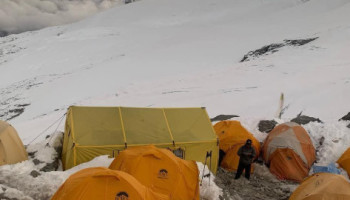
Climbers can reach the Manaslu Base Camp either by taking a helicopter ride to Samagaun followed by a short trek, or by completing the classic trekking route over several days. Located on a rocky glacier moraine beneath Mount Manaslu, the base camp offers spectacular Himalayan scenery and serves as the main hub for the expedition for nearly a month.
Each climber is generally provided with a private sleeping tent along with access to shared dining, kitchen, communication, shower, and toilet facilities. Before the ascent begins, a traditional Himalayan puja ceremony is held to pray for safety, success, and favorable conditions during the climb.
Fresh food supplies and expedition essentials are regularly transported to base camp by helicopter, helping maintain comfortable living conditions throughout the expedition.
Camp I (5,500m / 18,045ft)
After acclimatization and route preparation by the Sherpa team, climbers move toward Camp I, situated around 5,700 meters. The route involves glacier travel across mixed terrain with snow, ice, and a few crevasses. The climb usually takes approximately 3 to 4 hours from base camp.
To help the body adapt to the altitude, climbers often complete several acclimatization rotations between Camp I and base camp before progressing higher.
Camp II (6,200m / 20,341ft)
The route between Camp I and Camp II is considered one of the more demanding sections of the expedition. Climbers traverse snow-covered slopes, icy terrain, and steeper technical sections that may require ladder crossings over crevasses. Depending on conditions, the climb generally takes around five hours.
This section requires careful movement and proper use of mountaineering equipment due to the increasing altitude and technical terrain.
Camp III (6,800m / 22,310ft)
The ascent from Camp II to Camp III is comparatively shorter and usually takes about 2 to 3 hours. Although there are still some crevasses and technical sections along the route, the climb is generally less strenuous than the previous stage.
Camp III serves as an important resting and acclimatization point before climbers prepare for higher altitude climbing.
Camp IV (7,400m / 24,278ft)
The journey from Camp III to Camp IV becomes significantly more challenging due to the thinner air and steep snow slopes. At this altitude, oxygen levels are considerably lower, and climbers may begin to feel the effects of extreme altitude.
The climb typically takes 3 to 4 hours and demands steady pacing, strong endurance, and careful energy management. If weather conditions remain stable, climbers may spend additional time acclimatizing before the summit push.
Summit Day (8,163m / 26,782ft)
Summit day is the most anticipated and physically demanding stage of the entire expedition. Most climbers begin their final ascent around midnight in order to reach the summit during the morning hours. The climb from Camp IV to the summit generally takes 7 to 8 hours, depending on weather and individual pace.
Reaching the summit of Mount Manaslu rewards climbers with breathtaking panoramic views of several Himalayan giants, including neighboring 8,000-meter peaks.
After spending a short time at the top for photographs and celebration, climbers descend carefully back to Camp III or Camp II on the same day. The descent can be equally demanding and requires full concentration and proper safety measures.
During the summit push, climbers are typically accompanied by experienced high-altitude Sherpas who assist with route safety, oxygen management, communication, and logistical support. Fixed ropes, trail preparation, weather forecasting, and continuous coordination from base camp all play a vital role in ensuring a safe and successful ascent.
Climbers should carry proper mountaineering equipment for safety and comfort during the expedition. Important items include:
High-altitude mountaineering boots
Insulated summit gloves
Safety climbing helmet
Dynamic and fixed climbing ropes
Down climbing suit
Crampons
Ice axe
Technical ice tools
Belay and rappel device
Climbing harness
Ascender/jumar
Locking carabiners
Non-locking carabiners
Nylon slings and webbing
Prusik cords
Snow or glacier goggles
Headlamp with extra batteries
Satellite communication device
Hand warmers
1- What is the cost of the Manaslu Expedition?
The climbing permit fee for Mount Manaslu depends on the season set by Nepal’s Tourism Department. During the spring climbing season, the permit charge is approximately USD 1,800 per climber. In autumn, the fee is around USD 900 per person, while winter and summer permits cost about USD 450 per climber. Apart from the permit expenses, the total expedition budget differs depending on the services, logistics, and support provided by the trekking or expedition company.
2- How difficult is it to climb Manaslu?
Standing at 8,163 meters, Mount Manaslu is the world’s eighth-highest mountain and is considered a challenging Himalayan expedition. The climb involves technical sections that require mountaineering skills, physical endurance, and prior high-altitude experience. Many climbers view Manaslu as an excellent preparation peak before attempting other 8,000-meter mountains such as Mount Everest, Annapurna I, or Kangchenjunga.
3- What kind of food and accommodation can climbers expect?
The Manaslu region is remote and less crowded compared to other trekking destinations in Nepal, so accommodation options are simple and limited. Throughout the trek, climbers usually stay in local teahouses that provide basic lodging and meals.
At base camp, meals are prepared by experienced camp cooks using imported and locally available ingredients. Climbers are generally served a variety of energizing foods such as pasta, soups, rice dishes, beans, eggs, pancakes, pizza, and meat items. Accommodation at higher camps is arranged in durable expedition tents designed for high-altitude conditions.
4- Which route is commonly used for the Manaslu climb?
There are several recognized routes to ascend Mount Manaslu. Among them, the northeast face is the standard and most frequently used path for expeditions due to its comparatively safer and more established climbing line. The southern approach is regarded as more demanding and technically difficult.
5- Who leads the expedition?
Expeditions are guided by highly trained mountaineering professionals with extensive experience in the Himalayan region. These guides are skilled in high-altitude climbing, safety management, and expedition logistics. Many have years of experience leading major Himalayan climbs and have successfully summited peaks such as Mount Everest multiple times.
6- Are rescue services available in the Manaslu region?
Yes, emergency helicopter evacuation services operate in the Manaslu area when weather conditions allow. Rescue assistance can be arranged from base camp or nearby locations in case of altitude sickness, injury, or other emergencies. Climbers are strongly advised to obtain comprehensive travel and high-altitude insurance that includes helicopter evacuation coverage.
7- What type of accommodation is available during the climb?
Accommodation for the entire expedition is arranged in advance. In cities such as Kathmandu, climbers generally stay in comfortable hotels before heading toward the mountain region. Along the trekking trail, lodging is usually provided in the best available teahouses and mountain lodges in the area.
At base camp, participants stay in well-equipped expedition tents designed to provide comfort and protection in high-altitude conditions. Dining and resting areas are also organized to ensure a more comfortable stay during the expedition.
8- Can climbers communicate with family and friends during the expedition?
Yes, communication is possible in most parts of the trekking route, as several areas have mobile network coverage. At base camp, additional communication facilities such as Wi-Fi, VHF radio systems, and satellite phones are commonly available for both emergency situations and regular use.
9- What equipment is supplied during the expedition?
The expedition team provides shared climbing and camping gear, including fixed ropes, tents, cooking equipment, heaters, and other group logistics. However, climbers are expected to bring their own personal mountaineering equipment such as clothing layers, climbing boots, crampons, harnesses, helmets, and technical gear. A detailed packing checklist is usually shared before the expedition begins.
10- What meals are served during the expedition?
A variety of freshly prepared meals are provided throughout the expedition by experienced cooks and kitchen staff. Food served at base camp and higher camps is designed to provide sufficient nutrition and energy for high-altitude climbing. Typical meals may include soups, rice dishes, pasta, vegetables, meat items, eggs, snacks, tea, coffee, and other energy-rich foods.
12- What level of fitness is needed for climbing?
High-altitude mountaineering requires strong physical conditioning and prior preparation. Climbers should possess good endurance, cardiovascular fitness, mental resilience, and basic technical climbing abilities. Previous trekking or mountaineering experience at altitude is highly beneficial when attempting demanding peaks such as Mount Manaslu.
The given cost are per person and exclude international flights. Given below are the departure dates available for online booking. If the given date is not favorable then please contact us and we will happily customize your trip on dates more appropriate for you.
Note: If your group size is of more than 1 pax then you can set your own departure date.
| Start Date | Trip Price | Discount | Discounted Price | Action |
|---|
Duration : 35 Days