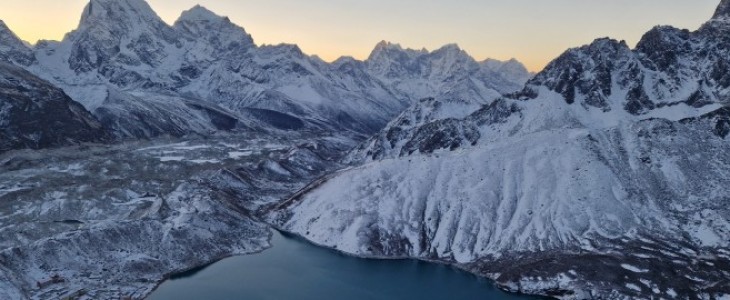
The Everest Three High Passes Trek is one of the most demanding and iconic trekking adventures in Nepal's Everest region. Offered by Adventure Aspirant, this epic journey leads you to the heart of the Khumbu Himalayas, including the world-renowned Everest Base Camp, the majestic Kala Patthar, the tranquil Gokyo Lakes, and the panoramic summit of Gokyo Ri.
This trek brings you face-to-face with three of the most exhilarating high-altitude passes in the Himalayas — Kongma La (5,535m), Cho La (5,420m), and Renjo La (5,360m). These challenging mountain passes, combined with ascents to Kala Patthar and Gokyo Ri (5,350m), offer an unmatched Himalayan experience filled with jaw-dropping vistas, cultural encounters, and unforgettable moments.
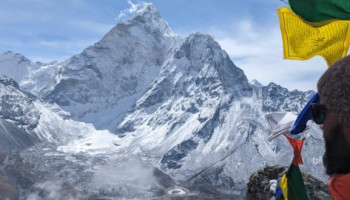
Your journey with Adventure Aspirant begins with a thrilling 35-minute scenic flight to Lukla, the gateway to Everest. The trail winds through classic Sherpa villages like Namche Bazaar, which offers breathtaking views of Ama Dablam, Nuptse, and Cholatse, and meanders through the rich biodiversity of Sagarmatha National Park, where pine forests, rhododendron blooms, and rare wildlife heighten the experience.
The route continues via the high passes, offering ever-changing landscapes and dramatic mountain scenery. From Thame to Lungden, through rocky valleys and glacial terrain, the trek leads you to Renjo La Pass, where you'll enjoy panoramic views of the enchanting Gokyo Valley, blue glacial lakes, and the towering peaks of Makalu, Everest, and more.
An adventurous crossing of Cho La Pass brings you to Everest Base Camp, completing a challenging loop that showcases the stunning Ngozumpa Glacier—the largest glacier in the Nepal Himalayas. Key highlights of this journey include climbs to Gokyo Ri, Chhukung Ri, Dzongla, and Thagnak, each offering unique perspectives of the surrounding giants.
Khongma La Pass serves as one of the most scenic high points, rewarding trekkers with magnificent views of Thamserku, Ama Dablam, Kongde Ri, and multiple glacial lakes. As you make your way across the Khumbu Glacier toward Everest Base Camp, you'll witness the awe-inspiring Khumbu Icefall, cascading down the western face of Everest.
This challenging trek, curated by Adventure Aspirant, is perfect for seasoned trekkers seeking a comprehensive Everest region circuit with adventure, solitude, and stunning Himalayan beauty. Whether you're preparing for future peak-climbing endeavors or aiming for a bucket-list experience, the Everest Three High Pass Trek promises a thrilling and transformative journey.
Day 1: Arrival in Kathmandu (1,350m) and Transfer to Hotel
Arrive at Tribhuvan International Airport, where a representative from Adventure Aspirant will greet you and escort you to your hotel. This is a leisurely arrival day with no scheduled activities, allowing you time to unwind or explore nearby attractions at your own pace. In the early evening, a pre-trek briefing will be conducted where you will be introduced to your trekking guide and receive essential information for the journey ahead. Overnight stay at a hotel in Kathmandu.
Day 2: Kathmandu Sightseeing and Trek Preparation
After enjoying breakfast, begin a guided exploration of some of Kathmandu’s most iconic cultural and spiritual landmarks. Today’s tour covers several UNESCO World Heritage Sites, including the historic Kathmandu Durbar Square, the revered Pashupatinath Temple, the ancient Swayambhunath Stupa (commonly known as the Monkey Temple), and the massive Boudhanath Stupa, one of the largest Buddhist stupas in the world. Following the sightseeing tour, you’ll meet with your trekking guide and representative from Adventure Aspirant for a detailed pre-trek briefing and gear check to ensure everything is in place for your upcoming adventure. Overnight stay at your hotel in Kathmandu.
Day 3 : Fly Kathmandu to Lukla (2,800m) & trek to Phakding (2,652m) (3-4 hrs)
Begin your day with an early morning transfer to the domestic terminal for a breathtaking 35-minute scenic flight to Lukla, the gateway to the Everest region. Upon arrival, enjoy a refreshing cup of tea at a local lodge in Lukla before beginning your trek. From here, we set out on the renowned “Everest Trail”, descending gently through a picturesque alpine valley. The trail follows the banks of the Dudh Koshi River, named for its milky appearance caused by glacial sediments. After approximately three hours of hiking, we arrive at the charming village of Phakding, where we conclude our first day on the trail. Overnight stay at a lodge, organized by Adventure Aspirant.
Day 4: Trek to Namche Bazaar (3,440m) – 5 to 6 Hours
Today’s trek involves a gradual ascent through scenic alpine valleys, passing through lush forests and traditional villages. We cross the Dudh Koshi River several times via suspension bridges as we make our way toward Namche Bazaar, the vibrant Sherpa hub and gateway to the high Himalayas in the Khumbu region. As evening approaches, you can stroll through the lively market area or take a short acclimatization hike to a viewpoint above Namche, offering stunning vistas. On clear days, enjoy panoramic views of Mount Everest, Lhotse, Thamserku, Kusum Kanguru, Kongde Ri, and Tawache along the trail. Overnight stay at a lodge, arranged by Adventure Aspirant.
Day 5: Rest and Acclimatization Day in Namche Bazaar
Acclimatization is a crucial part of adjusting to high altitude, and today serves as your first planned rest and adaptation day in Namche Bazaar—an essential component of any Everest region trek. To aid the acclimatization process, you’ll likely hike up to the Everest View Hotel (3,880m), a renowned vantage point offering stunning panoramic views of Everest, Ama Dablam, and surrounding peaks. Along the way, you'll visit the Sagarmatha National Park Museum, where you can learn more about the region’s culture, geography, and mountaineering history.Spend the rest of the day exploring the village, relaxing at local cafés, or simply enjoying the mountain atmosphere. Overnight at a lodge, organized by Adventure Aspirant.
Day 6: Trek from Namche Bazaar to Deboche (3,820m) – 4 to 5 Hours
Today’s journey begins along a gentle trail that contours the hillside, offering breathtaking views of Everest, Nuptse, and Lhotse as they slowly emerge into full view. The path then descends steeply through a dense forest toward a suspension bridge over the Dudh Koshi River. After crossing the river, we ascend a winding trail through a vibrant rhododendron forest, where you might catch glimpses of musk deer or even spot colorful Himalayan monals, Nepal’s national bird. As the climb steepens, the trail leads to the serene and scenic village of Tengboche (Tyangboche), where you’ll be rewarded with panoramic views of Ama Dablam, Everest, Taboche, and Nuptse. Tengboche is home to the largest and most revered monastery in the Khumbu region. You'll have the opportunity to explore this spiritual site and also visit the local museum before continuing the short descent to Debuche, a quiet settlement nestled in the forest. Overnight at a lodge, organized by Adventure Aspirant.
Day 7: Trek from Deboche to Dingboche (4,410m) – Approx. 4 Hours
Today’s trail takes us through beautiful, shaded forest paths lined with birch, conifer, and rhododendron trees, creating a peaceful and scenic start to the day. The route gradually ascends along a ridge on the true right side of the valley, offering continuous and striking views of the distinctive spire of Ama Dablam, which dominates the skyline for much of the journey. Upon reaching Dingboche, a picturesque high-altitude village surrounded by fields of barley and stone walls, you’ll have time to rest before taking a short acclimatization hike to Nagarjuna Hill in the late afternoon. This optional ascent provides stunning panoramic vistas and helps your body adjust to the increasing elevation. Overnight stay at a lodge, arranged by Adventure Aspirant.
Day 8: Trek from Dingboche to Chhukung (4,730m) – 3 to 4 Hours
Today’s trek takes us from Dingboche to the small settlement of Chhukung, situated deeper in the Imja Valley. The hike is a gentle ascent that takes around three to four hours, offering a rewarding blend of alpine scenery and peaceful trails. Along the way, you’ll pass numerous seasonal stone huts, traditionally used by locals for grazing and sheltering livestock during the summer months. The views of the surrounding Himalayan peaks, including Ama Dablam, Lhotse, and Island Peak, become increasingly dramatic as you approach Chhukung. Once there, take time to relax and soak in the serene mountain atmosphere while preparing yourself mentally and physically for the challenging Kongma La Pass ahead. Overnight stay at a lodge, arranged by Adventure Aspirant.
Day 9: Ascent of Chhukung Ri (5,546m) and Return to Chhukung – 3 to 4 Hours
Today’s optional acclimatization hike takes you to Chhukung Ri, a rugged rocky summit rising above the village of Chhukung—much like Kala Patthar near Everest Base Camp. Though relatively modest in height by Himalayan standards, the ascent demands 3–4 hours of steady, high-altitude effort, making it an excellent warm-up for higher passes ahead. The climb does not require any technical climbing skills, only a good level of endurance. From the summit, you'll be rewarded with unparalleled views of Imja Tse (Island Peak), the elegant Ama Dablam, the massive Makalu, and unique perspectives of Nuptse—vistas rarely seen from other viewpoints. Notably, Mount Everest is not visible from Chhukung Ri, which is why this viewpoint remains peaceful and less crowded than Kala Patthar or Gokyo Ri. After soaking in the mountain scenery, descend back to Chhukung to rest and recharge for the upcoming Kongma La Pass crossing. Overnight at a lodge, organized by Adventure Aspirant.
Day 10: Cross Kongma La Pass (5,535m) and Trek to Lobuche (4,910m) – 6 to 7 Hours
After an early morning breakfast, the trek begins with a challenging ascent toward Kongma La Pass, one of the highest and most rewarding passes in the Everest region. The climb is steep and demanding, but the panoramic views from the summit make every step worthwhile. From the top of Kongma La (5,535m), you’ll be greeted with a spectacular vista: to the left lies the impressive Khumbu Glacier, sprawling beneath the shadows of Everest, while to the right, you'll see a breathtaking lineup of Himalayan giants—Island Peak, Makalu, Lhotse, Nuptse, Ama Dablam, Thamserku, Taboche, and more. Below, the traditional Sherpa settlements are scattered among rugged landscapes. The descent from the pass leads down to Lobuche, a quiet high-altitude village nestled near the glacier, where you’ll rest for the night. Overnight at a lodge, arranged by Adventure Aspirant.
Day 11: Trek from Lobuche to Gorak Shep (5,170m), Visit Everest Base Camp (5,360m), and Return to Gorak Shep – 6 to 7 Hours
From Lobuche, the trek follows the Khumbu Glacier as you make your way to Gorak Shep, the last settlement before Everest Base Camp. After a brief exploration of Gorak Shep, you will continue on foot to the iconic Everest Base Camp, where you can admire the breathtaking Khumbu Icefall and observe the climbing route leading up to the South Col. After soaking in these spectacular sights, you will return to Gorak Shep for the night by retracing your steps along the same trail. Overnight stay at a lodge, facilitated by Adventure Aspirant.
Day 12: Hike to Kala Patthar (5,545m) & Trek to Dzongla (4,830m) – Approx. 7 Hours
Begin your day with an early morning ascent to the summit of Kala Patthar, a renowned vantage point that offers an unforgettable sunrise panorama over Mount Everest and its towering neighbors. This two-hour uphill hike rewards you with sweeping views of Everest, Pumori, Lingtren, Lhotse, Nuptse, Ama Dablam, Thamserku, Taboche, Cholatse, and several lesser peaks. From this vantage, you can also gaze down upon Everest Base Camp, the Khumbu Icefall, and the sprawling Khumbu Glacier. Take time to capture panoramic photographs and soak in the majestic scenery before descending back to Gorak Shep for breakfast. After your meal, you'll retrace your steps to Lobuche, walking alongside the glacier once again. From Lobuche, a short descent of around 20 minutes brings you to a trail junction. Here, you’ll branch off the main EBC route and take the right-hand trail toward Dzongla. Along the way, you'll be treated to captivating views of Ama Dablam, the wide valley of Pheriche, the majestic Taboche Peak, and the turquoise glacial lake Cholatse Tsho. A final gradual ascent leads you to the peaceful village of Dzongla, where you’ll rest and rejuvenate after a rewarding day. Overnight at a lodge, arranged by Adventure Aspirant.
Day 13: Trek to Gokyo (4,750m) via Cho La Pass (5,480m) – 7 to 8 Hours
Today begins with an early start after a warm breakfast, donning cold-weather gear to prepare for one of the most challenging and exhilarating segments of the trek. The day starts with a gentle trail, gradually turning into a steep ascent over rocky terrain as you make your way toward the summit of Cho La Pass (5,420m), adorned with colorful Buddhist prayer flags fluttering in the mountain breeze. The route includes a crossing over glacial sections, offering awe-inspiring vistas from the top. From the pass, you can marvel at the striking views of Cholatse, Ama Dablam, the vast Ngozumpa Glacier, as well as Pharilapche and Kyajo Ri—a true Himalayan panorama. After soaking in the scenery, you’ll begin a careful descent along a rocky slope, eventually reaching the valley floor. From here, the trail involves a brief uphill section, followed by a gentle descent of 1.5 to 2 hours leading to Dragnag (also known as Thaknak). Continuing onward, you’ll traverse the Ngozumpa Glacier, Nepal's longest glacier. A short final descent then brings you to the serene Gokyo Valley, home to pristine turquoise lakes nestled beneath towering peaks. Overnight at a cozy tea house, thoughtfully arranged by Adventure Aspirant.
Day 14: Rest Day in Gokyo or Optional Hike to Gokyo Ri (5,357m) – 3 to 4 Hours
Today is a well-deserved rest day in the stunning Gokyo Valley. For those who prefer to take it easy, you can relax by the tranquil turquoise lake, soak in the peaceful mountain ambiance, or take a gentle walk along the lakeshore. If you're feeling energetic and up for a challenge, you can embark on an optional early morning hike to Gokyo Ri (5,357m). This 2–3 hour ascent rewards you with one of the most spectacular panoramic views in the entire Everest region. From the summit, witness a majestic sunrise over a collection of the world's tallest peaks—Mount Everest (8,848m), Lhotse (8,516m), Makalu (8,481m), Cho Oyu (8,201m)—as well as an incredible array of surrounding summits. The vistas also include the shimmering Gokyo Lakes and the massive Ngozumpa Glacier, the longest glacier in Nepal. After spending some unforgettable moments at the top, you’ll descend back to Gokyo, where the rest of the day is yours to unwind, reflect, or simply enjoy the peaceful alpine setting. Overnight at a lakeside teahouse, arranged by Adventure Aspirant.
Day 15: Gokyo to Marlung(4,380m.) via Renjo La Pass(5,360m.) 7 to 8 Hours
An early morning departure sets the tone for another rewarding high-pass crossing. The trail ascends steadily toward Renjo La Pass, offering a quieter but equally spectacular alternative to other Everest region routes. From the summit, you’re treated to breathtaking views of Mount Everest, Lhotse, and Makalu, along with the shimmering Gokyo Lakes below. After taking in the panorama, a long descent follows over rugged terrain, gradually easing into a more defined trail. Passing remote yak pastures and small settlements, you’ll arrive in the peaceful village of Marlung for an overnight stay.
Day 16: Marlung to Namche Bazaar (3,440m) – 5 to 6 Hours
Today’s trek follows a scenic downhill route along the Bhote Koshi Valley. The trail winds through traditional Sherpa villages, across suspension bridges, and through rhododendron and pine forests. As you approach Namche Bazaar, the landscape becomes more vibrant and lively. Arriving in Namche feels like a return to bustling civilization, with cozy cafés, bakeries, and shops. Enjoy a relaxed evening in this iconic Himalayan hub.
Day 17: Namche Bazaar to Lukla (2,800m) – 6 to 7 Hours
Retracing your steps along the Dudh Koshi River, today’s trek is a mix of descents and gentle climbs through familiar villages and forests. Crossing several suspension bridges and passing through checkpoints, you’ll gradually make your way back to Lukla. This final trekking day is a time to reflect on your journey and celebrate your achievement with your team.
Day 18: Lukla to Kathmandu (1,300m)
A scenic morning flight takes you from Lukla back to Kathmandu. The short yet thrilling flight offers one last glimpse of the Himalayas before returning to the Kathmandu valley. Upon arrival, you’ll be transferred to your hotel, where you can relax or explore the city at your leisure.
Day 19: Final Departure
After an unforgettable Himalayan adventure, it’s time to bid farewell. You’ll be transferred to Tribhuvan International Airport for your onward journey, carrying with you incredible memories of the Everest region.
Accommodation
This package includes well-organized accommodation throughout your journey. In Kathmandu, you’ll spend two nights in a standard hotel on a twin-sharing, bed-and-breakfast basis, ensuring a comfortable start to your trip.
During the trek, you’ll stay in teahouses and lodges chosen for their comfort and reliability. These typically provide twin-sharing rooms with two single beds, along with essentials like blankets, pillows, and mattresses. Single rooms may be available for an extra charge, although this can be limited during busy seasons.
At lower elevations, some lodges offer rooms with attached bathrooms and hot showers (such as in Phakding, Namche, and Lukla). However, as you ascend, facilities become more basic, and shared bathrooms are common. Overall, the focus is on securing the best available lodges with great mountain views to enhance your trekking experience.
Meals and Drinks
All meals—breakfast, lunch, and dinner—are included during the trekking portion of the trip. In Kathmandu, only breakfast is provided.
You’ll typically have breakfast and dinner at your accommodation, while lunch is served at stops along the trail. Menus in teahouses include a mix of Nepali, Indian, and Western dishes. A popular and recommended local option is Dal Bhat, known for its nutritional value and freshness.
Due to hygiene concerns at higher altitudes, it’s generally better to avoid meat and dairy products. Beverages like tea and coffee are included with meals, but other drinks (including bottled or hot water) are available at an extra cost, usually between USD 2–5.
Drinking Water
Although tap water is accessible along the route, it should not be consumed without proper treatment. It’s recommended to use purification tablets or other sterilization methods before drinking.
Alternatively, bottled water is widely available for purchase, typically costing USD 2–5 per bottle. Hot water can also be purchased at teahouses, with prices varying depending on the quantity.
Transportation
All transportation during your stay is arranged for convenience, including airport transfers and travel within Nepal using private vehicles.
Flights to and from Lukla are also organized in advance, allowing for a smooth transition into the trekking portion of your journey.
Best Time to Trek
The ideal seasons for the Everest Three Passes Trek are:
Spring (March to May):
Pleasant temperatures, blooming rhododendrons, and clear skies make this a great time to trek, though trails can be busy.
Autumn (September to November):
Stable weather and excellent visibility offer some of the best trekking conditions, although it is also a peak season.
Daytime temperatures during these periods usually range from 10°C to 20°C. Trekking is possible in winter and monsoon seasons, but these come with additional challenges such as cold temperatures, snow, or heavy rainfall.
Trek Difficulty
The Everest Three Passes Trek is considered demanding and is best suited for experienced trekkers with strong fitness levels. It involves crossing three high-altitude passes—Kongma La, Cho La, and Renjo La—each exceeding 5,300 meters.
Trekkers can expect steep climbs, rocky trails, and potentially icy conditions. The journey typically lasts 16–19 days, with daily walking times of around 4–6 hours. Weather can be unpredictable, and facilities become more basic at higher elevations, adding to the challenge.
Despite the difficulty, the trek offers incredible views and a rewarding high-altitude adventure.
Safety and Acclimatization
Safety is a top priority throughout the trek. Experienced guides accompany the journey, carrying first aid supplies and monitoring trekkers’ health, including oxygen levels at higher elevations.
Extra acclimatization days are included in the itinerary to help your body adjust gradually and reduce the risk of altitude sickness. In case of emergencies, proper evacuation procedures are in place to ensure prompt assistance.
Do You Need a Guide?
Although it’s possible to complete the trek independently, hiring a guide is strongly recommended. The route can be challenging to navigate, especially in high-altitude and remote areas.
A guide enhances safety, assists with logistics, and helps monitor your health. They are also trained to respond effectively in case of emergencies.
Travel Insurance
Comprehensive travel insurance is essential for this trek. Your policy should cover high-altitude trekking, emergency medical treatment, and helicopter evacuation if needed.
It’s also advisable to include coverage for trip cancellations, delays, and loss of personal belongings. Be sure to carefully review your policy to ensure it includes adventure activities and sufficient coverage limits for high-altitude conditions.
If you are planning this trek, here’s a general packing guide. Adjust it based on your personal comfort and needs.
Important Notes:
• Porters usually carry the main luggage, with one porter shared between two trekkers (maximum ~25 kg total).
• Domestic flight luggage limits are typically around 15 kg per person.
• Unnecessary items can be stored at your hotel in Kathmandu.
Headgear
• Neck gaiter or buff
• Sun hat or headscarf
• Warm hat or lightweight balaclava
• UV-protection sunglasses
• Headlamp or flashlight
Upper Body Clothing
• T-shirts or thermal tops
• Insulating fleece jacket
• Waterproof and wind-resistant outer layer
• Down jacket (recommended for cold conditions)
Lower Body Clothing
• Lightweight trekking pants
• Waterproof over-trousers
• Thermal base layers
Footwear
• Liner socks
• Warm wool socks
• Durable trekking boots
• Casual shoes or sandals for evenings
Hand Protection
• Insulated gloves (preferably waterproof)
Accessories
• Sleeping bag suitable for temperatures around -20°C
• Duffel bag or trekking backpack
• Waterproof liners or plastic bags for gear protection
• Trekking poles (optional but helpful)
• Water bottle or hydration system
• Personal toiletries
• Quick-dry towel
• Small repair or sewing kit
• Sunscreen, insect repellent, and lip balm
• Basic first-aid supplies (pain relievers, bandages, antihistamines, anti-diarrheal medication)
• Electrolyte powders and personal medications
• Wet wipes
• Book, journal, or entertainment items
1- What is the Everest Three High Passes Trek?
The Everest Three High Passes Trek is a demanding 19-day trekking route in Nepal’s Everest region. It forms a loop that crosses three major mountain passes—Renjo La (5,360 m), Cho La (5,420 m), and Kongma La (5,535 m). Along the way, trekkers also visit Everest Base Camp, Kala Patthar, and the scenic Gokyo Lakes.
2- How challenging is this trek?
This trek is classified as strenuous and is best suited for those who are physically fit and have prior trekking experience. The combination of high altitude, steep climbs, and long hiking days makes it quite demanding.
3- When is the best time to go?
The ideal seasons are spring (March to May) and autumn (September to November). These months generally provide clear skies, excellent visibility, and stable weather, making it safer to cross the high passes.
4- What kind of accommodation is available?
Accommodation along the trail consists mainly of teahouses or mountain lodges. These are simple yet comfortable, offering basic rooms, bedding, and shared dining spaces.
5- Is a guide or porter necessary?
Although independent trekking is possible, hiring a guide and porter is strongly advised. They help with navigation, safety, and managing the physical load, especially in remote and high-altitude areas.
6- What permits are needed?
Trekkers must obtain two permits:
• Sagarmatha National Park Entry Permit
• Khumbu Pasang Lhamu Rural Municipality Permit
Both are required to enter and trek in the region.
7- How can I handle altitude during the trek?
Proper acclimatization is essential. The itinerary usually includes rest days in places like Namche Bazaar and Dingboche. Staying hydrated, ascending slowly, and using preventive medication such as Diamox can help reduce the risk of altitude sickness.
8- How long is the trek?
The total trekking distance is around 115 km (approximately 71 miles), beginning and ending in Lukla.
9- Is travel insurance required?
Yes, having travel insurance is essential. It should include coverage for high-altitude trekking and emergency helicopter evacuation.
10- How many hours do you walk each day?
On average, trekkers walk between 5 to 8 hours daily. During high pass crossings, the duration can extend to 8–10 hours.
11- Are flights to Lukla reliable?
Flights to and from Lukla are highly dependent on weather conditions and can often be delayed or canceled. It’s wise to include extra buffer days in your travel plan.
12- Do I need special equipment like crampons?
In colder seasons or snowy conditions, microspikes or light crampons are recommended. Other essential gear includes trekking poles, insulated clothing, and sturdy hiking boots.
13- Is internet and electricity available?
Many teahouses provide Wi-Fi and charging services for an extra fee. However, connections can be slow or unreliable at higher elevations.
14- What kind of food is available?
Teahouses serve a range of meals such as dal bhat, rice dishes, noodles, pasta, soups, eggs, pancakes, and hot beverages like tea and coffee. Vegetarian options are commonly available.
15- What are the main highlights?
Key attractions include breathtaking views of Everest and other peaks, crossing three high mountain passes, exploring Gokyo Lakes, trekking along the Ngozumpa Glacier, and visiting Everest Base Camp and Kala Patthar.
16- Can beginners attempt this trek?
This trek is better suited for experienced trekkers due to its altitude, length, and difficulty. Beginners are encouraged to gain experience on easier treks first.
17- What if someone gets altitude sickness?
If symptoms become serious, immediate descent is necessary. In emergencies, evacuation by helicopter may be arranged, which is why proper insurance is crucial.
18- How much does the trek cost?
The cost varies depending on services, group size, and inclusions, but typically ranges between USD 1,500 and USD 2,000 per person.
19- Is drinking water safe?
It’s recommended to purify water using tablets, filters, or by purchasing boiled water from teahouses to avoid illness.
20- Can the itinerary be customized?
Yes, many trekking plans can be adjusted. Options may include extra acclimatization days or additional activities like peak climbing or side excursions.
The given cost are per person and exclude international flights. Given below are the departure dates available for online booking. If the given date is not favorable then please contact us and we will happily customize your trip on dates more appropriate for you.
Note: If your group size is of more than 1 pax then you can set your own departure date.
| Start Date | Trip Price | Discount | Discounted Price | Action |
|---|
USD1692pp
Duration : 19 Days
From USD 1649
Duration: 17 Days
View Details