Situated in Nepal’s renowned Khumbu region, Kyajo Ri is an impressive Himalayan peak that attracts skilled climbers seeking both adventure and technical mountaineering experience. Rising to an elevation of 6,186 meters, the mountain lies within the beautiful Gokyo Valley area and forms part of the boundary between Solukhumbu and Gokyo.
The journey to Kyajo Ri generally begins with a scenic flight to Lukla, followed by a trek through charming Sherpa villages and stunning mountain landscapes toward Namche Bazaar. From there, climbers continue deeper into the Gokyo Valley before establishing base camp at approximately 5,000 meters (16,404 ft). The complete expedition typically lasts around 17-18 days, allowing sufficient time for acclimatization, preparation, and summit attempts.
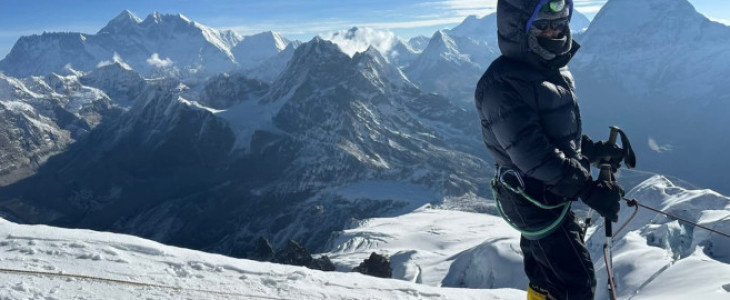
One of the major highlights of climbing Kyajo Ri is the extraordinary panoramic view of the Himalayan giants, including Everest, Lhotse, and Cho Oyu. The dramatic alpine scenery, glaciers, and rugged terrain create an unforgettable mountaineering experience for adventure enthusiasts.
Kyajo Ri is considered a challenging climb that demands excellent physical conditioning, previous high-altitude trekking experience, and technical climbing abilities. The ascent involves steep snow slopes, exposed rock sections, and icy ridges that require the use of ropes, crampons, ice axes, and other mountaineering equipment. Climbers must also be prepared for rapidly changing mountain weather and freezing temperatures at higher elevations.
Safety is an essential aspect of any Kyajo Ri expedition. Proper preparation, quality gear, and experienced leadership are crucial for a successful climb. Many climbers choose to join professionally organized expeditions with skilled guides and support teams to ensure better safety, logistics, and overall success on the mountain.
Adventure Aspirant Pvt Ltd proudly offers well-organized Kyajo Ri expeditions designed for climbers seeking a rewarding Himalayan adventure. This remarkable journey combines technical mountaineering, breathtaking natural beauty, and the unique cultural experience of Nepal’s mountain communities, making it a truly life-changing expedition.
Day 1: Arrival in Kathmandu
Your Himalayan journey begins with your arrival in Kathmandu, the lively capital of Nepal. After clearing immigration, a representative from Adventure Aspirant will receive you at the airport and transfer you to your hotel in Thamel, the vibrant heart of the city. The rest of the day is free to relax and recover from your journey.
Day 2: Kathmandu Sightseeing & Expedition Preparation
Today is dedicated to both cultural immersion and preparation. In the morning, explore some of Kathmandu’s most iconic landmarks, including Swayambhunath Stupa (Monkey Temple), the sacred Pashupatinath Temple, and the historic Kathmandu Durbar Square. In the afternoon, your climbing permits will be arranged, and you'll have time to rent or purchase any last-minute gear. A detailed pre-climb briefing will be held to outline the expedition plan.
Day 3: Fly to Lukla & Trek to Phakding
An early morning flight whisks you to the gateway of the Khumbu region—Lukla. Depending on the season, the flight may depart directly from Kathmandu or from Ramechhap after a short drive. Upon arrival in Lukla (2,860m), you begin your trek with a gentle descent through picturesque Sherpa villages and along the Dudh Koshi River to reach Phakding (2,610m), where you’ll spend the night.
Day 4: Trek from Phakding to Namche Bazaar
Today’s trek takes you deeper into the Khumbu, as you ascend through pine forests, cross several suspension bridges, and enter Sagarmatha National Park. After a final climb up a steep hill, you’ll arrive in Namche Bazaar (3,440m), the main trading hub of the Everest region. The colorful town offers stunning mountain views and a vibrant local culture.
Day 5: Acclimatization Day in Namche
To help your body adjust to the altitude, you’ll spend a rest day in Namche. Options for the day include a short hike to Khumjung Valley, visiting the local monastery, or checking out the Sherpa Museum and market. These light activities are ideal for acclimatization and provide deeper insight into Sherpa life.
Day 6: Trek from Namche to Mende
Leaving Namche behind, you’ll trek through peaceful rhododendron forests and pass by the serene village of Thamo. The trail gradually climbs to Mende (3,736m), a quiet settlement nestled in the hills above the Bhote Koshi River. The peaceful environment here makes it an ideal stop before heading into more remote terrain.
Day 7: Trek to Kyajo Ri Base Camp
From Mende, the route takes you off the beaten path toward Kyajo Ri Base Camp (4,550m). As you gain elevation, you’ll enjoy breathtaking views of peaks such as Thamserku, Kusum Kangaru, Kwangde, and Parchamo. Upon reaching base camp, your team will set up tents in a remote and beautiful alpine setting.
Day 8: Acclimatization at Base Camp
A second acclimatization day is scheduled at Base Camp to prepare you for the higher elevations to come. You’ll rest, review climbing techniques with your guide, and familiarize yourself with gear while soaking in panoramic views of the surrounding peaks.
Day 9: Ascent to Camp I
You’ll begin your gradual ascent to Camp I, situated at 5,200 meters. The terrain becomes steeper and more glaciated, offering scenic vistas of Kyajo Ri and glacial lakes along the way. The route helps you adapt further to altitude as you approach the technical climbing zone.
Day 10: Rest Day at Camp I
This day is set aside for further acclimatization at Camp I. You'll also review technical climbing skills with your guide, including rope systems, crampon use, and ice axe techniques, ensuring you’re fully prepared for the summit push.
Day 11: Climb to Camp II
Today’s objective is Camp II at approximately 5,700 meters. The climb involves navigating mixed terrain—snow, ice, and rock—requiring careful movement and teamwork. Upon arrival, you’ll settle into your tents and rest for the early morning summit bid.
Day 12: Summit Day – Kyajo Ri (6,186m) & Return to Camp II
This is the most demanding and rewarding day of your expedition. An early pre-dawn start sets you on the ascent of Kyajo Ri, which involves steep, 50–55 degree slopes of snow and ice. After reaching the summit, you’ll be rewarded with spectacular views of Everest, Lhotse, Makalu, and other towering giants. After savoring the achievement, you’ll descend carefully back to Camp II for a well-earned rest.
Day 13: Descend to Base Camp
Following your successful summit, you’ll make your way back down to Base Camp. The descent offers a chance to take in the remote beauty of the Kyajo Ri valley and reflect on your journey.
Day 14: Trek Back to Namche Bazaar
Retracing your steps through the alpine landscape, you’ll trek back to Namche Bazaar. With lower altitude and better amenities, Namche offers the perfect place to relax and celebrate your accomplishment.
Day 15: Return Trek to Lukla
Your final trekking day takes you down the familiar trail from Namche to Lukla. As you descend through forested paths and across suspension bridges, the sense of achievement will stay with you every step of the way.
Day 16: Flight Back to Kathmandu
After breakfast, you’ll board a short flight back to Kathmandu. Upon arrival, you’ll be transferred to your hotel for a relaxing evening and a chance to enjoy the comforts of the city once again.
Day 17: Final Departure
Your Kyajo Ri adventure comes to a close. Depending on your flight schedule, you’ll be transferred to Tribhuvan International Airport for your departure, carrying home memories of a truly extraordinary Himalayan expedition.
Why Choose Kyajo Ri Peak Climb
Distinctive Alpine Objective:
Kyajo Ri offers a unique mountaineering experience, categorized as a semi-technical climb. It features a mix of icy slopes, rocky faces, and snowy ridgelines—requiring climbers to have basic proficiency in rope work, crampons, and ice axe techniques.
Breathtaking Himalayan Landscapes:
Journey through picturesque alpine scenery, including forested gorges, high-altitude meadows, and glacier-carved basins. Enjoy uninterrupted views of legendary peaks such as Everest, Lhotse, and Makalu.
Demanding Yet Rewarding Ascent:
The summit route involves strenuous gradients, with inclines reaching up to 55 degrees. Conquering Kyajo Ri requires endurance, mental grit, and a collaborative spirit among climbers.
Seasoned Climbing Support:
Led by veteran guides with in-depth knowledge of Himalayan mountaineering, you'll receive hands-on instruction and expert supervision. Their guidance ensures a safe and enriching experience from start to finish.
Kyajo Ri Climbing Difficulty
Kyajo Ri Peak presents a demanding yet rewarding challenge, ideal for experienced mountaineers and avid adventurers. Rated around 7 to 8 on the alpine difficulty scale, this ascent requires a strong fitness foundation, mental stamina, and technical climbing proficiency. Here's what contributes to the climb's overall difficulty:
Varied Alpine Terrain:
The technical aspect of Kyajo Ri lies in its diverse terrain—blending rock, snow, and glacial ice. Climbers must be skilled in using crampons, ice axes, and rope systems to safely navigate the route.
Sharp Gradients:
Sections of the route feature steep slopes between 50° and 55°, demanding confidence in moving on exposed and angled surfaces—especially when roped with teammates.
High-Altitude Acclimatization:
Due to the elevation, gradual adaptation to lower oxygen levels is essential. The expedition plan includes paced ascents and strategic rest days to minimize the risk of altitude sickness.
Unpredictable Weather:
Weather at higher altitudes can be volatile. Be prepared for fluctuating conditions, including sudden snow, wind chills, and freezing temperatures.
Why Choose Kyajo Ri?
Opting for Kyajo Ri as your next summit offers a number of compelling advantages:
Solitude & Serenity:
Far less frequented than many neighboring peaks, Kyajo Ri provides a peaceful environment—perfect for climbers seeking solitude and a deeper connection with the mountains.
Untouched Wilderness:
As a relatively lesser-known objective, Kyajo Ri offers the thrill of venturing into pristine, less-traveled territory. It’s ideal for those craving a sense of raw exploration.
Incredible Summit Views:
From the summit, enjoy commanding panoramic views of towering Himalayan giants like Everest, Lhotse, and Makalu—an unforgettable reward for your efforts.
Cultural Encounters:
The approach to the peak weaves through authentic Sherpa villages, centuries-old monasteries, and vibrant local markets—offering a rich cultural tapestry along the way.
Mountaineering Skill Advancement:
This climb is an excellent opportunity to refine alpine techniques such as cramponing, roped travel, and self-arrest with an ice axe—making it perfect for those looking to advance their climbing skill set.
We’ve compiled this comprehensive gear list to help you pack. Most items can be bought or rented in Kathmandu. Porters carry all group luggage (max 25kg per 2 climbers). Domestic flight limit: 15kg per person.
Climbing Gear – Personal
Ice axe
Crampons
Climbing harness
2 Tape slings
2 Locking + 2 Non-locking carabiners
Figure-8 or ATC descender
Ascender (jumar)
Plastic or double-mountaineering boots
Helmet (optional but recommended)
Climbing Gear – Group (Provided)
Snow bar
Ice hammer
Climbing rope
Ice screws
Headwear
Buff or neck gaiter
Sun hat or scarf
Warm fleece or wool hat
Sunglasses (UV protection)
Headlamp (extra batteries)
Upper Body
Moisture-wicking base layers
Insulating fleece or softshell
Waterproof and windproof jacket
Down jacket (recommended; rental available)
Lower Body
Trekking pants (lightweight, long)
Waterproof pants
Thermal leggings
Feet
Thin inner socks
Thick wool trekking socks
Broken-in hiking boots
Camp shoes or slippers
Hands
Warm, insulated gloves (Gore-Tex or equivalent)
Accessories
Sleeping bag (rated -20°C; rental available)
Duffel bag (provided; waterproof)
Large dry bags/plastic liners
Trekking poles (optional but recommended)
Reusable water bottle or hydration bladder
Microfiber towel
Toiletries + quick-dry items
Sunscreen, lip balm, insect repellent
Small first aid kit + personal meds
Wet wipes
Notebook or reading material
1- How challenging is the Kyajo Ri ascent?
Kyajo Ri is considered a demanding climb, rated 7–8 in difficulty. The ascent includes steep gradients over mixed alpine terrain—ice, snow, and rock. Prior experience with roped movement, crampon use, ice axe techniques, and basic rock climbing skills is essential.
2- What route is followed to summit Kyajo Ri?
The standard approach is via the south face, featuring inclines of 50–55 degrees on snowy and icy slopes. This technical route requires climbers to be comfortable using abseiling and ascension gear, moving securely with crampons, and traveling as a roped team.
3- What is the guide-to-climber ratio during summit attempts?
For summit days, we maintain a 1:3 guide-to-participant ratio. This ensures focused guidance, increased safety, and seamless coordination throughout the ascent.
4- What kind of accommodation is available during the expedition?
During the trekking portion, you’ll stay in cozy teahouses and local lodges. Once on the mountain, fully equipped tents are provided at Base Camp and higher elevation camps for a secure and restful overnight experience.
5- Are meals included in the expedition?
Yes, all meals are included throughout both the trek and climb. Our seasoned expedition cooks prepare wholesome, energy-packed meals to keep you well-nourished throughout the journey.
6- Is drinking water supplied?
Yes, safe drinking water is provided at all stages of the expedition. We offer boiled or treated water, and we also recommend bringing personal purification tablets or a filtration system for added peace of mind.
7- Is travel insurance required for this trip?
Absolutely. Comprehensive travel insurance is mandatory. Your policy must cover high-altitude mountaineering, medical treatment, and emergency evacuation specific to the Kyajo Ri climb.
8- Will I need to carry all my gear?
You’ll only carry a daypack with essentials like water, layers, and snacks. Porters will transport your main duffel bag. On climbing days, you'll carry necessary personal climbing gear such as harnesses, helmets, and ice axes.
9- Is it referred to as Kyajo Ri Peak Climbing or Kyajo Ri Expedition?
Since Kyajo Ri stands at 6,186 meters—under the 6,500-meter classification threshold—it is categorized as peak climbing, not a full-scale expedition.
The given cost are per person and exclude international flights. Given below are the departure dates available for online booking. If the given date is not favorable then please contact us and we will happily customize your trip on dates more appropriate for you.
Note: If your group size is of more than 1 pax then you can set your own departure date.
| Start Date | Trip Price | Discount | Discounted Price | Action |
|---|
USD3397pp
Duration : 17 Days
From USD 2498
Duration: 20 Days
View Details