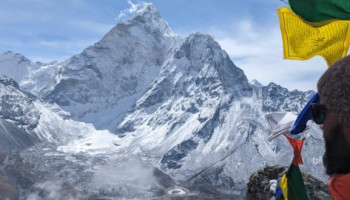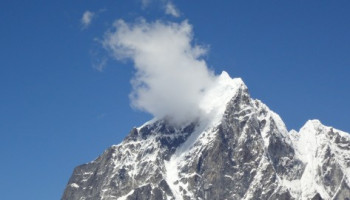
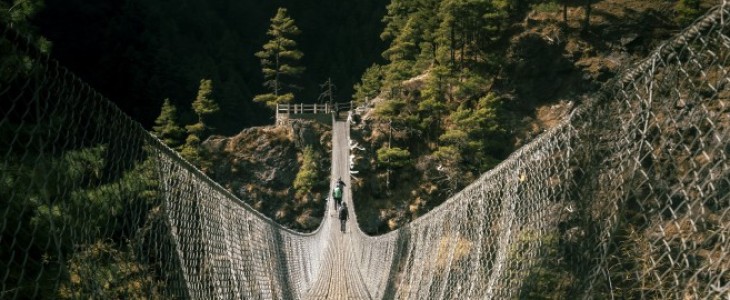
The Everest Base Camp Trek with Cho La Pass and Gokyo Lakes is one of the most adventurous and scenic trekking routes in the Everest region of Nepal. This exhilarating journey takes you through the iconic Everest Base Camp (5,364m), across the challenging Cho La Pass (5,420m), and into the serene beauty of the Gokyo Lakes.
Your adventure begins with a spectacular mountain flight to Lukla, the gateway to the Khumbu region. From Lukla, the trail winds gradually uphill alongside the Dudh Kosi River ("River of Milk") and through enchanting forests of rhododendron, pine, and magnolia. After a few days of scenic trekking, you’ll arrive at the vibrant Sherpa town of Namche Bazaar (3,440m), where you’ll spend an extra day for acclimatization and an optional hike to explore the surrounding areas.
Continuing the trek, you’ll pass through traditional Sherpa villages like Tengboche, Pangboche, Dingboche, Lobuche, and Gorak Shep. From Gorak Shep, you hike to Everest Base Camp, and the following morning, climb to the famous viewpoint of Kala Patthar (5,545m). From here, you'll witness breathtaking panoramic views of towering Himalayan peaks including Mount Everest, Lhotse, Nuptse, Pumori, Lingtren, Ama Dablam, Cholatse, Kangtega, Thamserku, and more.
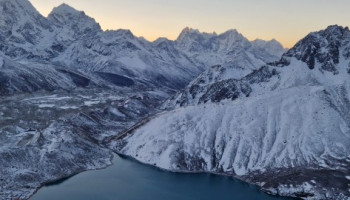
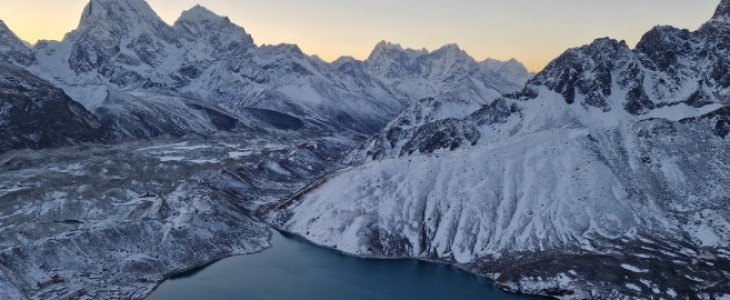
After soaking in the awe-inspiring scenery, you’ll return to Lobuche and trek to Dzongla, where you prepare to cross the high and scenic Cho La Pass. Descending from the pass, you journey toward the sparkling Gokyo Lakes, traversing the immense Ngozumpa Glacier—one of the longest glaciers in the Himalayas. After reaching Gokyo, you’ll ascend Gokyo Ri (5,369m) for another incredible viewpoint showcasing majestic peaks like Everest, Makalu, Cho Oyu, and others.
The return journey takes you through Machhermo, Dole, Phortse-Tenga, Mong La, Kyanjuma, and finally back to Namche Bazaar before completing your trek in Lukla. The following morning, you board a flight back to Kathmandu, bringing your unforgettable Himalayan adventure to a close.
The Everest Base Camp Trek with Gokyo Lakes and Cho La Pass is a favorite among trekkers and adventure seekers. It offers a complete Himalayan experience—featuring diverse flora and fauna, authentic Sherpa culture, ancient Buddhist monasteries, and unmatched mountain vistas.
For more details and pricing, please contact us at: info@adventureaspirant.com
Day 01: Arrival in Kathmandu & Hotel Transfer
After landing at Kathmandu’s international airport, a representative from Adventure Aspirant Pvt. Ltd. will be waiting outside the terminal to welcome you. If you haven’t arranged your visa in advance, you can obtain an on-arrival visa at immigration. This process may take around 1–2 hours. Once formalities are complete, you’ll be transferred by private vehicle to your hotel in Thamel, approximately 7 km away (about 30–35 minutes). Later, you’ll receive a short trek briefing—either at your hotel or at the company office. Any missing gear will be reviewed, and recommendations will be provided. Equipment such as sleeping bags and down jackets can be rented locally. You’ll also settle any remaining payment for the trek (cash is preferred to avoid additional transaction fees). In the evening, feel free to explore Thamel, Kathmandu’s lively tourist district.
Day 02: Fly to Lukla & Trek to Phakding (2,610m) – 3 hours
Your adventure begins with an early morning flight to Lukla, a thrilling 35-minute journey to one of the world’s most dramatic airstrips. During peak seasons, flights may operate from Ramechhap instead. Upon arrival, you’ll meet your porters and begin trekking. The trail is mostly downhill, following the scenic Dudh Koshi River through Sherpa settlements like Chheplung and Thado Koshi. You’ll reach Phakding by afternoon and spend the night in a teahouse.
Day 03: Trek to Namche Bazaar (3,440m) – 7 hours
After breakfast, follow the river trail through charming villages and pine forests. You’ll cross several suspension bridges, including the famous Hillary Bridge decorated with prayer flags. From there, a steep uphill climb of 2–3 hours lead you to Namche Bazaar, the bustling gateway to the Everest region. Overnight stay in Namche.
Day 04: Acclimatization Day in Namche
To adjust to the altitude, you’ll spend a rest day here. A short hike to Syangboche and the Everest View Hotel offers stunning panoramas of Everest, Lhotse, Ama Dablam, and other peaks. After enjoying the views, return to Namche and relax or explore the town.
Day 05: Trek to Tengboche (3,860m) – 5 hours
Today’s trail passes through forests and descends to Phunki Thanga before climbing steeply up to Tengboche. This village is home to a famous monastery and offers incredible mountain views.
Day 06: Trek to Dingboche (4,410m) - 5 hours
The route continues through rhododendron forests and traditional villages like Pangboche. As altitude increases, you’ll walk at a steady pace until reaching Dingboche for the night.
Day 07: Acclimatization Day in Dingboche
Another rest day helps your body adapt. You can hike to Chhukung (4,830m) or Nangkartshang Peak (5,083m). Many trekkers prefer Nagarjun Hill to test their endurance before heading higher. Return to Dingboche for overnight rest.
Day 08: Trek to Lobuche (4,910m) - 6 hours
The trail gradually ascends to Thukla, then climbs to a memorial area dedicated to mountaineers. From here, continue on a gentle path to Lobuche, surrounded by stunning Himalayan peaks.
Day 09: Trek to Everest Base Camp (5,364m) & Return to Gorakshep (5,164m) - 7 hours
Today is the highlight of your journey. Trek to Gorakshep, leave your heavy bags, and continue to Everest Base Camp. Enjoy views of the Khumbu Icefall and take photos before returning to Gorakshep for the night. If energy permits, you may hike to Kala Patthar for sunset views.
Day 10: Sunrise at Kala Patthar & Trek to Dzongla (4,800m) - 7 hours
Wake early for a sunrise hike to Kala Patthar, offering one of the best views of Everest. After breakfast, trek toward Dzongla in preparation for crossing Cho La Pass.
Day 11: Cross Cho La Pass (5,420m) & Trek to Thangnak (4,700m) - 8 hours
This is one of the toughest yet most rewarding days. You’ll cross the high Cho La Pass, navigating rocky and sometimes icy terrain. After descending carefully, reach Thangnak for overnight stay.
Day 12: Trek to Gokyo (4,750m) - 4 hours
Today’s route crosses glacier terrain, requiring caution. After a few hours, you’ll arrive at Gokyo, a beautiful village beside turquoise lakes. Rest and explore the surroundings.
Day 13: Hike Gokyo Ri (5,357m) & Trek to Dole (4,038m) - 7 hours
Climb Gokyo Ri early morning for panoramic views of Everest, Lhotse, Makalu, and Cho Oyu. After descending, continue trekking to Dole.
Day 14: Trek to Namche Bazaar (3,440m.) - 6 hours
Descend through forests and villages, with a few uphill sections along the way. Rejoin the main Everest trail and return to Namche for a comfortable overnight stay.
Day 15: Trek to Lukla (2,860m.) - 7 hours
Follow the familiar trail along the Dudh Koshi River, passing through several villages. After a final uphill stretch, reach Lukla for your last night in the mountains. Say farewell to your trekking crew.
Day 16: Fly Back to Kathmandu
Take a scenic flight back to Kathmandu (or Ramechhap, depending on conditions). Upon arrival, enjoy free time in the city. In the evening, Adventure Aspirant Pvt. Ltd. will host a farewell dinner at a traditional Nepali restaurant with a cultural program.
Day 17: Final Departure
Depending on your flight schedule, you’ll be transferred to the airport. If you’re staying longer, the team can assist in planning further adventures.
× Nepal entry visa fees (USD 30 for 15 days / USD 50 for 30 days)
× Travel insurance covering emergency helicopter evacuation (up to 6,000m) and medical costs
× Tips for guide(s) and porter(s)
× Personal expenses (laundry, Wi-Fi, charging devices, snacks, desserts, beverages, etc.)
× Additional hotel nights in Kathmandu due to early arrival, late departure, or early return from trek
× Any services or items not specifically listed under “Cost Includes”
Highlights of the Everest Cho La Pass Trek
• Scenic mountain flight to Lukla, offering breathtaking Himalayan views
• Crossing the iconic Hillary Suspension Bridge decorated with prayer flags
• Immersion in traditional Sherpa villages, culture, and mountain lifestyle
• Visits to sacred Buddhist monasteries, stupas, and prayer monuments along the trail
• Ascending to remarkable viewpoints such as Kala Patthar and Gokyo Ri
• Adventure of crossing the challenging Cho La High Pass
• Experience the stunning turquoise waters of the Gokyo Lakes
• Reaching the legendary Everest Base Camp at 5,364 meters
Food & Accommodation in the Everest Region
Life in the Everest region is remote and demanding, and this becomes evident from the very beginning of the trek. You will often see locals and animals transporting essential supplies like food, fuel, and building materials on foot, as helicopter transport is extremely costly and not always available. This also explains why prices for goods and services increase with altitude.
Despite the remoteness, trekkers will find a wide range of teahouses and lodges along the route. Many offer both local Nepali meals as well as international dishes such as pasta, noodles, pizza, and burgers, catering to travelers from around the world.
The Everest Cho La Pass trekking package provides full-board meals throughout the journey, including breakfast, lunch, and dinner, along with a hot drink per meal. Special care is taken to ensure hygienic, nutritious, and well-prepared food, as well as clean and pre-checked accommodations for your comfort and safety.
In Kathmandu, the package includes two nights’ stay in a comfortable hotel on a twin-sharing basis with breakfast. During the trek, accommodation is arranged in standard teahouse lodges, offering simple yet comfortable rooms.
Permits for Everest Cho La Pass Trek
To complete this trek, two main permits are required:
• Sagarmatha National Park Entry Permit
• Khumbu Pasang Lhamu Rural Municipality Permit
The Khumbu permit can be issued at the entry point in Lukla, right at the beginning of the trekking route. The process is straightforward, with clear instructions available at the permit office.
Similarly, the Sagarmatha National Park permit can also be obtained in Lukla, though many trekkers prefer to arrange it in Kathmandu to avoid queues during peak trekking seasons.
All necessary trekking permits are fully managed and arranged by the Adventure Aspirant Pvt. Ltd. team without any additional hassle for trekkers.
Transportation for the Trek
Upon your arrival at Kathmandu airport, a representative from Adventure Aspirant Pvt. Ltd. will greet you warmly and transfer you to your hotel using a private vehicle suitable for your group size.
During peak trekking seasons (March–May and October–November), flights to Lukla are typically operated from Ramechhap airport, which is about a 4-hour drive from Kathmandu. This arrangement is included in the trekking package, so travelers do not need to worry about logistics.
In the off-season months (December–February and June–September), direct flights from Kathmandu to Lukla are usually available, making travel more convenient and time-saving.
All transportation arrangements required during the trip are carefully organized and handled by Adventure Aspirant Pvt. Ltd. to ensure a smooth and stress-free trekking experience.
Preparing for the Everest Base Camp via Gokyo Valley trek is quite similar to the standard EBC route. However, because this route includes higher passes and more remote sections, choosing the right gear becomes even more important for safety, comfort, and performance in changing mountain conditions.
Below is a well-structured packing guide recommended for trekkers with Adventure Aspirant Pvt. Ltd.
Footwear
• High-ankle trekking boots (waterproof): A durable, well-used pair is highly recommended to avoid blisters and ensure stability on rocky and icy trails (1 pair)
• Gaiters: Useful for keeping snow, mud, and small debris out of your boots (1 pair)
• Camp footwear: Lightweight sandals or slippers for use inside teahouses (1 pair)
• Foot warmers (optional): Helpful during extremely cold nights or high-altitude crossings
Clothing System
• Base layers (thermal sets): At least 2 sets for warmth and moisture control
• Mid layers: Fleece jackets or similar insulating wear (minimum 2)
• Outer insulation: One high-quality down jacket for cold altitude conditions
• Waterproof shell: Windproof and waterproof jacket plus trekking pants for protection against rain, wind, and snow (1 jacket, 2 pants recommended)
• Comfort wear: At least 2 relaxed trousers for use in lodges
• Moisture-wicking tops & bottoms: Around 3 sets to stay dry during long trekking days
Head & Face Protection
• Warm insulated hat: Essential for cold mornings and evenings
• UV-protection sunglasses: Preferably glacier glasses for strong alpine sunlight
• Buff / neck gaiter / balaclava: Protects against wind, dust, and cold air at high altitude
Hand Protection
• Heavy insulated gloves: Waterproof and wind-resistant for extreme conditions
• Light inner gloves: For layering and added flexibility during trekking
Backpack & Carrying Gear
• Trekking backpack (40–50L): Comfortable, ergonomic design with proper support and compartments for daily essentials
Sleeping Equipment
• High-altitude sleeping bag: Rated for sub-zero temperatures for cold Himalayan nights
• Sleeping liner or mat (optional): Extra insulation for better rest in teahouses
Trekking Accessories
• Adjustable trekking poles: Reduce pressure on knees and improve balance on steep or uneven terrain
Navigation & Essentials
• Trekking map: Provided by Adventure Aspirant Pvt. Ltd. for route awareness
• Compass (backup): Useful as an additional navigation aid
Personal Hygiene & Medical Kit
• Basic toiletries: toothbrush, toothpaste, soap, towel, and other essentials
• First aid supplies: bandages, antiseptic cream, pain relievers, altitude sickness medication, and personal prescriptions
(A basic medical kit is arranged by the company)
Hydration System
• Insulated water bottles: Prevent freezing at higher elevations
• Water purification tablets or filters: Ensure safe drinking water throughout the trek
Electronics & Lighting
• Headlamp or torch: Essential for early starts or nighttime use (carry extra batteries)
• Camera or smartphone: For capturing mountain landscapes (extra batteries or power bank recommended)
Useful Extras
• Repair tape (duct tape) for quick gear fixes
• Multi-tool or small knife for general use
• Energy bars, chocolates, or dry snacks for quick energy boosts
Travel Insurance
• Strongly recommended travel insurance covering:
o High-altitude trekking risks
o Emergency evacuation (including helicopter rescue)
o Medical treatment and trip disruptions
All equipment should be selected carefully to match high-altitude Himalayan conditions. Proper preparation significantly improves safety and enjoyment throughout your journey with Adventure Aspirant Pvt. Ltd.
1- What type of hotel is provided in Kathmandu?
In Kathmandu, trekkers are accommodated in a comfortable tourist-standard hotel. Rooms are equipped with essential facilities to help you relax and recover before and after your Himalayan journey.
2- What accommodation is available during the trek?
Along the trekking route, you will stay in locally run teahouses. These are simple mountain lodges where rooms are usually shared. While facilities are basic, they are clean, safe, and welcoming.
3- What meals are included during the trek and in Kathmandu?
Your stay in Kathmandu includes breakfast only. During the trek, you will receive full board meals—breakfast, lunch, and dinner—served at teahouses or designated stops along the trail.
4- What kind of food is served on the trek?
Meals are freshly prepared using local ingredients and are generally hygienic and nutritious. Common options include dal bhat (rice and lentils), soups, noodles, pasta, Tibetan bread, porridge, and seasonal vegetables.
5- Is there a pre-trek briefing?
Yes, a detailed orientation is conducted before the trek begins. This includes route explanations, safety instructions, essential guidelines, and a meeting with your assigned guide.
6- Who leads the trek?
The trek is guided by a licensed, government-approved, English-speaking professional with extensive experience in high-altitude trekking and local terrain knowledge.
7- Is there an assistant guide?
Yes, an assistant guide is provided when required, especially for group treks or challenging sections, ensuring better safety and support throughout the journey.
8- Are porters provided?
Yes, luggage is carried by porters, typically shared between two trekkers. Each porter carries up to 20–25 kg, allowing you to walk comfortably with only a light daypack.
9- Are guides and porters insured?
All trekking staff, including guides and porters, are fully insured. Their coverage includes medical support and high-altitude emergency evacuation.
10- Will I receive a completion certificate?
Yes, after successfully completing the trek, you will be awarded a certificate of achievement as a souvenir of your Himalayan adventure.
11- What is the group size?
Trekking groups usually consist of 2 to 10 participants. However, arrangements can be customized for solo travelers or larger groups upon request.
12- Is the itinerary suitable for acclimatization?
Yes, the route is carefully structured with gradual altitude gain and planned rest days to help your body adjust and reduce the risk of altitude-related issues.
13- What should I do if I feel altitude sickness symptoms?
Immediately inform your guide. Slow your pace, stay hydrated, avoid alcohol, and rest. The team is trained to handle altitude-related situations and will take necessary precautions.
14- Is travel insurance required?
Yes, it is strongly recommended. Your insurance should cover high-altitude trekking, emergency helicopter evacuation, medical treatment, trip delays, and baggage loss.
15- Are permits included in the package?
Yes, all required permits such as national park entry and local area permits are included and arranged before or during the trek as needed.
16- What happens if flights to or from Lukla are delayed or canceled?
Weather-related delays are common in Lukla flights. In such cases, helicopter alternatives may be arranged depending on availability. Costs vary based on group sharing and are generally payable in Kathmandu, with receipts provided for insurance claims.
17- How can I pay for emergency helicopter evacuation if needed?
Payments can be made via cash or major cards where applicable. Proper documentation and receipts are issued to support insurance reimbursement claims.
18- Is it necessary to arrive early in Kathmandu?
Yes, arriving at least one day before the trek is highly recommended. It allows time for rest, gear preparation, and the mandatory pre-trek briefing.
19- Should I keep extra days after the trek?
Yes, additional buffer days are strongly advised due to possible weather delays affecting flights between Lukla and Kathmandu.
20- Why choose Adventure Aspirant Pvt. Ltd.?
Adventure Aspirant Pvt. Ltd. is committed to safe, well-organized, and responsible trekking experiences. With experienced local staff, carefully planned itineraries, transparent service, and strong safety measures, the company focuses on delivering a reliable and memorable Himalayan journey while promoting sustainable tourism.
The given cost are per person and exclude international flights. Given below are the departure dates available for online booking. If the given date is not favorable then please contact us and we will happily customize your trip on dates more appropriate for you.
Note: If your group size is of more than 1 pax then you can set your own departure date.
| Start Date | Trip Price | Discount | Discounted Price | Action |
|---|
USD1649pp
Duration : 17 Days