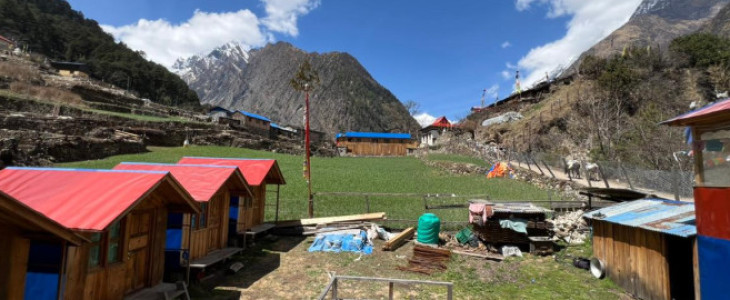
Manaslu Circuit Trek – A Hidden Gem in the Heart of the Himalayas
The Manaslu Circuit Trek is one of Nepal’s finest off-the-beaten-path adventures. Winding through the Manaslu Conservation Area, the route meanders along the rolling foothills beneath the majestic Manaslu Himalaya range. With its Tibetan-influenced culture and incredible ecological diversity, this trek offers an unforgettable blend of nature and tradition as you make your way toward the iconic Larkya La Pass (5,106m).
This journey is an ideal alternative for those who have already explored the Annapurna Circuit. Unlike the more commercialized Everest or Annapurna regions, the Manaslu trail sees relatively fewer hikers, providing a more serene and authentic experience.
Towering at 8,156 meters (26,759 feet), Mount Manaslu is the world’s eighth-highest peak and is often affectionately referred to as the “Japanese Mountain.”
The trek showcases panoramic views of pristine snow-capped summits and tranquil alpine campsites, while passing through ethnic Tibetan villages nestled along the high-altitude Budhi Gandaki Valley. The conservation area is also home to rare Himalayan wildlife such as the musk deer, Himalayan Tahr, blue sheep, and the elusive snow leopard.
This region is primarily inhabited by the Gurung-Bhote and Tibeto-Burman communities. Their spiritual lives revolve around Buddhism, though elements of Hinduism also influence the lower hill settlements.
Formally opened to international trekkers in 1991, the Manaslu Circuit lies within a Restricted Area, which mandates that all foreign trekkers be accompanied by a licensed Nepali guide or porter.
The adventure kicks off with a scenic drive from Kathmandu to Soti Khola, passing through vibrant Middle Hills. From there, the trail ascends through dense forests, terraced farmlands, and charming mountain hamlets before reaching the highlands near the Larkya La Pass (5,106m) — the trek’s highest and most spectacular viewpoint.
This trek is considered moderately demanding and is accessible year-round, though the best trekking seasons are from March to May and September to December. It’s a full overland expedition, meaning no internal flights are required. While prior trekking experience is not mandatory, mental preparation, strong willpower, and a positive outlook are essential for a successful journey.
Trip Highlights
Authentic Gurung and Tibetan hamlets, showcasing rich traditions and spiritual rituals
Awe-inspiring views of Siringi Himal, Manaslu Himal, Naike Peak, Himlung, Gyaji Kang, Kang Guru, Namjung, Annapurna II, Cheo, and Larke Peak
Breathtaking glaciers: Hinang, Punggen, Larkya, Ponkar, and Kechakyu
Exhilarating crossing over Larkya La Pass (5,106m)
Sacred mani walls, ancient Buddhist monasteries, and mystical caves
Seasonal Tibetan marketplaces and local fairs
Lush rhododendron and oak forests, scenic pastures, and rural countryside
Traditional subsistence farming systems
Need Customization?
If our standard itinerary doesn’t match your expectations, Adventure Aspirant can tailor a personalized trek just for you. We also offer exclusive group discounts. For more information, feel free to reach out to us at info@adventureaspirant.com or call us anytime at +977-9767232220. We are available 24/7 and can communicate in English, Hindi, and Nepali.
Day 01: Arrival in Kathmandu (1,300m / 4,264ft)
Upon landing at Tribhuvan International Airport (TIA), a friendly representative from Adventure Aspirant will receive you and escort you to your hotel. After settling in, you may rest or visit our office for a quick briefing. Feel free to explore Thamel, Kathmandu’s bustling tourist district known for souvenirs and local charm. In the evening, enjoy a traditional Nepali welcome dinner, where you’ll get your first taste of authentic Nepali cuisine. Overnight stay in Kathmandu.
Day 02: Cultural Exploration of Kathmandu Valley and Trek Preparation
After breakfast, embark on a guided sightseeing tour of Kathmandu’s UNESCO World Heritage Sites. Discover the sacred Hindu temple of Pashupatinath, the towering Boudhanath Stupa, the iconic Swayambhunath (Monkey Temple), and the historic Patan Durbar Square. Later, we’ll hold a pre-trek briefing, introduce the trekking team, and discuss the journey ahead.
Day 03: Drive from Kathmandu to Soti Khola (710m / 2,330ft) via Arughat – 135 km, 8-9 hrs
Begin the scenic drive along the Prithvi Highway, through forested hills and terraced farmlands. After passing Malekhu, turn north toward Dhading Besi, and then follow a rugged road to Arughat beside the Budhi Gandaki River. Continue towards Soti Khola, enjoying the panoramic vistas of Ganesh Himal, Baudha Himal, and Manaslu en route.
Day 04: Trek to Machha Khola (890m / 2,920ft) – 6-7 hrs
Today’s trek begins gently through Sal forests, gradually climbing and descending across terraced ridges, waterfalls, and scenic cliffs. Pass Labubesi, a picturesque Gurung village, and cross a suspension bridge near Nauli Khola Falls. The trail opens up onto the riverbed before ascending to Machha Khola, or "Fish River."
Day 05: Trek to Dobhan (1,000m / 3,280ft) – 6-7 hrs
Following the Budhi Gandaki upstream, the trail rolls over minor ridges, passing Khorlabesi, known for its coffee and tobacco farming. The Great Himalayan Trail also intersects here. Today’s walk involves riverside paths, modest climbs, and rustic rural scenery.
Day 06: Trek to Philim (1,590m / 5,216ft) – 6-7 hrs
Cross the Dobhan Khola and continue through Thulo Dhunga. Traverse peaceful stretches like Yaruphant and cross the Yaru Khola via a long suspension bridge. Climb to Thado Bharyang, cross back over the Budhi Gandaki, and arrive at Jagat, the official entry point into the Manaslu Conservation Area, before reaching Philim.
Day 07: Trek to Deng (2,240m / 7,350ft) – 6-7 hrs
Walk past Philim into a narrowing, lush valley through Chisopani and Ekle Bhatti. Pass under a grand waterfall and descend into the gorge. Cross multiple suspension bridges, trek through bamboo forests, and gradually ascend to the quiet village of Deng, with stunning views of Shringi Himal.
Day 08: Trek to Namrung (2,660m / 8,725ft) – 6-7 hrs
This marks your entry into Kutang (Lower Nupri), a region formerly part of Tibet. The trail climbs steeply and crosses a series of wooden bridges, watermills, and forests. Villages like Rana and Bihi Phedi offer glimpses into local life influenced by Tibetan culture and Buddhism.
Day 09: Trek to Lho (3,180m / 10,430ft) – 3-4 hrs
Namrung is the gateway to Upper Nupri, where locals dress in traditional chubas and speak a Tibetan dialect. Short but scenic, today’s trek ascends gradually to Lho, with excellent views and ancient mani walls dotting the trail.
Day 10: Trek to Sama Gaon (3,530m / 11,578ft) – 5-6 hrs
Pass the Damonan Khola and climb through forests to Shyala Village. Surrounded by towering peaks like Himal Chuli, Ngadi Chuli, and Manaslu, this leg of the journey offers some of the most dramatic vistas so far.
Day 11: Acclimatization Day in Sama Gaon
Explore Sama, the cultural heart of Upper Nupri. Visit Birendra Lake, the ancient Pungyen Gompa, or trek towards Manaslu Base Camp. Learn about local life — from weaving woolen chubas to trading with nearby Tibetan villages.
Day 12: Trek to Samdo (3,860m / 12,660ft) – 3-4 hrs
Today’s path is gentle, following the Budhi Gandaki through forests of birch and juniper, before crossing a wooden bridge and climbing to Samdo, near the Mayol Khola and Samdo Glacier. This village offers insights into a lifestyle shaped by trade and tradition.
Day 13: Trek to Larkya Phedi (Dharamsala) (4,460m / 14,628ft) – 3-4 hrs
Descend and cross the Budhi Gandaki one final time. Climb steadily through alpine terrain and pastures to reach Dharamsala, the base camp for the Larkya La Pass. The lodge here is simple but functional — perfect for acclimatization before the big climb.
Day 14: Cross Larkya La (5,106m), Trek to Bimthang (3,720m / 12,201ft) – 7-9 hrs
An early start is key. The climb to Larkya La Pass is challenging but incredibly rewarding with sweeping Himalayan views. The descent to Bimthang is steep and long, but equally dramatic, passing glacial lakes and moraine fields.
Day 15: Trek to Gho (2,515m / 8,250ft) – 5-6 hrs
Trek across the Bimthang Plain and descend into beautiful rhododendron and pine forests. Views of Manaslu, Larke, and Cheo Himal linger behind. The trail continues through fields and villages like Sangura Kharka and Karche before arriving at the peaceful village of Gho.
Day 16: Trek to Dharapani (1,920m / 6,300ft) – 3-4 hrs
Pass through Tilje, then follow the riverbanks down into the Marsyangdi Valley. Cross several bridges before reaching Dharapani, where the Manaslu Circuit merges with the Annapurna Circuit. Enjoy your final evening in the mountains.
Day 17: Drive to Kathmandu via Besi Sahar (760m / 2,495ft) – 9-10 hrs
Take a shared jeep through the rugged road to Besi Sahar, then continue on a public bus along a paved highway back to Kathmandu. Enjoy the drive through terraced fields, riverside towns, and the scenic countryside.
Day 18: Final Departure
After breakfast, a representative from Adventure Aspirant will transfer you to Tribhuvan International Airport for your onward journey. We hope to trek with you again in the Himalayas!
Our service package covers the following:
The following are not included in the package:
Larkya La Pass (5,106 m) – The Highest Point of Manaslu Circuit Trek
Standing at an elevation of 5,106 meters, Larkya La Pass is one of the most challenging and rewarding crossings in the Himalayas. It marks the pinnacle of the famous Manaslu Circuit journey.
This dramatic mountain pass links the Manaslu Conservation Area with the Annapurna Conservation Area. The pass is named after Larkya Peak (6,249 m), which towers over the route.
From the top, trekkers are rewarded with breathtaking views—Mount Manaslu dominates the skyline to the east, while Annapurna II and surrounding giants form a dramatic panorama.
Manaslu Base Camp vs. Manaslu Circuit
The Manaslu Base Camp trek is not a standalone route. Instead, it is a key acclimatization excursion included within the Manaslu Circuit.
This side trip begins from Samagaun (3,520 m) and covers roughly 5 km one way. The round trip usually takes 6–7 hours.
At 4,800 meters, the base camp offers incredible views of the north face of Manaslu. More importantly, it helps trekkers adjust to altitude before attempting Larkya La Pass.
Distance and Difficulty of Manaslu Circuit Trek
The Manaslu Circuit spans approximately 125–135 km and typically takes around two weeks to complete, with about 12-16 days of active trekking.
The trail begins at Machha Khola and ends at Dharapani.
The trek ranges from moderate to strenuous. Challenges include long walking days, altitude gain, and physical fatigue, making proper acclimatization essential.
About Mount Manaslu
Mount Manaslu rises to 8,163 meters, making it the eighth-highest mountain on Earth. Its name comes from the Sanskrit word manasa, meaning “mind” or “spirit.”
Located in the Gorkha region, it forms part of the Manaslu Himal range near the Nepal–Tibet border.
Notable features include the Larkya Glacier, as well as nearby lakes and ridges that add to its dramatic landscape. The mountain remains a major attraction for experienced climbers.
Fascinating Facts About the Manaslu Circuit
Extreme Climate Variation
The trek passes through multiple ecological zones—from subtropical forests at lower elevations to glacial terrain above 5,000 meters. Wildlife ranges from langur monkeys to blue sheep, reflecting this diversity.
Mandatory Guided Trekking
The Manaslu region is a restricted area. Trekkers must travel with a licensed guide, as per regulations introduced in 1992 to preserve the environment and culture.
Kalchuman Lake – A Remote Sacred Site
Often referred to locally as “Death Lake,” Kalchuman Lake is rarely visited. It holds spiritual significance, where locals perform rituals such as burning juniper during full moon ceremonies.
Pungyen Gompa – Historic Base Camp
Before modern expeditions, Pungyen Gompa served as an early base for climbers. This centuries-old monastery still functions as a spiritual retreat and offers stunning mountain views.
Birendra Lake
Birendra Lake is a striking glacial lake named after King Birendra. Its reflective waters often mirror Manaslu, making it a favorite spot for photographers.
Samdo – A Cultural Crossroads
Samdo sits close to the Tibetan border and reflects a blend of cultures. Historically, it was part of a salt trade route. Adventurous trekkers can also explore Rui La Pass nearby.
Dharamsala – Final Stop Before the Pass
At 4,460 meters, Dharamsala is the last resting point before crossing Larkya La. Accommodation here is basic, with shared spaces and limited facilities.
High Energy Demands
Trekkers can burn up to 6,000 calories daily due to altitude, cold temperatures, and long trekking hours.
No Killing Zone in Tsum Valley
Parts of the region, especially near Tsum Valley, follow strict Buddhist principles that prohibit harming any living being. This has helped preserve a rich and fearless wildlife population.
Beyul – The Hidden Sacred Land
The upper Manaslu region is believed to be a “beyul,” or sacred hidden valley, blessed by Guru Rinpoche. These spiritual sanctuaries are said to reveal themselves only in times of great need.
Head Gear
Multifunctional buff or neck gaiter
Sun cap, wide-brim hat, or headscarf
Lightweight balaclava or insulated wool/fleece hat
UV-protection sunglasses
Headlamp or flashlight with batteries
Upper Body Clothing
Breathable T-shirts or thermal base layers
Warm fleece or insulating jacket
Waterproof and wind-resistant outer shell
Down jacket (bringing your own is highly recommended; Adventure Aspirant Pvt Ltd will provide one on rental basis, which must be returned after the trek)
Lower Body Clothing
Lightweight trekking trousers
Waterproof over-trousers
Thermal base layer bottoms
Footwear
Lightweight liner socks
Thick wool hiking socks for warmth
Sturdy and comfortable trekking boots
Casual shoes, sandals, or slippers for use after trekking
Hand Protection
Insulated waterproof gloves (such as Gore-Tex or similar)
Accessories & Essentials
Sleeping bag suitable for temperatures around -20°C (personal one is recommended; rental available through Adventure Aspirant Pvt Ltd and must be returned after use)
Trekking duffel bag (provided), plus an additional suitcase or bag for storage in Kathmandu
Waterproof covers or plastic liners to keep gear dry
Trekking poles (optional but beneficial)
Reusable water bottle or hydration bladder
Personal toiletries and hygiene items
Quick-dry towel
Basic repair kit (needle, thread, etc.)
Sunscreen, insect repellent, and lip balm
Personal first-aid kit (including pain relievers, bandages, antihistamines, and medication for stomach issues)
Electrolyte or rehydration salts, along with any personal medications
Wet wipes or tissues
Books, journal, or other light entertainment items
1- Can I arrange a private trip with friends or family?
Absolutely. Private Manaslu Circuit treks can be organized for families or groups of friends. These trips allow you to move at a pace that suits your group rather than following a fixed itinerary. Even a solo participant can do Manaslu Trek at the moment, and all logistics are handled so everyone in your group is well taken care of.
2- Is it possible to trek the Manaslu Circuit independently?
No, independent trekking is not allowed in the Manaslu region. Because it is a restricted area, trekkers must obtain special permits and travel with a licensed guide. These regulations are enforced by the Government of Nepal to maintain safety and protect the region.
3- Can I get a visa on arrival in Nepal?
Yes, most travelers can obtain a visa upon arrival at Tribhuvan International Airport. To make the process smoother, it’s a good idea to fill out the online application form in advance and carry payment (cash or card) for the visa fee.
Make sure your passport is valid for at least six months beyond your arrival date and has at least one blank page for the visa stamp.
4- What happens during the pre-trek briefing in Kathmandu?
Before your trek begins in Kathmandu, you’ll attend a briefing session. During this meeting, you’ll be introduced to your guide, and important documents such as your passport copy and travel insurance will be collected.
Your gear will also be checked to ensure you’re fully prepared. Essential items like a down jacket, sleeping bag, trekking map, and duffel bag are typically provided. This is also a good opportunity to ask questions and clarify any concerns before heading into the mountains.
5- How do I book the Manaslu Circuit Trek? Is a deposit required?
To reserve your spot on the Manaslu Circuit Trek, you’ll need to complete a booking form with your travel details. Information such as flight schedules and insurance can be submitted later.
A deposit of 15% is required to confirm your booking. Once the payment is received, your trip is officially secured.
6- Will I get a refund if I cancel my trek?
The initial 15% deposit is non-refundable if you decide to cancel your trip, regardless of the reason. However, the amount is not lost—you’ll receive a lifetime credit that can be used toward a future trek.
7- Is there an age limit for the Manaslu Circuit Trek?
There is no fixed age restriction for joining the Manaslu Circuit Trek. Trekkers of various ages—from young children to seniors—have successfully completed this journey.
What matters most is overall health and fitness rather than age. For safety, younger participants under 16 must be accompanied by a parent or guardian. Special arrangements can also be made to support both older trekkers and families with children.
8- How should I prepare? Is this a technical climb?
Preparation is key for a successful trek. It’s advisable to start training about a month to six weeks in advance. Focus on cardiovascular fitness through activities like hiking, jogging, stair climbing, or brisk walking.
Practicing long walks (5–6 hours) with a backpack will help simulate trekking conditions. Breaking in your boots beforehand is also important to avoid discomfort.
The Manaslu Circuit is not a technical mountaineering expedition. It follows well-established trails through villages, forests, and high mountain passes. However, it is physically demanding due to altitude and terrain.
9- Is travel insurance required?
Yes, travel insurance is compulsory for this trek. Your policy should include coverage for high-altitude trekking (up to around 6,000 meters) and emergency evacuation, including helicopter rescue.
Well-known providers include Allianz Travel Insurance, AXA Travel Insurance, and World Nomads, among others.
10- Can I trek during summer or winter?
Trekking during winter (December to February) is generally discouraged due to heavy snowfall and extreme cold, especially near Samdo and Dharamsala. Trails may be blocked, and accommodations can be limited.
The monsoon season (June to August) also presents challenges, including frequent rain, landslides, muddy paths, and poor visibility. Leeches are common in lower elevations during this time.
11- How can I prevent altitude sickness?
To reduce the risk of altitude-related illness, maintain a steady pace, stay well hydrated (around 4–5 liters daily), and eat nourishing meals. Avoid alcohol and follow a proper acclimatization schedule.
If symptoms appear, inform your guide immediately. They will monitor your condition and oxygen levels. In severe cases, evacuation can be arranged.
12- Who carries the luggage?
Porters are available to carry shared bags, typically dividing one load between two trekkers with a weight limit of around 25 kg. You’ll only need to carry a personal daypack with essentials like water, snacks, and valuables.
13- Can I leave extra belongings in Kathmandu?
Yes, you can store additional luggage safely at your hotel in Kathmandu. This allows you to travel lighter during the trek and retrieve your items afterward.
14- Is trekking gear provided?
Basic equipment such as a down jacket, sleeping bag (suitable for temperatures down to around –15°C), a duffel bag, and a trekking map are usually provided. These items help ensure comfort and safety during the journey.
15- Will I receive a completion certificate?
Yes, trekkers are typically awarded a certificate after successfully completing the Manaslu Circuit Trek as a keepsake of their achievement.
16- Is there Wi-Fi or phone connectivity?
Connectivity is available in many areas along the trail. SIM cards from Nepal Telecom (NTC) and Ncell can be purchased in Kathmandu, allowing you to stay in touch during the trek.
17- Can I charge my devices?
Charging facilities are available at most teahouses for a small fee. Costs typically range between NPR 200–500 per device. Since electricity often depends on solar power at higher elevations, carrying a power bank is highly recommended.
18- Are single rooms available?
Accommodation is generally arranged on a twin-sharing basis. If you prefer a private room, it may be possible for an additional fee, depending on availability.
19- What food can I expect?
Teahouses along the route serve a variety of meals, including Nepali, Indian, Chinese, and some Western options. Meals are freshly prepared and designed to provide enough energy for trekking.
20- Are special diets accommodated?
Yes, vegetarian, vegan, and gluten-free options are widely available. It’s important to inform your guide in advance about any dietary needs or allergies so proper arrangements can be made.
21- Can I customize my itinerary?
Yes, the itinerary can be adjusted to suit your preferences—whether that means adding rest days or including visits to places like Pokhara or Chitwan National Park.
Customization is typically offered for private trips rather than fixed group departures.
The given cost are per person and exclude international flights. Given below are the departure dates available for online booking. If the given date is not favorable then please contact us and we will happily customize your trip on dates more appropriate for you.
Note: If your group size is of more than 1 pax then you can set your own departure date.
| Start Date | Trip Price | Discount | Discounted Price | Action |
|---|
USD1359pp
Duration : 18 Days
From USD 1649
Duration: 17 Days
View Details