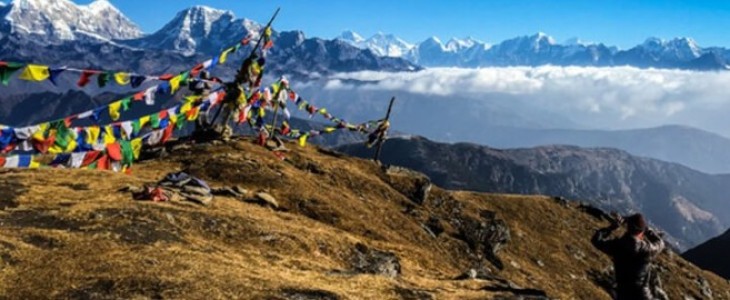
Discover the captivating and lesser-traveled Pikey Peak (4067m) Trek with Adventure Aspirant—a newly introduced trail in the lower Khumbu region that provides one of the finest panoramic viewpoints of Mount Everest.
The term "Pikey" originates from a local Sherpa clan deity, representing the sky and nature, enriching your journey with deep cultural significance.
Opt for a relaxed 8-day itinerary that meanders through dense woodlands of rhododendron (Nepal’s national flower), oak, and pine. This visually stunning route offers sweeping vistas of Himalayan giants such as Everest, Makalu, Annapurna, Gaurishankar, Lhotse, Nuptse, Numbur, Sishapangma, Thamserku, Mera Peak, and even Kanchenjunga in the far east.
Notably, this trek was a favorite of Sir Edmund Hillary. Despite its historical and scenic appeal, it remains largely untouched by mass tourism, offering an intimate and serene trekking experience.
Your journey with Adventure Aspirant begins with a scenic drive from Kathmandu to Dhap, passing through vibrant hillsides, river valleys, forests, and traditional villages before reaching Dhap Bazaar.
Beyond the natural beauty, this trek immerses you in the spiritual essence of the Himalayas with visits to Buddhist monasteries, gompas, and chortens—making this adventure not just a physical challenge, but a soulful exploration of the Khumbu region’s cultural heart.
Day 1: Arrival in Kathmandu [1,300m]
Upon your arrival at Tribhuvan International Airport, an Adventure Aspirant representative will be waiting to receive you at the airport’s exit, holding a signboard for easy identification. From there, you’ll be transferred to your hotel located near the vibrant Thamel area. After a short briefing session about your upcoming journey, you’ll meet your trekking guide. If needed, you can spend the rest of the day shopping for last-minute gear or essentials. Overnight stay in Kathmandu.
Day 2: Scenic Drive from Kathmandu to Dhap [2,800m]
Your adventure with Adventure Aspirant officially begins with a picturesque drive from Kathmandu to Dhap Bazaar. The route follows the Sun Koshi River until reaching Ghurmi. As you travel through winding roads, you’ll witness breathtaking landscapes of hills, forests, rivers, and agricultural fields. After several hours on the road passing through local villages, you’ll reach Dhap Bazaar. You’ll have time to explore the local market and observe the daily lifestyle of the inhabitants. Overnight in Dhap.
Day 3: Trek from Dhap to Sigane or Jhapre [2,920m]
Today’s trek takes you away from Dhap Bazaar, descending along dry trails towards Sigane before gradually ascending on uneven rocky paths toward Jhapre. As you gain altitude, you’ll be treated to glimpses of the snow-capped Himalayas. From Jhapre village, you can enjoy scenic views of Mount Everest and Numbur Himal. The village also features charming Buddhist stupas and monasteries that add a peaceful atmosphere to your stay. Overnight in Jhapre.
Day 4: Trek from Jhapre to Pikey Base Camp [3,640m]
The journey continues toward Pikey Base Camp. The trail begins as a dusty path that climbs steadily towards Bhulbhule. As you move higher, you’ll pass through vibrant rhododendron forests and reach the quaint village of Lhamuje. The trail then broadens, and you may spot yaks grazing peacefully in the alpine meadows. After a short ascent, you’ll arrive at Pikey Base Camp where stunning views of the surrounding peaks await you. Overnight at Base Camp.
Day 5: Summit Pikey Peak [4,065m] and Trek to Chaula Kharka [1,460m]
This is the highlight of your trek—an early morning hike to the summit of Pikey Peak. The ascent is gradual, and as you reach the top, you’ll see the peak adorned with colorful prayer flags. From this vantage point, you’ll enjoy a 360-degree panorama of the Himalayas, including majestic peaks like Everest, Annapurna, Dhaulagiri, and Kanchenjunga. After taking in the sunrise views, you’ll return to the base camp for breakfast, then begin your descent through Lamane and Kosinasa villages to reach Chaula Kharka. Overnight in Chaula Kharka.
Day 6: Trek to Shivalaya [1,770m] via Deurali Pass
Today’s route leads you to the final trekking destination—Shivalaya, a prominent village in the lower Khumbu region. The trail ascends gently to Deurali Pass before descending to Shivalaya. You’ll stop for lunch at the Deurali Bazaar, a well-known rest point with several local tea houses. Upon arriving in Shivalaya, you can unwind in one of the village’s comfortable lodges. Overnight in Shivalaya.
Day 7: Return Drive to Kathmandu
After breakfast, you’ll board a vehicle and drive back to the capital city. The return journey follows the scenic Araniko Highway and passes through towns like Charikot and Dolalghat. Once in Kathmandu, you’ll check into your hotel and enjoy a farewell dinner to celebrate the completion of your trek. If time allows, take a relaxing walk through Thamel in the evening. Overnight in Kathmandu.
Day 8: Departure
On your final day, an Adventure Aspirant team member will escort you to Tribhuvan International Airport in time for your scheduled departure. If you wish to extend your stay or explore other treks and cultural tours, we’ll be happy to assist with additional arrangements.
Welcome dinner featuring a live cultural performance and a farewell dinner at a renowned traditional restaurant.
Includes 2 nights’ accommodation in a 3-star standard hotel in Kathmandu with daily breakfast.
Lodging in local teahouses or mountain lodges throughout the trekking journey.
Full board meals (Breakfast, Lunch, and Dinner) during the entire trek.
Professional Trekking Guide (licensed, fluent in English, trained in first aid and responsible trekking practices).
Supportive Sherpa porter service (one porter assigned for every two trekkers).
All necessary trekking permits and entry fees.
Applicable government charges and local administrative taxes.
Complimentary down jacket rated for -30°C and a warm sleeping bag (available on request).
Branded duffle bag and a complimentary Adventure Aspirant t-shirt as keepsakes.
Trekking route map and an official certificate upon successful completion of the trek.
Group medical kit (including first aid supplies) carried by the guide.
Coordination of emergency helicopter evacuation (to be claimed through your travel insurance provider).
Airport pick-up on arrival and final transfer for departure.
Visa fees for entry into the country.
International airfare to and from Kathmandu.
Meals in Kathmandu other than the welcome dinner, farewell dinner, and daily breakfast.
Expenses for beverages not listed under inclusions (such as bottled water, alcoholic drinks, and soft drinks) during the trek or in Kathmandu.
Travel insurance expenses (must include coverage for emergency helicopter evacuation).
Tips or gratuities for guides, porters, or other support staff.
Any other expenses or services not explicitly mentioned in the “Included in the Trip” section.
Accommodation and Meals
While staying in Kathmandu, you will be accommodated in a comfortable tourist-standard hotel. During the trek, lodging will be arranged in teahouses where rooms are typically shared. Please keep in mind that facilities in the Everest region are basic compared to city standards, as the area is remote and less developed.
In Kathmandu, breakfast will be provided. During the trek, you will receive three meals a day: breakfast and dinner at the teahouse where you stay, and lunch along the trail. Due to the remoteness of the region, meal options are limited but nutritious and hygienic, often including local dishes such as dal bhat, soups, bread, and porridge.
Pre-Trek Orientation
Before beginning the trek, you will attend a briefing session where you’ll receive essential information about the journey, necessary documents, and meet your guide.
Trekking Team
You will be accompanied by a licensed, experienced, English-speaking guide knowledgeable in sustainable and responsible tourism practices. An assistant guide will also be available to support the group. Porters will be assigned at a ratio of one porter for every two trekkers, carrying up to 25 kg in total. All crew members are insured for their safety.
Completion Certificate
At the end of the trek, you will receive a certificate recognizing your accomplishment from Adventure Aspirant.
Group Size
Group sizes typically range from 2 to 10 participants. Solo travelers are welcome and can be accommodated. For groups larger than ten, arrangements can be customized upon request.
Acclimatization
Trekking in the Everest region requires both physical endurance and careful altitude adjustment. The itinerary is designed to help you acclimatize gradually, with planned rest stops and controlled pacing. In case of altitude-related issues, the team is trained to respond effectively.
Managing Altitude Sickness
• Carry a personal first aid kit
• Seek medical advice before your trip
• Inform your guide immediately if you feel unwell
• Stay with the group for mutual support
Travel Insurance
It is strongly advised to have comprehensive travel insurance that covers trekking activities. This should include emergency evacuation, trip cancellation, medical treatment, and protection against loss or theft of belongings.
Permits and Fees
All required entry fees and permits for national parks, heritage sites, and restricted areas are included in the package cost.
Travel Timing Recommendation
It is advisable to arrive in Kathmandu at least one day before your trek begins to allow time for rest and preparation. Likewise, keeping a few extra days after the trek is recommended in case of flight delays, ensuring you don’t miss your international departure.
Below is a well-structured packing guide recommended for trekkers with Adventure Aspirant Pvt. Ltd.
Footwear
• High-ankle trekking boots (waterproof): A durable, well-used pair is highly recommended to avoid blisters and ensure stability on rocky and icy trails (1 pair)
• Gaiters: Useful for keeping snow, mud, and small debris out of your boots (1 pair)
• Camp footwear: Lightweight sandals or slippers for use inside teahouses (1 pair)
• Foot warmers (optional): Helpful during extremely cold nights or high-altitude crossings
Clothing System
• Base layers (thermal sets): At least 2 sets for warmth and moisture control
• Mid layers: Fleece jackets or similar insulating wear (minimum 2)
• Outer insulation: One high-quality down jacket for cold altitude conditions
• Waterproof shell: Windproof and waterproof jacket plus trekking pants for protection against rain, wind, and snow (1 jacket, 2 pants recommended)
• Comfort wear: At least 2 relaxed trousers for use in lodges
• Moisture-wicking tops & bottoms: Around 3 sets to stay dry during long trekking days
Head & Face Protection
• Warm insulated hat: Essential for cold mornings and evenings
• UV-protection sunglasses: Preferably glacier glasses for strong alpine sunlight
• Buff / neck gaiter / balaclava: Protects against wind, dust, and cold air at high altitude
Hand Protection
• Heavy insulated gloves: Waterproof and wind-resistant for extreme conditions
• Light inner gloves: For layering and added flexibility during trekking
Backpack & Carrying Gear
• Trekking backpack (40–50L): Comfortable, ergonomic design with proper support and compartments for daily essentials
Sleeping Equipment
• High-altitude sleeping bag: Rated for sub-zero temperatures for cold Himalayan nights
• Sleeping liner or mat (optional): Extra insulation for better rest in teahouses
Trekking Accessories
• Adjustable trekking poles: Reduce pressure on knees and improve balance on steep or uneven terrain
Navigation & Essentials
• Trekking map: Provided by Adventure Aspirant Pvt. Ltd. for route awareness
• Compass (backup): Useful as an additional navigation aid
Personal Hygiene & Medical Kit
• Basic toiletries: toothbrush, toothpaste, soap, towel, and other essentials
• First aid supplies: bandages, antiseptic cream, pain relievers, altitude sickness medication, and personal prescriptions
(A basic medical kit is arranged by the company)
Hydration System
• Insulated water bottles: Prevent freezing at higher elevations
• Water purification tablets or filters: Ensure safe drinking water throughout the trek
Electronics & Lighting
• Headlamp or torch: Essential for early starts or nighttime use (carry extra batteries)
• Camera or smartphone: For capturing mountain landscapes (extra batteries or power bank recommended)
Useful Extras
• Repair tape (duct tape) for quick gear fixes
• Multi-tool or small knife for general use
• Energy bars, chocolates, or dry snacks for quick energy boosts
All equipment should be selected carefully to match high-altitude Himalayan conditions. Proper preparation significantly improves safety and enjoyment throughout your journey with Adventure Aspirant Pvt. Ltd.
1- When is the ideal time to do the Pikey Peak Trek?
The most favorable times for the Pikey Peak Trek are during spring (March to May) and autumn (September to November). These periods typically bring clear skies, pleasant temperatures, and reliable weather, offering excellent conditions for trekking and enjoying mountain views.
2- How high is Pikey Peak?
Pikey Peak rises to an elevation of 4,065 meters (13,335 feet) above sea level. From its summit, trekkers can enjoy remarkable views of the Himalayan range, including Mount Everest.
3- Where is Pikey Peak situated?
Pikey Peak lies in the lower Khumbu area of Nepal, within the Solu-Khumbu district. It forms part of the broader Everest region and is known for offering a quieter and less crowded alternative to popular routes like the Everest Base Camp trek.
4- How difficult is the Pikey Peak Trek?
This trek is generally considered easy to moderately challenging. Although it includes some uphill sections and requires walking around 5–6 hours per day, it is manageable for most people with a reasonable level of fitness. Proper preparation and gradual acclimatization make the journey accessible and rewarding, with beautiful scenery and cultural encounters along the way.
The given cost are per person and exclude international flights. Given below are the departure dates available for online booking. If the given date is not favorable then please contact us and we will happily customize your trip on dates more appropriate for you.
Note: If your group size is of more than 1 pax then you can set your own departure date.
| Start Date | Trip Price | Discount | Discounted Price | Action |
|---|
USD749pp
Duration : 8 Days
From USD 1649
Duration: 17 Days
View Details