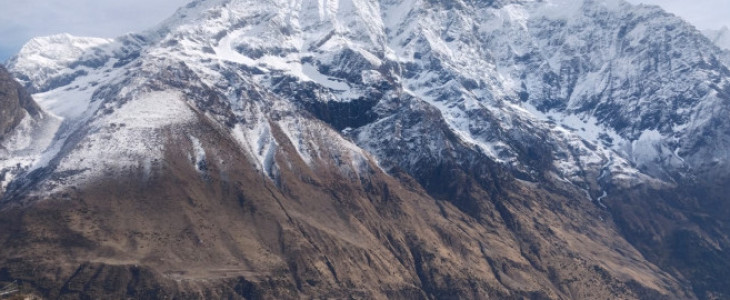
Nestled in the northern part of Gorkha, Tsum Valley is a hidden Himalayan gem framed by the majestic peaks of the Sringi Himal, Ganesh Himal, and Boudha Himal ranges. Compared to more frequented trekking destinations like the Annapurna, Everest, and Langtang regions, Tsum Valley remains one of Nepal’s most secluded and culturally vibrant regions — a true sanctuary for those seeking both spiritual depth and natural beauty.
The name ‘Tsum’ originates from the Tibetan word ‘Tsombo’, meaning “clear” — a fitting description of the valley’s pristine rivers, dense greenery, cascading waterfalls, pure hot springs, towering peaks, and sacred artifacts. The area possesses a distinct identity, both geographically and culturally.
Culture and Traditions
The residents of Tsum Valley are primarily of Tibetan descent, speaking their own dialect and following ancient customs and lifestyles. The region is adorned with intricate chortens, and long rows of mani walls, which are made of hand-carved stones etched with spiritual mantras and images of deities.
Tsum Valley is unique for preserving age-old Buddhist practices, including the rare tradition of polyandry (a woman having multiple husbands) and a deep respect for all sentient life — hunting and fishing are strictly prohibited. Locals observe vibrant and rare festivals such as Faning, Saka Dawa, and Lhosar Dawa, which reflect their rich spiritual heritage.
Nature and Wildlife
The valley is a haven for wildlife, home to large herds of Himalayan Thar and Blue Sheep, often seen in groups of 50 to 200. The untouched wilderness of the region supports a diverse ecosystem, making it ideal for nature lovers and wildlife enthusiasts.
Monasteries and Spiritual Sites
Tsum Valley is dotted with ancient and revered monasteries, each with its own unique charm. Notable among them are:
Mu Gompa – Situated at an altitude of 4,000 meters, this is the highest monastery in the region.
Rachen Gompa – Located on a picturesque plateau in the heart of the valley.
Gumba Lungdang – A remote and mystical nunnery nestled against the slopes of Ganesh Himal, ideal for trekkers seeking solitude and spiritual connection.
Trek Itinerary and Journey
The adventure begins with a scenic drive from Kathmandu to Machha Khola via Arughat and Soti Khola, followed by a trek through beautiful alpine landscapes and remote settlements, gradually ascending to the serene Mu Gompa. Those with more time can enhance their experience by trekking to the Ganesh Himal Base Camp and Lungdang Nunnery, adding an extra spiritual and scenic layer to the journey.
The trek concludes at Machha Khola, from where you’ll drive back to Kathmandu via Arughat, completing an unforgettable journey through one of Nepal’s most enchanting and culturally preserved valleys.
Trip Highlights
Immerse yourself in the pristine fusion of Himalayan landscapes and timeless cultural traditions
Marvel at breathtaking vistas of Hiunchuli, Ganesh Himal, Manaslu, and surrounding snow-capped peaks
Connect with local communities and gain first-hand insight into their daily lives and customs
Experience untouched Tibetan-influenced culture set amidst unspoiled natural surroundings
Wake up to panoramic mountain views dominated by the majestic Ganesh Himal range
Day 1: Drive from Kathmandu to Machha Khola (869m | 2850ft) – 7–8 hours
Begin your adventure with a scenic overland journey westward from Kathmandu. Following the winding route alongside the Trishuli and Budhi Gandaki Rivers, you arrive at Machha Khola—a riverside village nestled in the Himalayan foothills.
Day 2: Trek from Machha Khola to Jagat (1340m | 4395ft) – 7 hours
Today’s trail follows the Budhi Gandaki River through narrow gorges and terraced fields. You pass villages like Khorlabesi and Tatopani before climbing up to the stone-paved village of Jagat.
Day 3: Trek from Jagat to Lokpa (2240m | 7347ft) – 6–7 hours
Ascend through lush sub-tropical forests, charming hamlets, and suspension bridges. After crossing Philim and Ekle Bhatti, the trail diverts off the Manaslu Circuit into the tranquil Tsum Valley to reach Lokpa.
Day 4: Trek from Lokpa to Chumling (2386m | 7826ft) – 6–7 hours
A remote and serene route takes you deep into Tsum Valley. With views of Ganesh Himal guiding the way, today’s journey leads through forested ridges and across long cantilever bridges to the village of Chumling.
Day 5: Trek from Chumling to Chhokang Paro (3031m | 9941ft) – 6 hours
Climb gradually through cultivated fields and villages rich in Tibetan culture. Reach the wide valley of Chhokang Paro, with panoramic mountain vistas and traditional stone houses.
Day 6: Trek from Chhokang Paro to Nile and Mu Gompa (3361m | 11026ft) – 5–7 hours
Venture further into the spiritual heart of the valley. Explore the remote hamlet of Nile before ascending to Mu Gompa—the highest point of the trek—nestled beneath the Himalayan giants.
Day 7: Trek back from Mu Gompa to Chhokang Paro (3031m | 9941ft) – 5 hours
Descend gradually, retracing your steps past scattered settlements and religious shrines back to Chhokang Paro, taking time to engage with locals and enjoy their hospitality.
Day 8: Trek from Chhokang Paro to Gumba Lungdang (3400m | 11152ft) – 7 hours
Trek through hidden trails to reach Gumba Lungdang, a sacred nunnery tucked beneath Ganesh Himal. Enjoy spiritual ambiance and mountain serenity in this quiet retreat.
Day 9: Hike to Ganesh Himal Base Camp (4900m | 16076ft) and return to Gumba Lungdang – 8–9 hours
Start early for a challenging yet rewarding day hike to Ganesh Himal Base Camp. Experience dramatic alpine terrain and awe-inspiring glacier views before returning to the monastery.
Day 10: Trek from Gumba Lungdang to Chumling (2470m | 8101ft) – 4 hours
Make a gradual descent through the pristine landscape, retracing your route through pine woods and stone-built hamlets back to Chumling.
Day 11: Trek from Chumling to Salleri (1353m | 4438ft) – 6–7 hours
Drop in elevation as you pass through terraced fields and vibrant villages, enjoying final glimpses of the towering peaks. Arrive at Salleri for your last night in the hills.
Day 12: Trek from Salleri to Machha Khola (869m | 2850ft) – 6–7 hours
Continue your descent alongside the river, through forests and farmlands, until you reach back to the gateway village of Machha Khola.
Day 13: Drive from Machha Khola to Kathmandu (1400m | 4592ft) / Pokhara (800m | 2626ft) – 9 hours
Wrap up the adventure with a long drive back to civilization. Choose between returning to Kathmandu or heading onward to Pokhara, depending on your travel plan.
A Century-Old Non-Violence Tradition in Tsum Valley
One of the most fascinating yet lesser-known aspects of the Tsum Valley is its long-standing commitment to non-violence. For over a hundred years, this region has upheld a strict tradition of avoiding animal sacrifice. This principle is a source of deep pride for the local Tsumbas, who embrace a way of life rooted in compassion and respect for all living beings.
The people here rely heavily on agriculture and livestock, yet their spiritual beliefs—strongly influenced by Buddhism—emphasize peace, kindness, and harmony with nature. Visiting the valley offers a powerful reminder of purity, mindfulness, and the importance of valuing life.
Cultural Experience – Tibetan Heritage
The Tsum Valley trek provides an exceptional opportunity to engage with Tibetan-influenced culture. Located near the Tibetan border, the valley is home to communities of Tibetan origin who maintain deep-rooted Buddhist traditions.
Travelers can observe unique customs, hear local dialects such as Tsumke and Tsumba, and witness religious practices that highlight a non-violent philosophy, including the tradition of Shayagya. The region feels like a spiritual haven, dotted with monasteries, chortens, and prayer wheels that reflect centuries of devotion.
Cultural highlights include:
Shayagya Practice: A non-violence philosophy that forbids killing animals and harming the environment, revitalized by Mahaguru Dukpa Lama Serap Dorje in 1977.
Polyandry Tradition: In some villages, the custom of brothers sharing a single wife still exists.
Local Language: Distinct Tibetan dialects, including Tsumke and Tsumba, are widely spoken.
Architecture: Traditional homes and stone-paved pathways, especially in villages like Chumling, showcase ancient Himalayan lifestyles.
Festivals: Visitors may experience celebrations such as Lhosar, the Tibetan New Year.
Trek Difficulty – Remote and Rewarding
The Tsum Valley trek is considered moderately difficult to demanding, mainly due to its remote setting and long duration. Spanning around 198 kilometers over roughly 16 days, the journey begins at Machhakhola and climbs toward historic settlements near Mu Gompa at about 3,700 meters.
Unlike more popular trekking routes, this trail remains largely untouched. Trekkers will encounter rugged terrain, narrow paths, rocky sections, and multiple suspension bridges. Daily hikes typically last between 6 to 8 hours.
Although the trek doesn’t cross extremely high passes, altitude can still affect travelers. Proper acclimatization is essential as you gradually ascend from lower river valleys to higher elevations near sacred sites like Mu Gompa and Rachen Gompa.
Best Time to Visit
For the best trekking experience, plan your trip during spring (March to May) or autumn (September to November). These seasons offer stable weather, comfortable temperatures, clear mountain views, and well-maintained trails.
Traveling during these periods ensures you avoid harsh winter cold, heavy monsoon rains, and obstructed views—allowing you to fully enjoy the beauty and serenity of the valley.
Update for Solo Trekkers
Recent changes in trekking regulations now allow solo travelers to explore restricted regions like the Manaslu area. Previously, at least two trekkers were required to obtain a Restricted Area Permit (RAP). Under the updated rules, individual trekkers can now apply independently, provided they go through an authorized trekking agency.
Head Gear
Multifunctional buff or neck gaiter
Sun cap, wide-brim hat, or headscarf
Lightweight balaclava or insulated wool/fleece hat
UV-protection sunglasses
Headlamp or flashlight with batteries
Upper Body Clothing
Breathable T-shirts or thermal base layers
Warm fleece or insulating jacket
Waterproof and wind-resistant outer shell
Down jacket (bringing your own is highly recommended; Adventure Aspirant Pvt Ltd will provide one on rental basis, which must be returned after the trek)
Lower Body Clothing
Lightweight trekking trousers
Waterproof over-trousers
Thermal base layer bottoms
Footwear
Lightweight liner socks
Thick wool hiking socks for warmth
Sturdy and comfortable trekking boots
Casual shoes, sandals, or slippers for use after trekking
Hand Protection
Insulated waterproof gloves (such as Gore-Tex or similar)
Accessories & Essentials
Sleeping bag suitable for temperatures around -20°C (personal one is recommended; rental available through Adventure Aspirant Pvt Ltd and must be returned after use)
Trekking duffel bag (provided), plus an additional suitcase or bag for storage in Kathmandu
Waterproof covers or plastic liners to keep gear dry
Trekking poles (optional but beneficial)
Reusable water bottle or hydration bladder
Personal toiletries and hygiene items
Quick-dry towel
Basic repair kit (needle, thread, etc.)
Sunscreen, insect repellent, and lip balm
Personal first-aid kit (including pain relievers, bandages, antihistamines, and medication for stomach issues)
Electrolyte or rehydration salts, along with any personal medications
Wet wipes or tissues
Books, journal, or other light entertainment items
1- How difficult is the Tsum Valley Trek?
The Tsum Valley Trek is generally rated as moderate to fairly demanding, making it suitable for trekkers with a decent level of fitness. The route stretches roughly 198 km over about 16 days, beginning at Machhakhola (869 m) and reaching its highest point at Mu Gompa (3,700 m).
Because the trail passes through remote and less-developed areas, you’ll encounter narrow mountain paths, rocky terrain, suspension bridges, and long hiking days of 6–8 hours. While there’s no strict fitness requirement, preparing both physically and mentally beforehand makes the journey far more enjoyable and manageable.
2- How long is the trek?
The full trek covers approximately 198 km (123 miles), starting and ending at Machhakhola. Along the way, trekkers pass through scenic villages such as Jagat, Lokpa, Chumling, Chokangparo, and Nile before reaching the spiritual highlights like Mu Gompa and Rachen Gompa.
3- Is there an age restriction?
There isn’t a fixed age limit for this trek. People as young as 12 and as old as their seventies have successfully completed it. What matters most is your health, stamina, and preparation rather than your age. However, children under 16 should be accompanied by a parent or guardian for safety.
4- should I prepare? Is it technical?
Preparation should begin about 3 months in advance. Focus on cardio exercises like jogging, stair climbing, and long-distance walking to build endurance. It’s also helpful to do at least one long hike per week (5–6 hours) with a loaded backpack to simulate trekking conditions.
Breaking in your boots early is essential to avoid blisters. Mental readiness is just as important—staying positive and determined can make a big difference when the trek becomes physically demanding.
This trek is not technical and doesn’t involve climbing skills, but it still requires sustained effort as you walk through forests, traditional villages, and rugged mountain terrain.
5- Do I need travel insurance?
Yes, travel insurance is essential. Your policy should include coverage for high-altitude trekking (up to 4,000 meters) as well as emergency evacuation, including helicopter rescue.
6- How can I prevent altitude sickness?
To reduce the risk of altitude sickness, walk at a steady pace and avoid overexertion. Drink plenty of water—around 2 to 4 liters daily—and eat nutritious meals. Avoid alcohol, as it can slow down acclimatization.
Proper itineraries include rest days to help your body adjust to increasing altitude. If you feel unwell, inform your guide immediately. Early action can prevent serious issues, and in emergencies, helicopter evacuation is available.
7- What kind of food is available?
Food options along the trail are simple but nourishing, reflecting local cuisine. Common meals include dal bhat (rice and lentils), Tibetan bread, dumplings (momos), noodles, soups, potatoes, eggs, and pancakes.
You may also try traditional foods like tsampa, dhido, and yak dairy products such as cheese and butter. Meals are freshly prepared and designed to keep you energized throughout the trek.
8- Are special diets available?
Yes, vegetarian, vegan, and gluten-free options are generally available. It’s important to inform your guide or trekking organizer in advance about any dietary restrictions or allergies so arrangements can be made accordingly.
9- What about drinking water?
Safe hydration is important during the trek. Natural spring water is widely available but should be purified using tablets or filters. Boiled water can also be purchased at teahouses.
Using reusable bottles and purification methods is encouraged to reduce plastic waste. Avoid buying bottled water whenever possible to help protect the environment.
10- Is there Wi-Fi or phone connectivity?
Connectivity is limited but available in some areas. Local SIM cards like NTC and Ncell work in lower regions such as Machhakhola and Philim. However, as you move higher into Upper Tsum—especially around Chokangparo and Mu Gompa—network coverage becomes weak or unavailable.
Trekkers should be prepared for limited communication rather than consistent connectivity.
The given cost are per person and exclude international flights. Given below are the departure dates available for online booking. If the given date is not favorable then please contact us and we will happily customize your trip on dates more appropriate for you.
Note: If your group size is of more than 1 pax then you can set your own departure date.
| Start Date | Trip Price | Discount | Discounted Price | Action |
|---|
USD1198pp
Duration : 13 Days
From USD 1649
Duration: 17 Days
View Details